Copenhagen Is Europe's Most Bike-Friendly City — Here's Why
There is a particular sound that defines the mornings here — not the growl of traffic or the impatient blare of horns, but the soft, whirring chorus of thousands of bicycle wheels moving in loose unison. It is the sound of a city that has, over decades, quietly reorganised itself around the simplest machine ever invented. And if you are a remote worker chasing a slower, healthier, more grounded way of living, that sound might just be the reason you stay longer than you planned.
For years the debate over Europe's most bike-friendly city has bounced between two contenders: Amsterdam, with its canal-lined lanes and postcard familiarity, and Copenhagen, the Danish capital that turned cycling infrastructure into something approaching civic religion. In the most recent assessments — measured by dedicated lane coverage, cyclist safety, year-round ridership and the sheer normalcy of commuting by bike — Copenhagen has once again claimed the top spot. It is not a narrow victory of vanity metrics. It is a city where roughly half the population pedals to work or school every single day, rain or shine.
But this is not merely a story about who won a ranking. For the location-independent professional, a bike-friendly city is a lifestyle infrastructure — a place where your commute doubles as exercise, where car ownership becomes irrelevant, and where the rhythm of daily movement shapes something deeper than logistics. Let's explore why Copenhagen earned the crown, and what it actually means to live and work there on two wheels.
Why Copenhagen Took the Crown
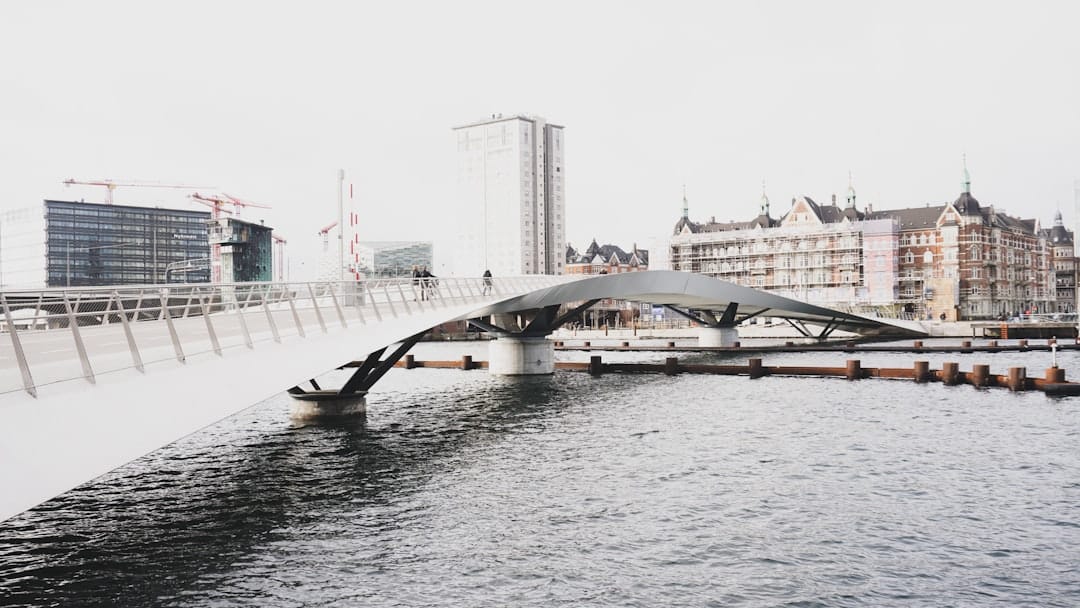
The numbers tell part of the story. Copenhagen has invested in more than 380 kilometres of dedicated, physically separated cycle tracks — not painted lines squeezed between parked cars and moving traffic, but proper raised lanes with their own kerbs, their own signals, and in some cases their own bridges. The Cykelslangen, or "Bicycle Snake," is an elevated orange ribbon of a cycleway that arcs over the harbour, carrying riders above the water without ever forcing them to dismount or negotiate with cars. Infrastructure like this signals intent: the bicycle is not tolerated here, it is prioritised.
What separates Copenhagen from its rivals is the consistency of the experience. In Amsterdam, cyclists, mopeds and pedestrians often share a chaotic, if charming, tangle of space. In Copenhagen, the design philosophy is calmer and more deliberate. Traffic lights are timed to create a "green wave" for cyclists travelling at around 20 kilometres per hour, meaning you can ride into the centre during rush hour and hit green after green after green. It is a small piece of urban choreography that makes the daily ride feel less like a battle and more like gliding.
Then there is the culture, which no amount of concrete can manufacture on its own. Cycling in Copenhagen is not a subculture or a statement — it is simply how people move. You will see suited executives, parents ferrying two children in front-mounted cargo boxes, and elderly residents all pedalling at an unhurried pace. This normalcy matters enormously for anyone relocating: you never feel like an outsider for choosing a bike, because everyone around you has made the same choice.
What Cycling Culture Means for Remote Workers
When you work remotely, the boundaries between your job and the rest of your life blur easily. Days can dissolve into a single unbroken stretch of screen time, and the absence of a natural commute — usually celebrated as a perk — can quietly rob you of the transition rituals that separate "work" from "rest." A daily bike ride reintroduces that boundary in the healthiest possible form. Riding to a café or coworking space in the morning gives your day a clear beginning, and the ride home lets your mind decompress before you walk through your door.
There is a wellness dimension here that is easy to underestimate. Sedentary work is one of the quiet hazards of the remote lifestyle, and building movement into your daily infrastructure — rather than relying on willpower to visit a gym — is far more sustainable. Twenty minutes of cycling each way adds up to real cardiovascular benefit without ever feeling like exercise. If you have struggled with the fatigue and restlessness that come from too many hours at a laptop, you may find that a city built for pedalling is quietly the best antidote. It is worth reading more about managing digital nomad burnout if you find your energy flagging in a new base.
Practically speaking, a bike-first city also transforms your budget and your sense of freedom. You do not need a car, you rarely need public transport, and you can reach almost anywhere in the central districts within fifteen minutes. That kind of accessibility makes spontaneous exploration effortless — a lunchtime ride to a harbour swimming spot, an evening loop through a park, a weekend jaunt to a neighbourhood you have never seen. The city opens up to you at pedal speed, slow enough to notice its details but fast enough to cover real ground.
Enjoying this? Get more like it.
Weekly picks for remote workers and digital nomads — tools, destinations, and honest takes, straight to your inbox.
Subscribe free →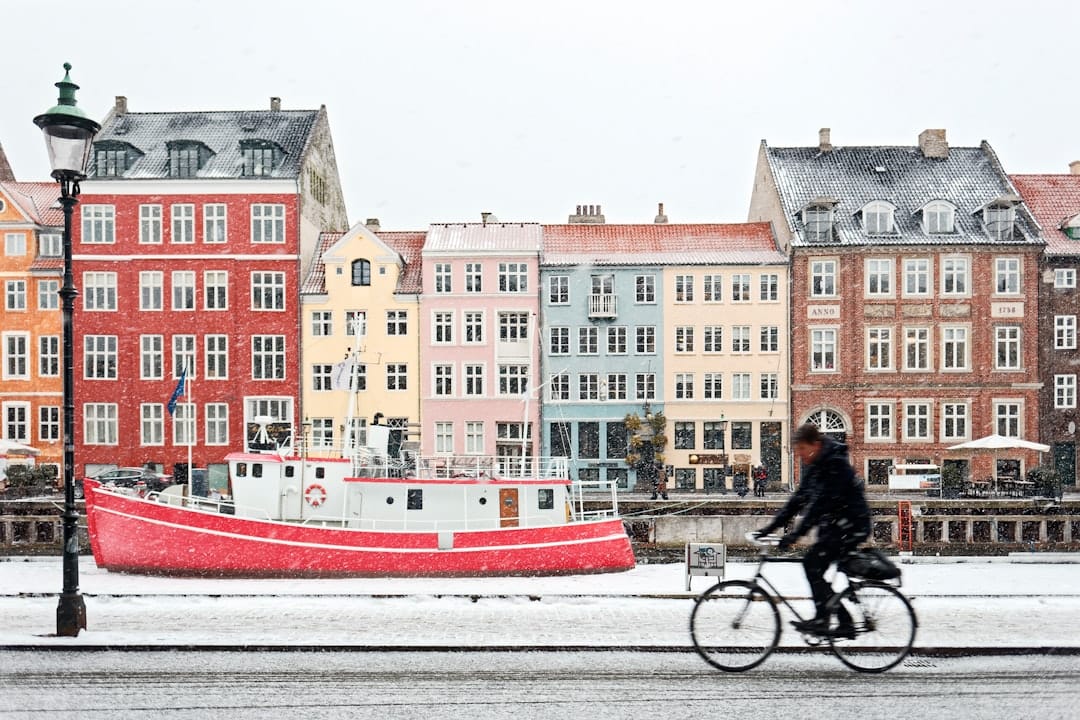
Getting Set Up: Bikes, Gear and First Rides
Getting Set Up: Bikes, Gear and First Rides
Comparison of bike types and setup costs for new cyclists in Copenhagen.
| Bike Type | Budget Option | Premium Option | Best For |
|---|---|---|---|
| City Bike | €80–150 | €250–400 | Beginners |
| Lock & lights | €30–50 | €100–150 | Safety essentials |
| Helmet & gear | €25–40 | €80–120 | Protection |
| Total startup cost | €135–240 | €430–670 | Year-one investment |
Illustrative figures — composed for shape, not sourced
If you are staying for a few days, the city-run bike share scheme and various app-based rentals will serve you well, offering electric-assist bikes you can unlock from a phone and leave at designated points. But if you are settling in for a month or more, buying a second-hand bike is almost always the smarter move. The used market here is enormous, and a reliable commuter — likely an unglamorous but bulletproof Danish city bike with a step-through frame, mudguards and a chain guard — can be found for a modest sum. When you leave, you sell it on, often for close to what you paid.
A few pieces of gear make all the difference. A robust lock is non-negotiable; bike theft exists here as everywhere, and locals invest in heavy chains or frame locks accordingly. Front and rear lights are legally required and genuinely essential given how early winter darkness falls. And because you will ride in all weather, waterproof panniers or a good rain layer will keep you and your laptop dry on the days the North Sea decides to remind you where you are. Pack these into your work travel packing list before you arrive, or buy them locally on day one.
Your first few rides will teach you the unwritten rules faster than any guide. Signal your turns with an outstretched arm and your intention to stop with a raised hand. Keep to the right so faster riders can pass on your left. Ring your bell not aggressively but as a gentle courtesy. Within a week the etiquette becomes instinct, and you stop feeling like a tourist wobbling through traffic and start feeling like part of the flow — one wheel among thousands, moving to the city's shared rhythm.
Working, Living and Budgeting on Two Wheels
Let's be honest about the elephant in the room: Copenhagen is not cheap. It routinely ranks among the most expensive cities in Europe, and a remote worker arriving from a lower-cost base will feel the difference in rent, groceries and the eye-watering price of a casual dinner out. But cycling quietly claws back some of that cost. Without a car, without frequent public transport passes, and with the ability to shop and socialise across a wide radius for free, your daily expenses shrink in ways that partly offset the premium of living here. If you are weighing the maths, it helps to have a clear digital nomad monthly costs breakdown to compare against.
For workspace, you are spoiled for choice. The city is dense with cafés that welcome laptop workers, though the best of them fill up early, and a scattering of coworking spaces cater to freelancers and remote teams alike. Many of these sit conveniently along the main cycle arteries, so you can pedal from your accommodation to a desk in minutes. The compact geography means you can try a different neighbourhood café each morning without ever facing a long or stressful journey — the workspace comes to you at whatever pace you choose to ride.
On the practical side of settling in, sort out your connectivity before you get too comfortable. A local or regional data plan keeps your phone useful for navigation and unlocking rental bikes, and if you are handling client work or logging into sensitive accounts on café Wi-Fi, take your digital hygiene seriously. Reliable mobile data is easy to arrange with the right approach — comparing eSIM and physical SIM options for travel before you land will save you the scramble of hunting for a shop on your first jet-lagged morning.
Beyond the Commute: Exploring the City at Pedal Speed
The real magic of a bike-friendly city reveals itself on the weekends, when the commute falls away and the bicycle becomes a tool of pure exploration. Ride out along the harbour and you will find designated swimming zones where locals plunge into startlingly clean water in the summer months. Follow the coast north and the urban density gives way to woodland, beaches and the quiet residential districts where the city's rhythm slows to a hush. None of it requires a car, a timetable or a plan — just a set of pedals and a free afternoon.
This is where cycling stops being about efficiency and starts being about a way of experiencing place. Slow travel is often framed as staying somewhere longer, but it is just as much about how you move through a destination once you are there. A bicycle is the perfect slow-travel vehicle: intimate enough to hear conversations spilling from café terraces and smell bread from a bakery you pass, yet swift enough to carry you from a morning in one neighbourhood to an evening in another. If this philosophy appeals to you, it pairs naturally with choosing the right slow travel cities for your budget.
There is also a subtle psychological shift that comes from months of daily cycling in a place designed to make it joyful. You become more attuned to weather, to light, to the changing of seasons in a way that people who move through cities in sealed metal boxes rarely do. You notice the first cold snap because you feel it on your face. You celebrate the long summer evenings because they mean riding home in golden light. The city imprints itself on you not through landmarks but through this accumulated, embodied experience of moving through it under your own power, day after day.
Copenhagen's crown as Europe's most bike-friendly city is well earned, but the ranking itself is almost beside the point. What matters for you, as someone who works from wherever there is decent Wi-Fi and a good café, is what that infrastructure makes possible: a daily life where movement, health and freedom are woven into the ordinary act of getting around. In a city built for the bicycle, you do not have to schedule wellness or negotiate with traffic — it simply becomes the texture of how you live.
So if the whirring chorus of morning wheels sounds like the kind of soundtrack you would want to your working life, consider making a base here for a season. Buy the unglamorous city bike, learn the etiquette, chase the green wave into the centre, and let the harbour swims and coastal rides remind you why you chose a location-independent life in the first place. Some cities you visit. This one, you ride.