The Work Travel Packing List for Remote Professionals
There is a particular kind of dread that arrives the night before a work trip, somewhere around midnight, when the suitcase is open on the bed and the question hanging in the air is not "do I have enough" but "do I have the right things." A vacation packing mistake costs you a beach afternoon in the wrong shirt. A work travel packing mistake costs you a dropped video call in a hotel lobby, a laptop charger that fits the wrong socket, and the slow-burning panic of realising your presentation slides live only on a machine now sitting at 4% battery.
Packing for work travel is its own discipline. It sits somewhere between the ruthless minimalism of the seasoned carry-on traveller and the professional readiness of someone who might need to look presentable on camera at 8am in a timezone their body does not yet believe in. You are not just moving your body across the world — you are moving your entire office, your income, and your ability to be reachable and reliable no matter where you land.
This guide is built around that reality. It is not a generic checklist of socks and toothbrushes — it assumes you already know how to pack for yourself as a human. Instead, it focuses on the work part of work travel: the gear that keeps you earning, the redundancies that keep you calm, and the packing philosophy that lets you walk through an airport without checking a bag and without leaving anything essential behind.
Start With the Work, Not the Wardrobe
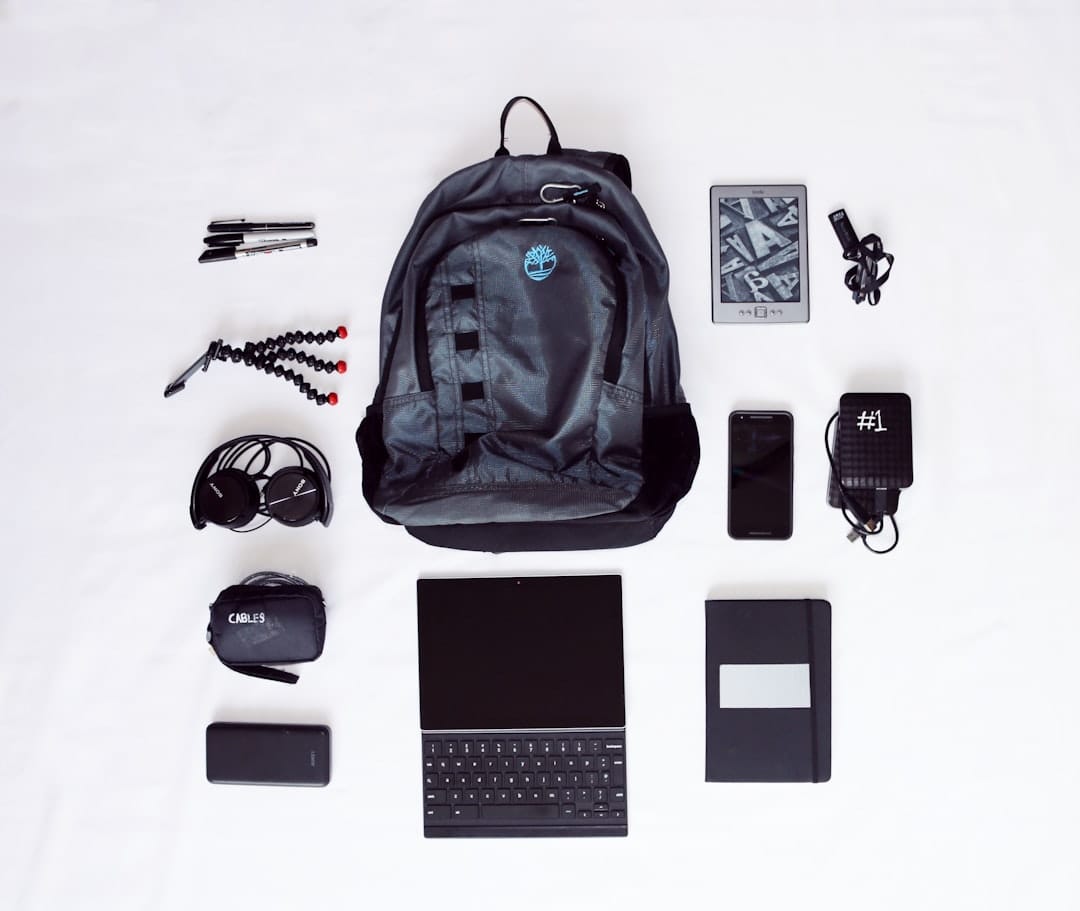
Most packing lists begin with clothes because clothes are visible and easy to imagine. But for anyone travelling to work, the correct starting point is the tech kit — because that is the category where a single missing item can end your productivity for a day or more. Lay out your laptop, its charger, and every cable it depends on. Then ask the uncomfortable question: if this exact bag were lost, what would still let me do my job? The answer usually reveals how fragile a single-device setup really is.
Start With the Work, Not the Wardrobe
Essential work tech items ranked by priority and typical replacement cost for remote professionals.
| Item | Must-Have | Weight (kg) | Typical Cost |
|---|---|---|---|
| Laptop | Yes | 1.5–2.0 | $800–2000 |
| Power adapter & cables | Yes | 0.3 | $40–80 |
| Portable charger | Yes | 0.2 | $30–60 |
| Wireless headphones | Recommended | 0.2 | $100–300 |
| USB hub / dock | Optional | 0.1 | $25–80 |
| External backup drive | Recommended | 0.15 | $50–120 |
Illustrative figures — composed for shape, not sourced
The essentials tier is short and non-negotiable. A laptop and its charger. A universal travel adapter that covers the regions you are heading to, ideally one with built-in USB and USB-C ports so it doubles as a multi-device hub. A power bank large enough to fully recharge your phone at least once — 10,000mAh is a comfortable sweet spot that still passes airline restrictions. A short, high-quality USB-C cable and a spare, because cables fail quietly and always at the worst moment. And noise-cancelling headphones with a microphone, which turn a chaotic airport gate or a thin-walled apartment into a passable meeting room.
Beyond the essentials sits the comfort tier, the small pieces of kit that separate surviving from working well. A lightweight laptop stand that folds flat can rescue your neck after a week of hunched cafe posture. A compact wireless keyboard and mouse make a hotel desk feel like a real workstation. If you rely on two screens at home, a portable USB-C monitor is heavier than most nomads want to carry but transformative for anyone doing spreadsheet-heavy or design work on the road. Decide honestly which of these you will actually use, because every item you pack "just in case" is weight you carry every single day.
Build Redundancy Into Your Connectivity
The single greatest source of remote-work anxiety abroad is not the wrong clothes — it is losing the internet at the wrong moment. Hotel wifi collapses. The advertised fibre at your apartment turns out to be a shared connection that dies every evening when the whole building streams. The cafe that promised strong signal has one router serving forty laptops. If your income depends on being online, your packing list has to treat connectivity as a system with backups, not a single point of failure.
The first layer is your phone as a hotspot, which means arriving with a working local data plan before you need it. An eSIM, purchased and installed before you land, means you step off the plane already connected rather than hunting for a SIM kiosk while your first meeting ticks closer. Buy a generous data allowance — tethering a laptop through a phone burns through gigabytes far faster than casual browsing does. Keep a note of your provider's top-up process so you are never stranded mid-call with an exhausted balance.
The second layer is knowing your fallback locations before you settle in. Scout two or three cafes or coworking spaces within walking distance of wherever you are staying, and confirm their wifi actually holds up during a video call rather than just loading a webpage. This kind of pre-planning matters even more if you are staying somewhere purpose-built for remote workers — many of the best co-living spaces for digital nomads advertise dedicated business-grade connections precisely because they know it is the thing their residents cannot live without. When connectivity is baked into your accommodation, half your packing anxiety evaporates.
Enjoying this? Get more like it.
Weekly picks for remote workers and digital nomads — tools, destinations, and honest takes, straight to your inbox.
Subscribe free →
{{IMAGE_2:digital nomad video call laptop cafe abroad}}
The Wardrobe That Works on Camera and on the Street
Clothing for work travel has one unusual requirement most travel wardrobes ignore: it needs to look good from the chest up, on a webcam, under whatever lighting the room happens to offer. This is liberating once you internalise it. You do not need a full formal outfit for every meeting — you need a small rotation of tops that read as professional on camera and pair with the practical, breathable trousers you actually want to wear while exploring a new city afterwards.
Build around a capsule of solid, mid-tone colours that photograph cleanly and hide creases. Merino wool is worth the investment here — it resists odour across multiple wears, dries overnight after a sink wash, and packs down to almost nothing. Two or three camera-ready tops, a layer you can throw on if a call turns unexpectedly formal, and bottoms in a wrinkle-resistant technical fabric will carry you through weeks. Roll everything rather than folding, use packing cubes to compartmentalise clean from worn, and you will fit far more than instinct suggests into a carry-on.
There is a psychological dimension worth noticing too. Getting dressed properly — even just from the waist up — signals to your own brain that the workday has begun, a boundary that is otherwise easy to lose when your bedroom and office are the same three square metres. The same principle that makes people fuss over the colours in a home office applies to what you wear in front of the lens: small environmental cues quietly shape how focused and capable you feel. Pack clothes that make you feel like the professional you are, not just the traveller you happen to be.
The Documents, Health, and Contingency Kit
The least glamorous section of any packing list is also the one that saves the trip when things go wrong. Documents come first: a passport with plenty of validity beyond your travel dates, physical and digital copies of anything a border might ask for, and printed confirmations for the first night's accommodation in case your phone dies at immigration. Store scanned copies in a cloud folder and email them to yourself, so that even a stolen bag cannot separate you from proof of who you are and where you are meant to be.
The health kit is small but disproportionately valuable. Any prescription medication in its original packaging with enough supply to outlast delays, plus a compact roll of the everyday remedies — painkillers, rehydration salts, plasters, anything you personally reach for. Time zones and travel are hard on the body, and being able to treat a headache or a rough stomach at 2am without hunting for an open pharmacy in an unfamiliar city is a quiet luxury. Add a refillable water bottle and a couple of high-protein snacks; low blood sugar during a long transit is the enemy of good decisions.
The Documents, Health, and Contingency Kit
Critical documentation and health items categorized by essentiality and storage format.
| Item | Digital Copy | Physical Copy | Priority |
|---|---|---|---|
| Passport & visa pages | Cloud backup | Yes | Critical |
| Travel insurance documents | Cloud backup | Yes | Critical |
| Vaccination records | Cloud backup | Optional | High |
| Prescription medications | Photo on phone | Yes | High |
| Bank & emergency contacts | Encrypted notes | Sealed envelope | High |
Illustrative figures — composed for shape, not sourced
Finally, protect the work itself. Travel insurance that explicitly covers your electronics and, ideally, work interruption is not an optional extra when your laptop is your livelihood. Back up everything to the cloud before you leave and confirm the backup actually completed. Carry a little emergency cash in a currency that is widely accepted, separate from your main wallet. None of this is exciting to pack, but it is the difference between a bad day and a ruined trip — and the peace of mind it buys makes you calmer, sharper, and more present in the places you have travelled so far to reach.
Pack Light Enough to Actually Enjoy the Travel
The final principle ties everything together: the goal is not to pack for every conceivable scenario, it is to pack light enough that the travelling itself does not exhaust you before the work even begins. Carry-on-only is not a badge of honour for its own sake — it is a practical decision that removes checked-bag anxiety, eliminates the risk of your work gear vanishing into a mishandled hold, and lets you move through airports and train stations with the freedom that makes long-term travel sustainable rather than draining.
Adopt a one-bag mindset and let it force honest choices. Almost everything you might forget can be bought at your destination; almost nothing you overpack will improve your trip. If you are just beginning this lifestyle, this ruthless editing is a skill that develops with each journey — and it pairs naturally with the broader shift covered in our guide on transitioning from a 9-to-5 to a digital nomad life. The less you own on the road, the more attention you have left for the actual reason you left home.
Refine your list after every trip. Note what you never touched and leave it behind next time; note the one thing you wished you had and add it. Over a handful of journeys, your packing list stops being a source of midnight dread and becomes a quiet, trusted routine — a bag you can assemble in twenty minutes because you already know, with certainty, that everything you need to keep earning and stay comfortable is in there.
The best work travel packing list is ultimately the one that disappears — the one so refined and reliable that you stop thinking about your gear entirely and start thinking about the meeting you are about to nail, the street you are about to wander down, and the strange new city that is, for now, your office. Pack for the work first, build in the redundancies that keep you calm, and carry only what earns its place. Do that, and the world becomes a workspace you can pick up and move whenever the mood takes you.
So the next time the suitcase is open on the bed at midnight, there is no dread — only the small satisfaction of a list you trust, a bag that closes easily, and a departure that feels less like a leap and more like a well-worn habit. That is what good packing buys you: not just the right things, but the freedom to stop worrying about them.