So, You Want to Become a Digital Nomad
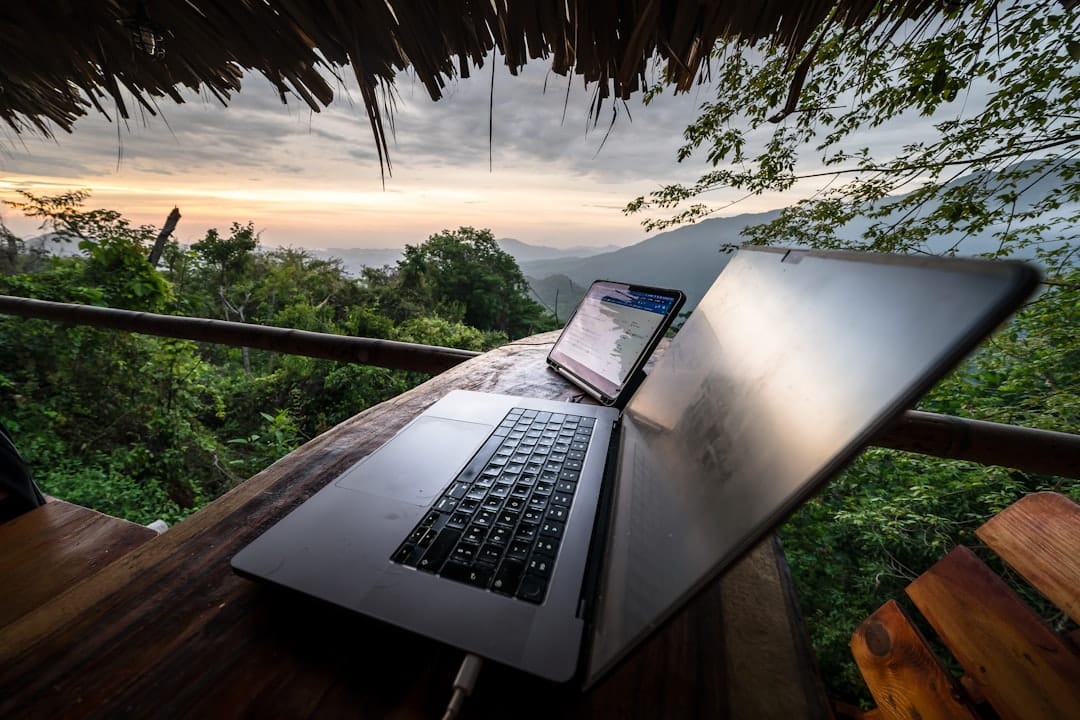
There is a particular kind of restlessness that settles in around the third Tuesday of a grey month. You glance out the window at the same street you've stared at for years, the coffee going lukewarm beside the keyboard, and a thought arrives uninvited: what if the desk could be anywhere? What if the window looked out on terracotta rooftops, or a fishing harbour, or a jungle canopy dripping after the afternoon rain? That thought is the seed. And if you're reading this, it has probably already taken root.
Becoming a digital nomad is less a single decision than a slow accumulation of them. It is choosing to earn a living from a laptop, yes, but it is also choosing to trade the comfort of the known for the friction and wonder of the unfamiliar. There is a romance to it that the highlight reels sell hard — the beach laptop shot, the rooftop pool, the passport thick with stamps. But the reality is quieter and, in its own way, far more rewarding: a rhythm of work and place that you build with your own hands.
This is a guide for the person standing at the edge of that leap. Not a checklist of visa fees and packing cubes — though those matter — but an honest walk through what the life actually asks of you, and what it gives back. Let's begin where every good journey does: with a clear-eyed look at the ground beneath your feet.
What the Life Actually Asks of You
What the Life Actually Asks of You
Core lifestyle demands and their impact on digital nomad readiness across key life areas.
| Life Area | Demand Level | Adaptation Required | Common Challenge |
|---|---|---|---|
| Time zones | High | Yes | Client overlap |
| Social bonds | High | Yes | Frequent goodbyes |
| Work discipline | High | Yes | Self-motivation |
| Logistics & admin | Medium | Yes | Visa paperwork |
| Financial flexibility | High | Yes | Currency fluctuation |
Illustrative figures — composed for shape, not sourced
Before the flights and the SIM cards, there is a temperament to reckon with. The digital nomad life rewards a certain comfort with ambiguity. Your Wi-Fi will drop during the client call. The apartment that looked spotless online will smell faintly of damp. The bank card will get blocked in a country where the customer service line only answers between nine and eleven. If these prospects fill you with dread rather than a mild shrug, that is worth knowing now — not as a disqualification, but as a signal about the kind of preparation you'll need.
The other quiet demand is self-direction. Nobody is going to notice if you sleep until noon and let the deadline slide, and nobody is going to celebrate the fact that you finished a project three days early while sitting under a fig tree. The structure that an office imposes on you — the commute, the meetings, the ambient pressure of colleagues — disappears entirely. In its place you must build your own scaffolding. Many new nomads underestimate how much they leaned on external structure until it is suddenly gone and the days begin to blur into one long, unproductive afternoon.
This is why so many experienced remote workers become almost religious about routine. Learning to protect your deep-work hours is a skill you can practise now, before you leave. Techniques like time blocking translate beautifully to life on the road, where the temptation to explore is constant and the discipline to say "first the work, then the world" becomes your quiet superpower.
Building the Income That Travels With You
The single most important thing to sort before you go is not the destination. It is the income. A location-independent living can take many shapes: a fully remote salaried role, freelance client work, a business you run, or some hybrid of all three. Each comes with a different flavour of freedom and a different flavour of anxiety. The salaried role offers stability but often ties you to a timezone. Freelancing offers flexibility but demands that you become your own sales team, accountant, and project manager all at once.
If you're still working out which path fits, it helps to survey the terrain of remote careers built for travel. The most portable skills tend to cluster around writing, design, software, marketing, and consulting — anything that produces value through a screen rather than through physical presence. The good news is that the appetite for genuinely remote talent has never been higher, and employers who once insisted on desks in the office have learned that output is what matters.
A word of hard-won wisdom: do not quit your job on a Friday and board a plane on Saturday. Build a runway. Ideally, you want to be earning remotely for a few months before you leave, so that the enormous variables of a new country are not compounded by the enormous variable of an untested income. Test your workflow from your own kitchen table first. If you can hit your targets from home, you can hit them from a café in Lisbon. If you can't, a change of scenery will not fix it.
Enjoying this? Get more like it.
Weekly picks for remote workers and digital nomads — tools, destinations, and honest takes, straight to your inbox.
Subscribe free →
The Money Machinery Nobody Warns You About
Here is where the dream meets the spreadsheet. The financial mechanics of nomad life are more intricate than the glossy accounts suggest, and getting them wrong is the most common reason people give up and go home. Currency fluctuations quietly eat into your budget. Foreign transaction fees nibble at every coffee. Health insurance for travellers is a genuine expense you cannot skip. And then there is the small matter of taxes, which do not politely vanish simply because you've changed postcodes.
The counterintuitive truth is that many destinations popular with nomads cost far less than the city you're leaving, which means your money can stretch further even as your life gets richer. The trick is knowing where your money actually goes. Accommodation is almost always the largest line item, and learning the art of the negotiated monthly rate — or exploring shared living arrangements — can transform your budget. A thoughtful approach to budgeting as a nomad is the difference between a life you can sustain for years and a lavish six months that ends in a scramble.
Set up your banking before you go. A multi-currency account, a card with no foreign fees, and a backup card stored separately from the first will save you countless headaches. Build an emergency fund that could get you home from anywhere at short notice. And keep meticulous records — future you, sitting across from an accountant, will be endlessly grateful for the receipts you filed rather than the ones you meant to.
ℹ️ This content is for informational purposes only and does not constitute financial advice. Consult a qualified financial adviser before making financial decisions. Full disclaimer →
Choosing Where to Land First
When it comes to your first base, resist the urge to go somewhere impossibly remote and romantic. The tiny island with the unreliable ferry and the single flickering internet café makes for a wonderful holiday and a terrible first month of remote work. For your maiden voyage, choose somewhere with proven infrastructure — fast, reliable connectivity, an established community of other remote workers, and enough amenities that you're not spending your energy solving basic logistics. There is a well-worn circuit of cities that have earned their reputation precisely because they get the fundamentals right.
Community, in particular, is worth optimising for. Loneliness is the underrated hazard of this lifestyle — it creeps in on the quiet Sunday when everyone back home is asleep and the new city still feels like a stranger. This is why so many first-timers thrive in co-living spaces built for remote workers. You arrive to an instant network of people who understand the strange shape of your days, a ready-made desk, and the kind of casual friendships that turn an unfamiliar city into a home in a matter of weeks.
Think, too, about timezone and pace. If your work depends on overlapping hours with clients or a team, a destination twelve hours out of sync will grind you down no matter how beautiful the sunsets. And consider the tempo of the place itself — a frenetic megacity and a sleepy coastal town will each shape your working life in profoundly different ways. Start somewhere forgiving, learn what you actually need, and let the more adventurous destinations come later, once you've found your footing.
The Kit and the Habits That Hold It Together
The Kit and the Habits That Hold It Together
Essential gear and software stack comparison for remote work stability and productivity.
| Tool Category | Tier-1 Essential | Tier-2 Recommended | Tier-3 Optional |
|---|---|---|---|
| Laptop spec | 8GB RAM minimum | 16GB RAM | 32GB+ workstation |
| Internet backup | Mobile hotspot | Dual SIM device | Portable WiFi unit |
| Time management | Calendar & task app | Time zone converter | Automation suite |
| Communication | Video conferencing | Slack or Telegram | Async recording tool |
Illustrative figures — composed for shape, not sourced
The gear conversation tends to spiral into gadget obsession, but the essentials are refreshingly few. A reliable laptop, a way to get online when the local connection fails — a portable hotspot or a local data SIM saves entire workdays — noise-cancelling headphones for the café hum and the overnight bus, and some approximation of an ergonomic setup so your neck survives the year. A foldable laptop stand and a compact keyboard weigh almost nothing and spare you the hunched agony of working off a low table.
Beyond the hardware, it is your systems that carry the load. Cloud storage so nothing lives on a single stealable device. A password manager. A VPN. And a lean, dependable stack of software for communication, project tracking, and time management. It is worth curating your toolkit for a seamless remote routine before you leave, so that changing continents never means learning new software on top of everything else.
The habits, though, are what truly hold the life together. Pack light — you will thank yourself at every airport and up every fifth-floor walk-up. Establish an anchor routine that travels with you regardless of location: the same morning ritual, the same first ninety minutes of focused work, the same weekly review. When everything around you is in flux, these small constants become the still centre that lets you actually enjoy the flux instead of being overwhelmed by it.
So, you want to become a digital nomad. The honest answer to whether you should is: probably, if you go in with your eyes open. The life is not an endless holiday, and anyone who sells it that way is selling something. It is work — the same deadlines, the same clients, the same Monday mornings — set against a backdrop that changes as often as you choose. What you gain is not escape from work but the freedom to weave it into a life shaped entirely by your own curiosity.
Start small. Build the income, test it from home, sort the money, pick a forgiving first base, and pack lighter than you think you can. Then buy the ticket. The version of you that's been staring out of that grey window is already halfway there — all that remains is to close the laptop, and open it again somewhere new.