Everything You Need to Pack for Two Weeks in Japan Carry-On Only
Two weeks in Japan with nothing but a carry-on sounds like a flex, but it's really just a decision you make once and then live inside for the entire trip. And honestly, Japan is the easiest hard country to do it in. The trains have luggage size restrictions that punish oversized bags, the cities are vertical and stair-heavy, and the laundromats are everywhere. A bloated checked bag is an active liability here, not a convenience.
This is the exact packing list that got me from Tokyo to Kyoto to Osaka and back over fourteen days, working remotely on the way, without checking a bag or doing the dreaded sit-on-the-suitcase-to-zip-it ritual. It covers spring/autumn shoulder-season weather, which is the sweet spot for layering and the worst-case scenario for over-packing because the temperature swings are real.
I'm not going to pretend this is minimalism for its own sake. Carry-on only travel packing is a productivity choice as much as an aesthetic one. Less to carry means less to track, less to lose, and zero time at the baggage carousel after a 13-hour flight. Here's what made the cut, what didn't, and the Japan-specific things nobody tells you until you're standing in a Lawson at 11pm wishing you'd known.
The Bag Itself, And Why It Matters More Than the Contents
The Bag Itself, And Why It Matters More Than the Contents
Comparison of carry-on bag features and specifications for two-week minimalist travel.
| Feature | 40L Hybrid | 35L Weekender | 45L Roller |
|---|---|---|---|
| TSA Carry-on Compliant | Yes | Yes | No |
| Compression Straps | Yes | Partial | Yes |
| Organization Pockets | Multiple | Standard | Minimal |
| Access While Rolling | Side panel | Limited | Not available |
| Best For | Minimalists | Light packers | Checked bags |
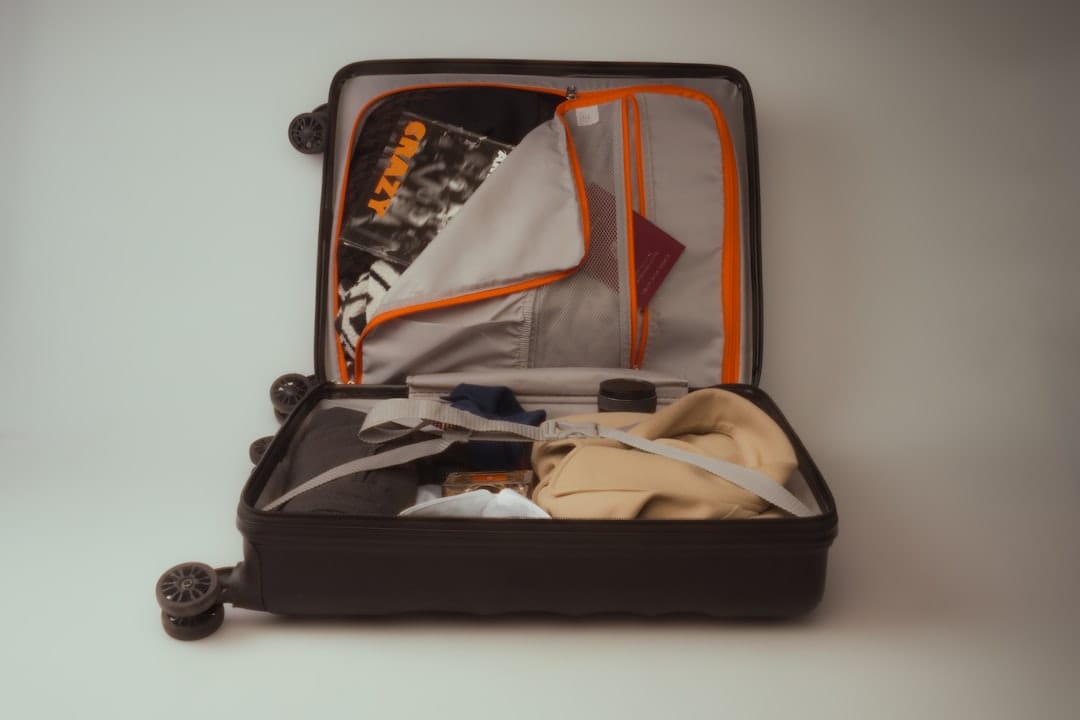
Start here, because the wrong bag undoes everything. I used a 40-litre soft-sided carry-on with a clamshell opening and a separate slim backpack for the under-seat "personal item". The clamshell matters: it lets you pack in two halves and see everything at once, which means you actually use what you brought instead of forgetting it lives at the bottom. Top-loading duffels are romantic and impractical for a trip with multiple stops.
My honest opinion: skip the giant 22-inch hard-shell roller that technically counts as carry-on. Japanese trains, especially the Shinkansen, now require reservations for oversized luggage, and dragging a rigid box up the stairs of an older station with no lift is genuinely miserable. A soft 40L bag with decent wheels or backpack straps gives you flexibility the hard-shell never will. If you can carry it up two flights of stairs without resentment, it's the right size.
The backpack is where your working life lives: laptop, a slim tablet, cables, passport, and a packable tote folded into a pocket. Japan is a cash-and-card society with surprisingly few public bins, so that tote earns its keep carrying your day's purchases and the trash you'll inevitably carry until you find a station with a bin. Choose a backpack that opens flat for the airport security tray and looks unremarkable on a packed Yamanote Line carriage.
The Clothes: A Two-Week Wardrobe From a Single Capsule
The secret to packing fourteen days into a carry-on is refusing to pack fourteen days of clothes. I packed for roughly five to six days and laundered everything once at the halfway point. The full list: five tops in a tight colour palette (charcoal, navy, off-white) that all work together, two pairs of trousers, one pair of shorts or a skirt depending on season, five sets of underwear and socks, a packable down jacket, a light merino layer, and one rain shell. That's it.
Merino wool is the cheat code nobody who's tried it will shut up about, and for good reason. It regulates temperature, resists odour for days, and dries overnight. Two merino t-shirts replace what would otherwise be four or five cotton ones, because you can wear them repeatedly without smelling like regret. Pair that with synthetic quick-dry items and you've cut your clothing volume roughly in half without cutting how many days you can go between washes.
Footwear is where carry-on dreams go to die, so be ruthless: one pair of comfortable, clean walking shoes worn on the plane, and one ultralight pair of slip-ons or sandals packed flat. You will walk 15,000 to 25,000 steps a day in Japan — this is not an exaggeration — so the shoes need to be broken in before you fly. And the slip-ons matter more than you'd think, because you'll be removing your shoes constantly: temples, traditional restaurants, ryokan, some changing rooms. Easy on-off saves your sanity.
Enjoying this? Get more like it.
Weekly picks for remote workers and digital nomads — tools, destinations, and honest takes, straight to your inbox.
Subscribe free →
The Tech and Work Kit That Earns Its Space
If you're working as you travel, the tech kit is non-negotiable and needs to be the most disciplined part of your pack. My setup: laptop, a foldable laptop stand the size of a tablet, a compact Bluetooth keyboard, a 65W GaN charger that handles laptop and phone from one brick, and a single organiser pouch for cables. Japan uses the same 100V two-flat-pin plug as North America, so US travellers need no adapter; everyone else needs exactly one. Don't pack a fistful of adapters "just in case".
A pocket Wi-Fi rental or a travel eSIM is the single best logistics decision you'll make. Japan's free public Wi-Fi is patchy and login-gated, and you'll want reliable connectivity for navigation, translation apps, and the occasional video call from a cafe. If you're juggling client work across time zones while moving between cities, the calmer your connectivity, the better — the same discipline that helps you manage multiple remote jobs without burning out applies to keeping your travel-work setup lean.
Skip the heavy laptop, the second monitor dreams, and the bulky over-ear headphones if you can tolerate good in-ear ones with noise cancellation. The foldable stand plus a packable keyboard turns any cafe table or hotel desk into a workable posture, which matters when you're hunched over for hours. There's a whole world of ergonomic accessories for remote workers, but on the road the rule is brutal: if it doesn't earn its weight every single day, it stays home.
Toiletries, Health, and the Japan-Specific Things You'll Forget
Here's the thing about toiletries in Japan: don't bother bringing much. Japanese convenience stores and drugstores are stocked with excellent travel-sized everything, and most hotels and ryokan provide shampoo, body wash, toothbrushes, and razors. I bring a quart bag with a solid shampoo bar, a small toothpaste, deodorant (genuinely hard to find good Western-style deodorant locally, so pack your own), sunscreen, and any prescription medication in its original packaging. That last point is not optional — Japan has strict rules on certain medications, so check before you fly.
Pack a small fold-flat tote and a couple of zip bags. Japan recycles meticulously and provides almost no public bins, which sounds inconvenient until you realise how clean it keeps everything. You'll accumulate snack wrappers, train tickets, and the occasional impulse buy from a vending machine, and you'll carry them until you find the right bin or your hotel. A handkerchief is the other quietly essential item — many public restrooms have no paper towels or hand dryers, and locals carry a small cloth for exactly this reason.
Two more things that punch above their weight: a slim cable lock for securing your bag in a coin locker or hostel, and a compact umbrella, because Japan's weather flips fast and the convenience-store umbrellas, while cheap, add clutter you don't need. If you're staying in shared spaces along the way, a few of the same instincts that make choosing remote-work accommodation easier apply here — pack so you can live out of a single open bag without exploding into the room.
The Laundry Strategy That Makes 14 Days Possible
The Laundry Strategy That Makes 14 Days Possible
Laundry frequency and method options for managing a two-week wardrobe with limited clothing.
| Method | Coin Laundry | Hotel Service | Hand Wash + Hang |
|---|---|---|---|
| Frequency Required | Every 5–7 days | Every 7–10 days | Every 2–3 days |
| Cost per Cycle | ¥500–800 | ¥3000+ | Free |
| Time Commitment | 2–3 hours | 24 hours | 30 minutes |
| Available Everywhere | Yes | Some locations | Yes |
| Recommended For | Urban areas | Business travel | Budget trips |
This is the part that turns "impossible" into "easy". You are not packing two weeks of clothes — you are packing five days and washing once. Coin laundries, called koin randori, are everywhere in Japanese cities, and many include dryers that finish a full load in under an hour. Plan one laundry session around day six or seven, ideally on an evening when you'd be resting anyway, and the whole carry-on equation collapses into something manageable.
For the in-between days, sink-wash your merino and quick-dry items at night and hang them to dry. Bring a tiny bottle of travel detergent or a few laundry sheets and a couple of clothespins or a flat braided travel clothesline. Merino and synthetics will be dry by morning; cotton won't, which is exactly why the capsule wardrobe above leans away from cotton. This single habit is the difference between a stuffed bag and a half-empty one.
One more mindset shift: leave a little room in the bag. Japan is a shopping country — stationery, snacks, ceramics, the occasional uniqlo find at half the price you'd pay at home. If you pack the carry-on to bursting on day one, you've got nowhere to put the things you'll actually want to bring back. A bag that arrives 75% full is a bag that leaves with room for the trip to have happened.
Two weeks in Japan with only a carry-on isn't a sacrifice — it's the version of the trip where you move faster, climb station stairs without cursing, and spend zero minutes at baggage claim. The whole system rests on three pillars: a soft 40L bag you can actually carry, a tight merino-led capsule wardrobe, and a single mid-trip laundry stop. Get those right and everything else is detail.
Pack the way you'd want to travel: light enough to say yes to a last-minute day trip, organised enough to open your laptop and work from a cafe in twenty minutes, and disciplined enough that the only thing you're carrying by the end is more than you arrived with. Japan rewards the traveller who travels light. Go be that traveller.