Carry On Only
There is a particular kind of freedom that arrives the moment you walk past the baggage carousel. The crowd clusters around the slow-turning belt, watching for their suitcases like anxious fishermen, while you stride toward the exit with everything you own slung over one shoulder. No waiting. No lost-luggage queue. No paying an airline an extortionate fee to fly a bag you didn't need anyway. Just you, the doors, and the warm unfamiliar air of somewhere new.
Carry-on-only travel is one of those skills that sounds like deprivation and turns out to be liberation. When you live and work on the move, the case for travelling light stops being about saving twenty minutes at the airport and becomes a way of moving through the world with less friction. Fewer decisions. Fewer things to lose, drag up cobbled streets, or worry about. A single bag forces a kind of clarity that bleeds into the rest of how you travel and how you work.
This is not a minimalist boot camp, and nobody is going to make you weigh your socks. Think of it instead as a long conversation about what you actually use versus what you carry out of habit and fear. Once you have packed for a month inside a forty-litre bag and discovered you never opened half of it, the old way of travelling starts to feel faintly absurd. Let's walk through how to get there.
Why Carry-On Only Changes How You Travel
The obvious benefits get listed everywhere: speed, savings, never losing a checked bag. They are real, and over a year of frequent flights they add up to hundreds of dollars and many recovered hours. But the deeper shift is psychological. When everything you own fits on your back, you stop being a tourist hauling a life behind them and start being someone who simply lives wherever they are. You can change cities on a whim. You can walk forty minutes from the station to your apartment instead of negotiating a taxi, because the bag is light enough to carry. The city opens up because you are not anchored to your luggage.
There is also a quiet financial logic that fits neatly into the way location-independent professionals already think about money. The same discipline that helps you find cheap monthly rentals and budget intelligently as a nomad applies to what you carry. Owning less means buying less, replacing less, and insuring less. The bag becomes a constraint that keeps the rest of your spending honest, because every new purchase has to earn its place by displacing something else.
For anyone who works remotely, there is a practical edge too. A carry-on setup keeps your laptop, hard drives, and documents on your person at all times. No baggage handler ever touches the tools your income depends on. There is no scenario where you land for a client deadline and your work machine is sitting on a tarmac in a different country. That alone is reason enough for most working travellers to commit.
Building Your Core Carry-On Travel Packing List
Start with the bag itself, because everything flows from that choice. A forty to forty-five litre travel pack or a wheeled cabin case sized to the strictest airline you fly is the foundation. Budget carriers vary wildly, so pack to the smallest dimensions you expect to encounter rather than the most generous, and you will never be caught out at a gate paying a fee that costs more than the flight. A bag that opens flat like a suitcase, rather than top-loading like a hiking pack, makes living out of it far less infuriating.
For clothing, the principle is a tight, repeatable rotation in a coherent colour palette. Think in terms of a week of outfits where everything mixes with everything else: a handful of tops, two or three bottoms, layers that stack for cold and strip down for heat, and one item that can pass as smart if you suddenly need to look presentable on camera or at a co-working event. Merino wool earns its premium here because it resists odour and can be worn many times between washes. You are not packing for every possible scenario. You are packing for the climate you are going to and trusting that laundry exists everywhere humans live.
Then there is the work kit, which for most remote professionals is the non-negotiable core the rest packs around. Laptop, a compact charger that handles multiple devices, a small power bank, a universal adapter, and noise-cancelling earbuds for working in noisy cafes and dormitories. If your back tends to complain, a lightweight foldable laptop stand transforms any table into a workable desk, and it is one of the few bulky-adjacent items worth its space. Anyone refining a portable setup will recognise the overlap with building a proper minimalist home office as a digital nomad — the goal in both cases is maximum capability from minimum footprint.
Enjoying this? Get more like it.
Weekly picks for remote workers and digital nomads — tools, destinations, and honest takes, straight to your inbox.
Subscribe free →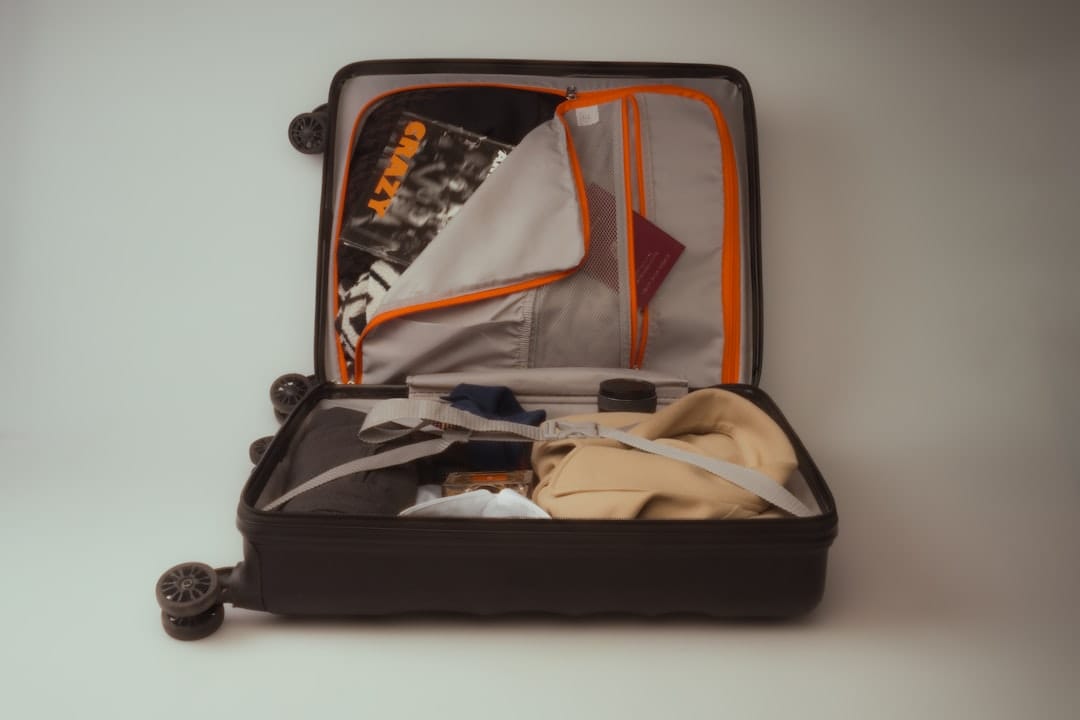
The Common Mistakes That Sabotage Light Packers
The Common Mistakes That Sabotage Light Packers
Comparison of common packing mistakes and their impact on carry-on travel success.
| Mistake | Impact | Prevention tip |
|---|---|---|
| Over-packing shoes | Wasted space, excess weight | Limit to 2–3 versatile pairs |
| Duplicate items | Reduced outfit combinations | Plan outfits before packing |
| Forgetting weight limits | Gate-check or fees at desk | Weigh bag before airport |
| Too many full-size products | Bathroom clutter, TSA holds | Use travel-size containers |
The first and most universal mistake is packing for fantasy rather than reality. We all carry a mental image of an idealised trip: the hiking we will surely do, the fancy dinner we will surely attend, the gym we will surely use every morning. So in go the boots, the dressy outfit, the resistance bands. Then reality unfolds in its ordinary way, and three weeks later those items return home unworn, having travelled thousands of miles for nothing. The honest test for any item is not whether you might use it but whether you used something like it on your last trip. Past behaviour is a far better predictor than aspiration.
The second mistake is over-investing in toiletries and liquids, which devour both space and your liquids allowance. Most of what you carry can be bought at your destination, often for less, and travel-sized bottles you refill yourself beat the bloated full-sized versions that creep in when you are not paying attention. Solid alternatives — shampoo bars, solid sunscreen, toothpaste tabs — sidestep the liquids rule entirely and never leak across your clothes at altitude. A leaking bottle of conditioner inside a single bag is a small catastrophe with no spare set of clothes to fall back on.
The third mistake is treating the packed bag as finished. The best carry-on travellers prune continuously. Every time you arrive somewhere, you notice what you reached for and what you ignored, and the ignored items become candidates for donation or shipping home. A bag is not a monument to be assembled once; it is a living system that gets leaner the longer you travel. Resist the temptation to refill the gaps that open up as you remove things. Empty space in a carry-on is not a problem to be solved. It is a buffer for souvenirs, for the jacket you buy when the weather turns, and for the simple pleasure of a bag that closes easily.
Adapting Your Bag to Climate and Destination
The single biggest variable in any packing list is temperature, and it is worth packing to the dominant climate of your route rather than its extremes. If you are spending three months across warm coastal cities, packing a winter coat for the one cold weekend in the middle is a poor trade. Layers solve this elegantly: a base layer, a light insulating mid-layer, and a packable waterproof shell cover a remarkable range of conditions between them, and they compress to almost nothing. Cold-weather travel is the genuine exception where a single bag gets harder, because bulky insulation simply takes more room — and even then, wearing your heaviest items onto the plane buys back valuable space.
Destination culture matters too. Some places expect more modest dress for temples or formal settings, and a lightweight scarf or a single pair of long trousers covers most of those moments without committing serious space. Beach-heavy itineraries lean toward quick-drying fabrics and a swimsuit that doubles for swimming and lounging, which pairs naturally with the rhythm of the best beach remote work destinations. Research the laundry situation at your accommodation before you arrive; a place with a washing machine effectively halves the clothing you need to carry, because you can wash and rotate rather than packing for the entire stay.
For longer slow-travel stints in one base, your packing strategy shifts again. When you settle into a city for a month, the bag stops being a daily companion and becomes storage, which means you can carry slightly more of what makes a temporary home feel comfortable. A favourite mug, a paperback, a small item that grounds you. This is the gentle paradox of carry-on living: travelling light between places is what earns you the steadiness to settle deeply into each one.
Living Out of One Bag for the Long Haul
Living Out of One Bag for the Long Haul
Feature comparison of top carry-on bags suited for extended one-bag travel.
| Feature | Budget bag | Mid-range bag | Premium bag |
|---|---|---|---|
| Capacity (litres) | 35–40L | 40–45L | 45–50L |
| Durability | 1–2 years | 3–5 years | 5+ years warranty |
| Organization pockets | Basic | Multiple compartments | Full modular system |
| Comfort on long trips | Limited padding | Padded straps, back panel | Ergonomic, weight distribution |
| Best for long-haul one-bag | Short trips only | 1–3 month journeys | 6+ month nomad life |
There is a difference between packing carry-on for a two-week holiday and doing it indefinitely as a way of life. Over months, small frictions that you could ignore on a short trip start to matter. The thin towel that never quite dries, the charger cable fraying at the plug, the one pair of shoes wearing through. Long-term carry-on living rewards buying fewer but better items and replacing them promptly when they fail, rather than limping along with gear that quietly drains your patience every single day.
Routine becomes your ally. Living from one bag works best when you have systems: a fixed home for the passport and wallet, packing cubes that always hold the same categories, a wash-and-dry cycle you run on the same day each week. These small rituals remove the daily friction of searching and deciding, and they make moving on quick and almost thoughtless. The same instinct for systems that helps people transition smoothly from a nine-to-five to a nomadic life carries over here: structure is what makes freedom sustainable rather than chaotic.
Finally, give yourself permission to evolve. The bag you pack in your first month will not be the bag you carry in your second year. You will discover that you never wear half your tops, that you desperately wish you had a better rain jacket, that the gadget you were sure you needed has gathered dust the entire time. This ongoing refinement is part of the pleasure, not a sign of failure. Every adjustment makes the next leg of the journey a little lighter, both literally and in the quieter sense of carrying less weight in your mind.
Carry-on-only travel is less a packing technique than a posture toward the world. It asks you to trust that you can find what you need wherever you go, that you do not have to prepare for every imaginable contingency, that lightness is its own reward. The first time you breeze past the baggage carousel into a new city with everything on your back, you understand the appeal in your body, not just your head.
Start smaller than feels comfortable. Pack the bag, then remove a quarter of it, then go. You will not miss what you left behind, and you will return home with a clearer sense of what a good life on the move actually requires. It is far less than you think — and that, in the end, is the whole point.