Carry-On Only: What I Pack to Travel the World
There is a particular kind of freedom that arrives the moment you walk straight past the baggage carousel. Other travellers crowd the belt, watching their suitcases circle like impatient sharks, while you sling a single bag over your shoulder and stride out into the warm chaos of a new arrivals hall. No waiting. No worrying whether your luggage made the connection in Doha. No paying a fortune in oversized fees at the gate. Just you, your essentials, and the open road.
Carry-on only travel has a reputation for being austere — the domain of minimalist evangelists who own three shirts and judge you for owning four. But the truth is gentler and far more practical than that. Travelling light is less about deprivation and more about clarity. When you carry everything you need on your back, you stop carrying everything you fear you might need. You learn the difference between essentials and emotional ballast, and that lesson follows you long after the trip ends.
This is a guide built for the long haul — for the location-independent professional who needs to work, sleep, present well on a video call, and survive a two-month trip across three climates, all from one bag. Whether you are bound for a co-living space in Lisbon or a beach town in Bali, here is how to pack for the world without ever checking a bag.
Why Carry-On Only Changes How You Travel
The first thing carry-on only travel does is collapse the distance between deciding to go and actually going. With everything already living in one bag, there is no marathon packing session, no anxious inventory of forgotten chargers, no last-minute dash to weigh the suitcase on the bathroom scale. You become the kind of traveller who can say yes to a weekend in another country on a Thursday afternoon and be on a train by Friday morning. That spontaneity is the quiet superpower of the light packer.
It also changes your relationship with money. Checked bag fees, especially on budget carriers, can quietly double the cost of a cheap flight. Avoid them across a year of travel and the savings stack into something meaningful — funds better spent on a long lunch overlooking a harbour, or a few extra nights in a place you have fallen for. If you are serious about stretching a nomad income, every avoided fee is part of the bigger picture, and it pairs neatly with the broader habits covered in our guide to budgeting for digital nomads.
Perhaps most importantly, carrying less makes you more mobile in the moment. Cobblestone streets, stairwells in old buildings with no lift, crowded local buses, the long walk from a remote bus stop to your accommodation — all of these become trivial when you are not dragging forty kilos behind you. A light bag means you move through the world the way the locals do, unencumbered and quick, able to duck into a side-street café on a whim because you are not chained to your luggage.
The Bag Itself: Choosing Your One True Companion
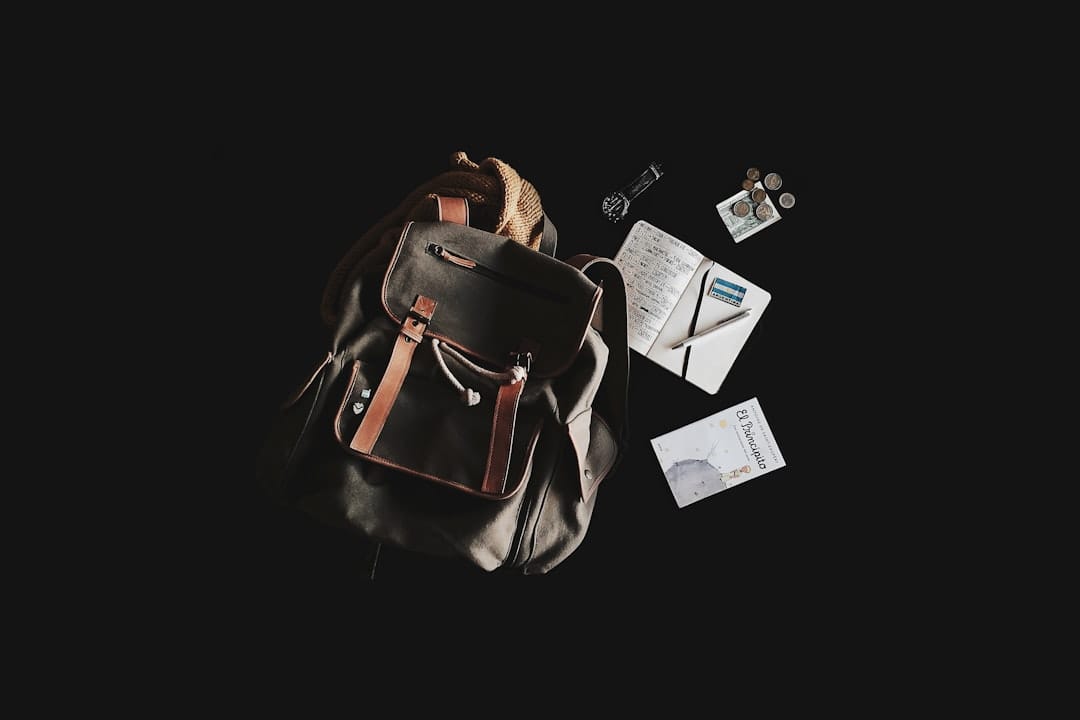
Everything begins with the bag, because the bag sets the rules. Choose something around 40 litres — large enough to hold a full life, small enough to slide into the overhead bin without a fight. The eternal debate is backpack versus wheeled carry-on, and the honest answer is that it depends on your terrain. A backpack wins on uneven streets, train platforms, and anywhere with stairs; a wheeled case wins on smooth airport floors and when your shoulders are tired. Hybrid bags that offer stowable straps split the difference, though they tend to be heavier empty.
Look for a clamshell opening that unzips fully like a suitcase rather than a top-loading hiking pack. This single feature transforms how you live out of the bag, letting you see everything at a glance and pack in neat layers instead of excavating to the bottom for a clean shirt. Internal compartments, a padded laptop sleeve, and compression straps round out the essentials. Resist the urge to buy the biggest bag that technically qualifies as carry-on — a smaller bag is a discipline, a gentle enforcement of the lightness you are trying to cultivate.
Pair your main bag with a small personal item — a packable daypack or a structured laptop tote that slides under the seat in front of you. This becomes your work bag, your day-trip bag, and your in-flight bag all at once. The two-bag system means your tech and valuables stay with you at all times while your clothes and gear ride above. When you arrive at a co-living space and want to head out to explore, you simply grab the daypack and go.
Enjoying this? Get more like it.
Weekly picks for remote workers and digital nomads — tools, destinations, and honest takes, straight to your inbox.
Subscribe free →{{IMAGE_2:folded clothing rolled into packing cubes neatly organized}}
The Clothing Capsule: Fewer Pieces, More Outfits
The clothing capsule is where most carry-on attempts succeed or collapse. The principle is simple: build a small wardrobe in which everything coordinates with everything else. Choose a tight colour palette — navy, grey, black, olive, with a single accent colour if you must — so that any top works with any bottom. Five or six tops, two or three bottoms, one layer for warmth, and one piece that reads as smart enough for a client call or a nice dinner. From this modest set you can generate weeks of distinct outfits, and nobody you meet along the way will ever notice the repetition.
Fabric matters more than quantity. Favour merino wool and technical synthetics that resist odour, dry overnight, and shrug off wrinkles. A merino t-shirt can be worn three or four days between washes without complaint, which means you can carry less and wash in the sink. The ability to do laundry in a hotel basin and have it dry by morning is the secret engine of carry-on travel — it lets you pack for a week and travel for a year. Roll your clothes rather than fold them, slot them into packing cubes, and your bag will hold far more than its volume suggests while staying ruthlessly organised.
Footwear is the great space thief, so limit yourself to two pairs: one comfortable walking shoe you can wear all day across a city, and one lighter option such as a sandal or a packable flat that covers everything from beach to evening. Wear the bulkiest pair on the plane. The same wear-the-heavy-stuff logic applies to your jacket and any chunky layers — your body is free luggage that no airline will ever weigh.
The Tech and Work Kit That Keeps You Earning
For the remote worker, the tech kit is non-negotiable, and it deserves the most thought. Your laptop is the heart of it, ideally a lightweight machine that can handle your workload without a charger the size of a brick. Add a universal travel adapter, a multi-port USB-C charger that powers your laptop and phone from a single wall socket, and a slim power bank for long travel days. A compact cable organiser keeps the inevitable nest of cords from becoming a black hole in the bottom of your bag.
Beyond the basics, a few small items punch well above their weight. Noise-cancelling earbuds turn a chaotic café or a screaming-baby flight into a focused work session. A foldable laptop stand and a featherweight Bluetooth keyboard transform any surface into an ergonomic desk, sparing your neck on the long days. A backup of your essential documents stored in the cloud, plus a physical copy of anything critical, means a lost device never costs you a contract. These are the tools that let you stay productive from anywhere, and they slot neatly alongside the wider setup ideas in our roundup of must-have tools for a seamless remote work routine.
Connectivity is the lifeline that makes all of this work. A reliable eSIM that activates the moment you land removes the panic of hunting for a SIM card in an unfamiliar airport, and a small travel router can turn a sketchy café connection into a stable, secure network for your work calls. Carry one good pair of over-ear or in-ear headphones for meetings, because nothing erodes a client's confidence faster than echoing audio from a tinny laptop speaker. With these in your personal item, you can land in a new country and be working professionally within the hour.
Toiletries, Health, and the Art of the Small
Liquid restrictions are the carry-on traveller's constant companion, but they are easily tamed. Decant everything into small reusable bottles and keep the total within the regulation clear bag. Better still, switch to solids wherever you can: shampoo bars, solid conditioner, bar soap, and toothpaste tablets sidestep the liquid rules entirely, last far longer than their bottled cousins, and never leak across your clean clothes mid-flight. A solid kit fits into a pouch the size of a paperback and rarely needs replacing for months.
Health items deserve a dedicated little kit: a strip of any prescription medication in its original packaging, basic painkillers, plasters, rehydration sachets for the days your stomach disagrees with the local water, and any personal essentials that might be hard to find abroad. A small quick-dry travel towel is one of those unglamorous items you will be quietly grateful for again and again, useful at hostels, beaches, and the occasional accommodation that runs short on linens. Pack what genuinely keeps you well, and trust that pharmacies exist nearly everywhere for the rest.
The mistake first-timers make is packing for every imaginable scenario — the just-in-case mindset that fills a bag with items used once a year, if ever. Experienced light packers learn to ask a single question of every object: will I miss this enough in the next week to justify carrying it for the next month? Most things fail that test. Whatever you forget can almost always be bought, borrowed, or lived without, and the lightness you gain is worth far more than the rare inconvenience.
Carry-on only travel is, in the end, a practice rather than a one-time decision. Your first trip will feel slightly over-packed; by your third, you will be quietly removing items you never touched. The bag teaches you, trip by trip, what you actually use and what you only feared you might. And as your packing list shrinks, something else expands — your willingness to move, to say yes, to follow a recommendation to a town you had never heard of, because nothing is holding you in place.
So choose your one good bag, build a capsule you love, pack the tech that keeps you earning, and leave the rest behind. The world is far easier to explore when you are not carrying so much of it on your back. Wherever you land next — a buzzing capital, a quiet slow travel city, or a beach town where work and waves blur together — you will arrive ready, light, and free to begin the moment you step off the plane.