Why does almost nobody mention Malaysia for digital nomads, especially in Europe?
Ask a room full of remote workers in Lisbon, Berlin, or Tbilisi to name the great digital nomad hubs of Southeast Asia, and the answers come fast and familiar. Bali rolls off the tongue first. Then Chiang Mai, the original. Maybe Da Nang or Ho Chi Minh City if the crowd has been doing this a while. But mention Malaysia and you'll often get a pause, a slight tilt of the head, the polite confusion of someone trying to place a country they've passed through on a layover but never truly stopped in. It's strange, when you think about it, because Malaysia ticks almost every box on the nomad checklist — and ticks several of them better than its more famous neighbours.
Part of the silence is geographic. From a European starting point, the mental map of Asia tends to get drawn in broad, lazy strokes — Thailand for the beaches, Vietnam for the value, Bali for the Instagram. Malaysia slips through the gaps of that map, neither the cheapest nor the most photogenic in the regional cliché, and so it quietly disappears from the conversation. The irony is that this very invisibility is part of what makes it so good. You get the infrastructure of a developed economy, the warmth of tropical living, and the absence of the saturated, slightly burned-out nomad scenes that now define the headline destinations.
So let's correct the record. This is a long, honest look at why Malaysia — and Kuala Lumpur in particular, though Penang deserves its own love letter — belongs in any serious discussion of where to base yourself as a location-independent professional. Not because it's a secret you should hoard, but because the gap between its quality and its reputation is one of the widest in the region.
The Reputation Problem: Why Malaysia Hides in Plain Sight
The Reputation Problem: Why Malaysia Hides in Plain Sight
How Malaysia compares to rival Southeast Asian destinations on nomad perception and online visibility metrics.
| Metric | Malaysia | Thailand |
|---|---|---|
| Blog mentions (annual) | ~340 | ~2,100 |
| Online nomad community size | Moderate | Very active |
| Nomad visa availability | No official scheme | Yes (DTV) |
Reputation in the nomad world is built on momentum, and momentum compounds. A destination becomes popular, the early arrivals post about it, the coworking spaces open, the bloggers write the guides, and soon there's a self-sustaining gravity that pulls in everyone else. Chiang Mai had that head start more than a decade ago. Bali rode the wellness wave and never looked back. Malaysia, for whatever reason, never had its viral moment — and without that initial spark, the flywheel never started spinning. The result is a country that's objectively excellent for remote work but starved of the word-of-mouth that fills cafes elsewhere.
There's also a subtler cultural reason. Malaysia doesn't market itself as an escape fantasy. It isn't selling rice terraces and temple sunrises the way Bali does, nor the backpacker romance of Vietnam. It's a modern, multi-ethnic, fast-developing nation that feels less like a postcard and more like an actual functioning place — which, paradoxically, makes it harder to sell to an audience trained to chase the picturesque. Kuala Lumpur looks like a real city because it is one. That can read as unremarkable on a feed, even though it's exactly what makes daily life so frictionless once you're on the ground.
For Europeans specifically, there's the distance illusion. Southeast Asia gets bundled into one mental category — far, hot, cheap — and within that bundle the loudest names win. Few people sit down and compare Malaysia's English proficiency, healthcare, or transport against Thailand's. They just go where everyone else went. If you're willing to break from that herd, the upside is a place where you can do excellent work and live a comfortable life without elbowing through crowds of fellow laptop-toting expats for a table near a power outlet.
The Practical Case: Infrastructure That Just Works
Start with the internet, because for remote workers everything else is secondary. Malaysia's connectivity is genuinely strong — fibre is widespread, mobile data is cheap and fast, and you can buy a generous prepaid SIM at the airport for the price of a coffee back home. The reliability matters more than the headline speeds. You're not gambling on whether a video call will hold; it simply does. After a stint somewhere with flaky power and patchy bandwidth, the boring dependability of Malaysian infrastructure feels like a quiet luxury you didn't know you were missing.
Then there's the language. English is widely spoken across Malaysia — not as a tourist-facing performance, but as a genuine working language used in business, signage, and everyday transactions. You can open a bank conversation, explain a medical symptom, negotiate a rental, or ask a stranger for directions without the friction that defines daily life in much of the region. This single factor removes an enormous amount of cognitive load. Tasks that elsewhere become small expeditions — sorting out a SIM, finding a co-working desk, dealing with a landlord — collapse into ordinary errands, freeing up the mental energy you'd rather spend on your actual work.
Healthcare seals the practical argument. Malaysia is a genuine medical-tourism destination, with modern private hospitals, English-speaking doctors, and costs that make European insurance excesses look absurd. Combine that with an international airport that connects you to the entire region in a few hours and you have a base from which the rest of Asia opens up. If you're weighing the numbers carefully, it's worth pairing this with a proper look at your spending — the principles in our guide to budgeting for digital nomads map neatly onto Malaysian cost realities, where a comfortable life rarely demands a painful budget.
Enjoying this? Get more like it.
Weekly picks for remote workers and digital nomads — tools, destinations, and honest takes, straight to your inbox.
Subscribe free →
The Living Experience: Food, Cost, and the Texture of Daily Life
Here is where Malaysia stops being a sensible spreadsheet decision and starts being a place you fall for. The food is the headline — a glorious collision of Malay, Chinese, and Indian traditions that turns even a casual lunch into something worth photographing. You drift into a humble hawker centre, sit on a plastic stool under a whirring fan, and for a couple of euros you're handed a plate of nasi lemak or char kway teow that quietly humbles the overpriced versions you've eaten in Europe. Breakfast is roti canai pulled and slapped on a hot griddle; the afternoon is a frosted glass of teh tarik, the tea pulled into a froth between two metal cups. Eating becomes a daily pleasure rather than a chore, and you never have to cook to eat well.
The cost of living rewards you in less glamorous ways too. Apartments in Kuala Lumpur — often in towers with a pool, a gym, and a co-working lounge built right in — rent for a fraction of comparable space in any Western capital, and frequently less than the established nomad hubs that have inflated under demand. You can live in a sleek high-rise with a skyline view for what a cramped studio costs back home. If you'd rather not commit to a long lease, the country's growing crop of co-living options makes a soft landing easy, and our guide to finding the best co-living spaces for remote workers is a useful starting point for sorting the genuinely good from the merely marketed.
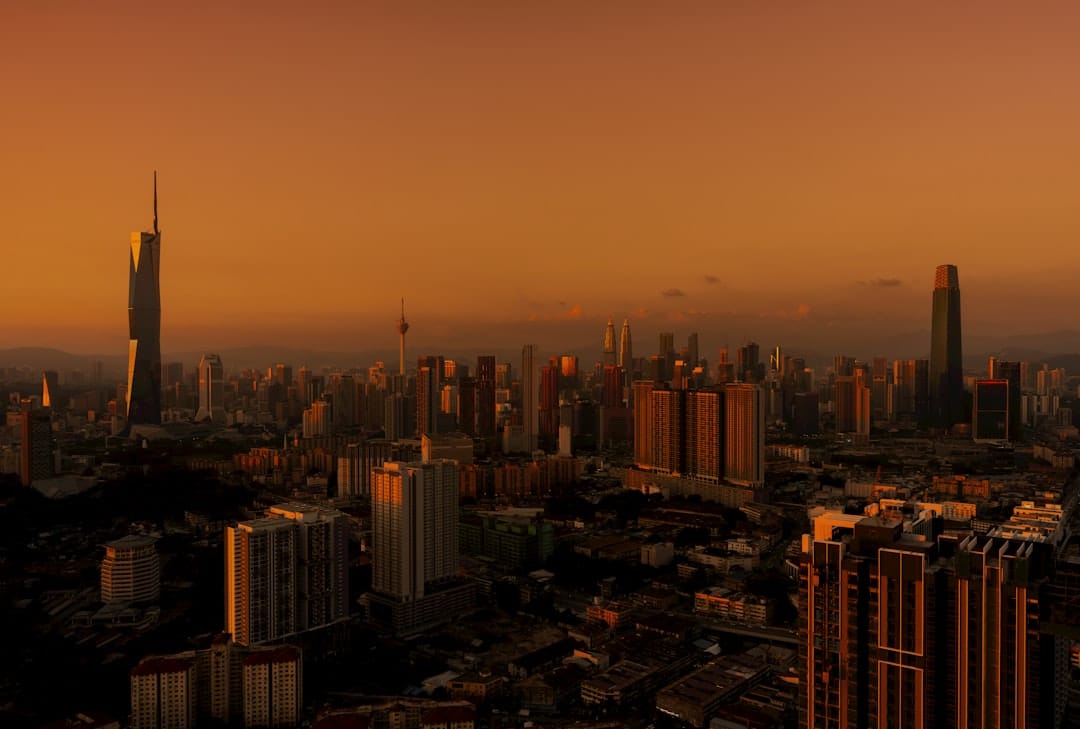
Daily life has a particular texture worth describing. Kuala Lumpur is vertical and air-conditioned, threaded with elevated trains and gleaming malls that double as social hubs in the heat. Penang, by contrast, is low and weathered and human-scaled, its George Town heritage core a maze of shophouses, street art, and coffee roasters where you can walk everywhere. Between the two you can build a rhythm that suits your temperament — the energy of the capital or the slow charm of the island — and switch when you tire of one. That optionality, within a single country and a single visa, is rarer than it sounds.
Making It Work: Visas, Base-Building, and Avoiding the Pitfalls
Making It Work: Visas, Base-Building, and Avoiding the Pitfalls
Visa options and renewal requirements for digital nomads choosing Malaysia as a long-term base.
| Visa Type | Duration | Renewal | Remote Work Allowed |
|---|---|---|---|
| Tourist (Visa Exempt) | 90 days | Border runs only | Yes |
| Social Visit Pass | 30 days | Extendable once | Yes |
| MM2H (Multi-Entry) | 10 years | Automatic annual | Yes |
| Employment Pass | 2 years | Requires sponsorship | Yes |
The administrative side has improved markedly. Many nationalities, Europeans included, receive a generous visa-free stamp on arrival, which makes a first reconnaissance trip effortless — you can simply show up and stay long enough to decide whether the place fits. For those wanting to settle in properly, Malaysia introduced a dedicated remote-worker pass aimed precisely at location-independent professionals, designed to give a longer, legitimate runway than visa-hopping allows. The details and thresholds shift over time, so verify the current requirements before you build plans around them, but the direction of travel is unambiguous: the country actively wants people like you to stay.
The most common mistake newcomers make is treating Malaysia like a beach holiday and then feeling vaguely let down. Kuala Lumpur is not a beach town, and if you arrive expecting Bali's sands a tuk-tuk away, you'll misjudge it. The pleasures here are urban and culinary and convenient, not coastal — and the islands and rainforest are weekend trips, not the daily backdrop. Set your expectations to city-with-jungle-on-the-edges rather than tropical-paradise and the experience clicks into place. A second pitfall is underestimating the equatorial heat and humidity, which can quietly sap your energy and focus; build your day around the cooler mornings and the air-conditioned afternoons rather than fighting the midday sun.
The other thing to plan for is the comparatively thin nomad community — which is, of course, the flip side of the very obscurity that makes Malaysia appealing. You won't stumble into a ready-made social scene the way you might in Chiang Mai, so be a little more deliberate. Pick a co-working space, show up to the same cafe regularly, and treat community as something you build rather than something you join. If you find the isolation creeping in, that's worth taking seriously — the lessons in our piece on mastering digital nomad burnout apply doubly in a place where you have to be intentional about connection.
Who Malaysia Is Actually For
Malaysia rewards a particular kind of remote worker — the one who values substance over scene. If your priority is a frictionless base with fast internet, real healthcare, extraordinary food, and a low cost of living, and you don't need a buzzing hostel-bar nomad culture to feel at home, it's hard to do better. It suits those a little further along in their working lives, people running businesses or holding down demanding remote roles who want their environment to support their output rather than constantly distract from it. The quietness that disappoints the party crowd is exactly what lets you concentrate.
It also makes an outstanding regional hub. From Kuala Lumpur you can be in Bangkok, Singapore, Bali, or half a dozen other destinations in a short, cheap flight, which means you can keep Malaysia as your stable base and treat the rest of Southeast Asia as a series of weekend or month-long detours. That hub-and-spoke approach — a comfortable home with adventures radiating outward — is one of the most sustainable ways to live this lifestyle without the exhaustion of constant movement. Malaysia, precisely because it's so easy to live in, makes an unusually good anchor.
So why does almost nobody mention Malaysia, especially in Europe? Because the nomad map is drawn by repetition, and repetition favours the loud over the good. The famous places earned their fame, but fame and fit are not the same thing — and the gap between Malaysia's reputation and its reality is wide enough to drive a comfortable, productive year of remote work straight through. The cafes aren't crowded, the food is unbelievable, the internet never blinks, and the rent leaves room to breathe.
Maybe it's better that the secret stays quiet a while longer. But if you're tired of fighting for an outlet in an overrun cafe halfway around the world, consider booking the layover you'd normally skip — and actually stepping outside the airport this time. You might find that the country everyone forgets to mention is the one you've been looking for.