Who is WeWork's biggest competitor?
There's a particular kind of Monday morning that only nomads and remote workers truly understand. You've just landed in a new city — maybe it's your third this quarter — and you need a desk, fast. Not the corner of your Airbnb kitchen, not a coffee shop with one outlet and passive-aggressive baristas, but a real workspace: reliable Wi-Fi, a door you can close for calls, maybe an espresso machine that doesn't judge you for your third cup. For years, WeWork was the obvious answer to that particular prayer. Glass walls, neon signs, cold brew on tap, and a location in virtually every city worth working in. But the coworking landscape has shifted dramatically, and the question "who is WeWork's biggest competitor?" is no longer a simple one.
WeWork's turbulent journey — from a $47 billion valuation to a bankruptcy filing in 2023 — cracked open a door that a dozen serious competitors have since walked through. IWG (the parent company of Regus and Spaces), Industrious, Common Desk, Convene, and a constellation of boutique operators have all stepped into the gap. For digital nomads and location-independent professionals, this is genuinely good news. Competition drives quality, variety, and price sensitivity. The best coworking spaces today are more thoughtfully designed, more community-oriented, and often more flexible than anything that existed five years ago. But choice also creates confusion, and confusion costs time — something none of us have to spare.
So let's cut through it. In this piece we'll map the competitive landscape honestly, zoom into some of the cities where these battles play out most vividly, and explore the less glamorous side of shared workspaces that the glossy membership brochures never mention. Whether you're a freelancer hunting for your next month-long base or a fully remote professional who needs a serious setup in multiple cities, the following should help you spend less time Googling and more time actually working.
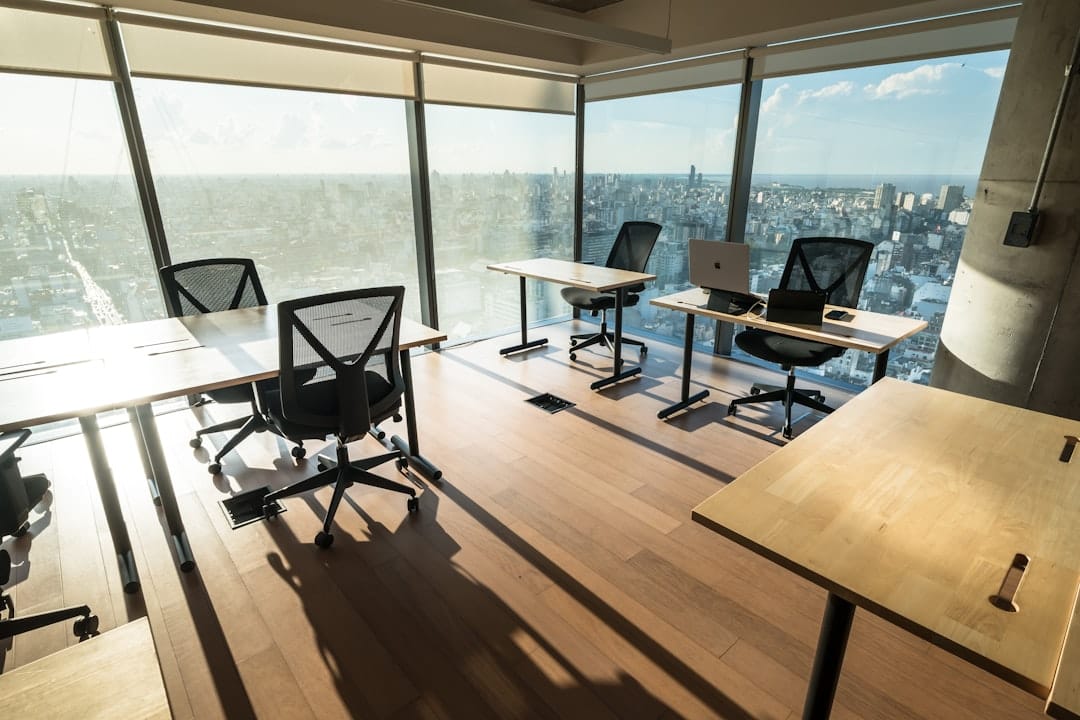
Who Is WeWork's Biggest Competitor?
If you're looking for a single name, it's IWG — the International Workplace Group — and it isn't particularly close. IWG operates more than 3,500 locations across over 120 countries under a portfolio of brands that includes Regus, Spaces, HQ, and Signature. Where WeWork grew fast and burned bright, IWG grew steadily and profitably across three decades. Regus in particular has a presence in second- and third-tier cities that WeWork never bothered with, which matters enormously if your remote work life takes you somewhere off the well-worn nomad trail. Think Birmingham, Bogotá, or Brisbane rather than Brooklyn. For pure geographic coverage, nothing else comes close.
But coverage and experience are different things. IWG's Regus locations can feel corporate and a little soul-free — they were built for road-warrior consultants, not community-seeking creatives. That's where brands like Industrious, Convene, and the boutique operators start to feel like genuine alternatives rather than runners-up. Industrious in particular has built a reputation for hospitality-first design: quieter, more polished spaces with a staffed front desk that actually feels like a service rather than a security checkpoint. Convene leans into event-ready venues with premium finishes. And then there are the independents — the single-location coworking spaces that a city's creative class quietly relies on — which collectively represent an enormous amount of the market even if no single one shows up in a competitive analysis.
For the nomadic professional, the honest answer is that "biggest competitor" depends heavily on what you're optimizing for. If it's global flexibility and the ability to walk into a professional desk in almost any city on earth, IWG wins. If it's design, community programming, and the feeling that your workspace was designed for humans rather than headcount, Industrious and the boutique independents are the ones to watch. The best coworking spaces aren't always the ones with the most locations — they're the ones that understand what you actually need when you sit down.
What Is the Best Coworking Space in NYC?
New York is where the coworking wars are most visible, and arguably most entertaining. The city has more shared workspace per square mile than almost anywhere else on earth, which means the competition to be the best coworking space in NYC is fierce, ongoing, and genuinely contested. WeWork still operates several of its flagship Manhattan locations — the Meatpacking District and Bryant Park outposts in particular remain genuinely beautiful spaces — and their post-restructuring pricing has become more competitive. But for many regulars, Industrious has become the default recommendation. Their locations at Rockefeller Center, Hudson Yards, and across Midtown offer a quieter, more polished atmosphere that suits professionals who need to project a certain kind of credibility to clients.
Beyond the major chains, New York has a rich ecology of independent spaces that deserve a spot on any shortlist. The Wing, before its stumbles, redefined what a membership community could feel like. Neuehouse in the Flatiron still attracts a media and creative crowd with its gallery-like aesthetic and programming calendar. The Brooklyn Creative League and Bat Haus out in Williamsburg and Bushwick serve a different energy entirely — louder, scrappier, and considerably cheaper, but full of the kind of accidental introductions that lead to actual collaborations. If you're a writer, designer, or anyone whose work benefits from ambient creative energy rather than enforced silence, the outer borough independents deserve serious consideration.
The honest answer is that there isn't a single best coworking space in NYC — there's the best one for your particular work style, your calendar, and your budget. A day pass at a premium Midtown location can run $60 or more; a monthly hot-desk membership at an independent Brooklyn space might cost less than $200. Before you commit to anything, spend a week with a few day passes and pay attention not just to the Wi-Fi speed and the chair ergonomics, but to who else is there and what the ambient energy feels like. You'll be spending more time with these strangers than you think.
Enjoying this? Get more like it.
Weekly picks for remote workers and digital nomads — tools, destinations, and honest takes, straight to your inbox.
Subscribe free →
What Are the Downsides of Coworking?
Here's what the coworking industry's marketing departments would rather you didn't think too hard about: shared workspaces are, structurally, quite noisy and quite distracting. The open-plan aesthetic that looks so inviting in a brochure — all natural light and exposed brick and cheerful humans collaborating — is precisely the environment that decades of research tell us is terrible for deep, focused work. You'll be sitting two feet from someone whose speakerphone etiquette is aspirational, and across the room from someone who apparently learned to type in a blacksmith's forge. If your work requires sustained concentration — writing, coding, complex analysis — the romantic image of coworking can clash badly with the daily reality.
Cost is the other dimension that deserves honest scrutiny. A dedicated desk membership at a premium coworking space in a major city can easily run $500 to $800 a month. A private office pushes well past $1,000. For someone whose employer is covering the tab, that's fine. For an independent freelancer or early-stage entrepreneur trying to manage runway, it starts to feel like a significant lifestyle tax. It's also worth noting that membership contracts, cancellation policies, and price escalation clauses vary wildly between operators. Some of the less scrupulous players have made a habit of being extremely clear about the onboarding process and rather vague about how to get out of it.
There's also a subtler downside that takes longer to notice: the feeling of rootlessness that can come from working somewhere that is, by design, not really yours. The best coworking spaces work hard to manufacture community, with happy hours and workshops and Slack channels, but community that's engineered from the top down is a fundamentally different thing from the organic relationships that develop when you share a real workplace over years. For nomads who are already navigating a transient life, the coworking space can sometimes feel like one more temporary thing in a life that already has too many of them. That's not a reason to avoid coworking — it's a reason to be intentional about how you use it.
Is Industrious or WeWork Better?
Is Industrious or WeWork Better?
This table compares Industrious and WeWork across key features relevant to digital nomads and remote teams.
| Feature | Industrious | WeWork |
|---|---|---|
| Pricing Model | All-inclusive | Tiered / à la carte |
| Membership Flexibility | Month-to-month | Month-to-month |
| Global Locations | ~160 | ~700 |
| Amenities Quality | Premium | Standard–Premium |
| Community Events | Partial | Comprehensive |
| Enterprise Plans | Recommended | Recommended |
| Budget Friendliness | Partial | Recommended |
This is the comparison that comes up most often among serious coworking users, and it's a genuinely interesting one because the two brands have chosen almost opposite philosophies. WeWork was built on scale, speed, and the audacious promise of a global community that would change how the world worked. Its spaces were designed to feel exciting — high ceilings, bold graphics, kegs in the kitchen, a vibe of ambient entrepreneurial optimism. At its best, a WeWork location feels like being inside a very expensive, very well-lit startup. At its worst, it feels like a budget airline lounge with better furniture.
Industrious made a different bet. Founded in 2013, it positioned itself as the premium, hospitality-forward alternative — quieter spaces, better-quality finishes, a staffed host team that actually knows your name, and an operational consistency that WeWork famously struggled to maintain. Industrious was acquired by CBRE in 2021, which gave it the balance sheet stability to weather the turbulence that nearly destroyed WeWork. The physical experience at Industrious leans more toward a boutique hotel business center than a startup campus, which is either exactly what you want or a bit sterile, depending on your personality.
For most remote professionals who are choosing between the two today, the honest verdict is: Industrious if you prioritize reliability, quiet, and professionalism; WeWork if you want energy, a larger global network for your travels, and you're comfortable with slightly more variability in the experience from location to location. WeWork's post-bankruptcy restructuring has made it leaner and more focused, and there are WeWork locations that remain genuinely among the best coworking spaces in their cities. But Industrious has the stronger institutional backbone right now, and for anyone who needs their workspace to just work, every single time, that matters.
What Is the 996 Rule?
It might seem like an odd topic to surface in a piece about coworking spaces, but the 996 rule is deeply relevant to anyone thinking about how and where they want to work — and it's a concept that has sparked one of the most significant workplace culture debates of the last decade. The 996 rule originated in China's tech industry and refers to a working schedule of 9am to 9pm, six days a week: 72 hours of work in a typical week. The term gained international attention around 2019 when Alibaba's founder Jack Ma publicly endorsed it, calling it a "blessing" for ambitious young workers and suggesting that those who put in those hours were the ones who would shape the future.
The backlash was swift and substantial, particularly among younger Chinese tech workers who created the 996.ICU GitHub repository — a reference to the idea that working 996 would land you in the ICU — to document complaints and violations. The debate it triggered was really about something much bigger than a single company's schedule: it was about who owns your time, what work-life balance actually means in a globalized economy, and whether the traditional model of trading enormous amounts of your life for career advancement still makes sense in a world where remote work and location independence have fundamentally changed the calculus.
For the nomadic and remote work community, the 996 conversation is worth knowing because it sits at the philosophical opposite end of the spectrum from what most of us are building. The entire premise of location-independent work — the slow travel, the deliberate pace, the idea that you can be productive from a café in Lisbon or a coworking space in Chiang Mai without sacrificing your output or your sanity — is a direct rebuttal to the 996 worldview. You don't have to work 72 hours a week to do meaningful, well-compensated work. What you do have to do is be intentional about your space, your schedule, and your energy — which is, come to think of it, exactly why choosing the right coworking space matters more than it might first appear.
The coworking landscape in 2024 is more interesting, more varied, and ultimately more useful for location-independent professionals than it has ever been. WeWork's stumble created space — quite literally — for a generation of competitors with different ideas about what a shared workspace should feel like, and the best of them have risen to that opportunity. Whether you end up at an Industrious in Midtown Manhattan, a Regus in a city you've never heard of, or a tiny independent space above a café in a neighborhood you fell in love with by accident, the fundamentals are the same: you need a desk, reliable internet, and enough of the right kind of atmosphere to do your best work.
The deeper lesson from everything above — from the competitive dynamics to the 996 rule to the honest downsides of open-plan noise — is that your workspace is a tool, and like any tool, it works best when you choose it deliberately rather than defaulting to whatever is most familiar or most marketed. Spend a little time figuring out what you actually need from a workspace, and then go find the place that gives you exactly that. The rest is just furniture.