Where is the cheapest but nicest place to go on holiday?
There's a particular kind of freedom that comes from realising the world is far more affordable than you've been led to believe. Not the freedom of a two-week package deal with a swim-up bar and a buffet breakfast — something quieter, more expansive than that. It's the feeling you get when you're sitting in a centuries-old café in Tbilisi nursing a three-dollar coffee, your laptop open, nowhere you need to be until you decide to be there. That's the freedom slow travel destinations are built for. And the best part? The places that offer the deepest, richest experiences are very often the ones that cost the least.
For digital nomads and location-independent travellers, the question of where to go is never really just about geography. It's about daily cost, internet reliability, visa terms, the texture of the streets at six in the morning, and whether the neighbourhood has a market that smells like something real. Budget matters, of course — but so does beauty. So does the sense that you've landed somewhere worth paying attention to. This guide is for anyone who refuses to choose between the two.
Whether you're planning a long-term base or a short burst of somewhere new, the places in this post have been chosen for one reason above all others: they give you more than you expect, for less than you imagined. Some of them will surprise you. Most of them will make you wonder why you waited so long.
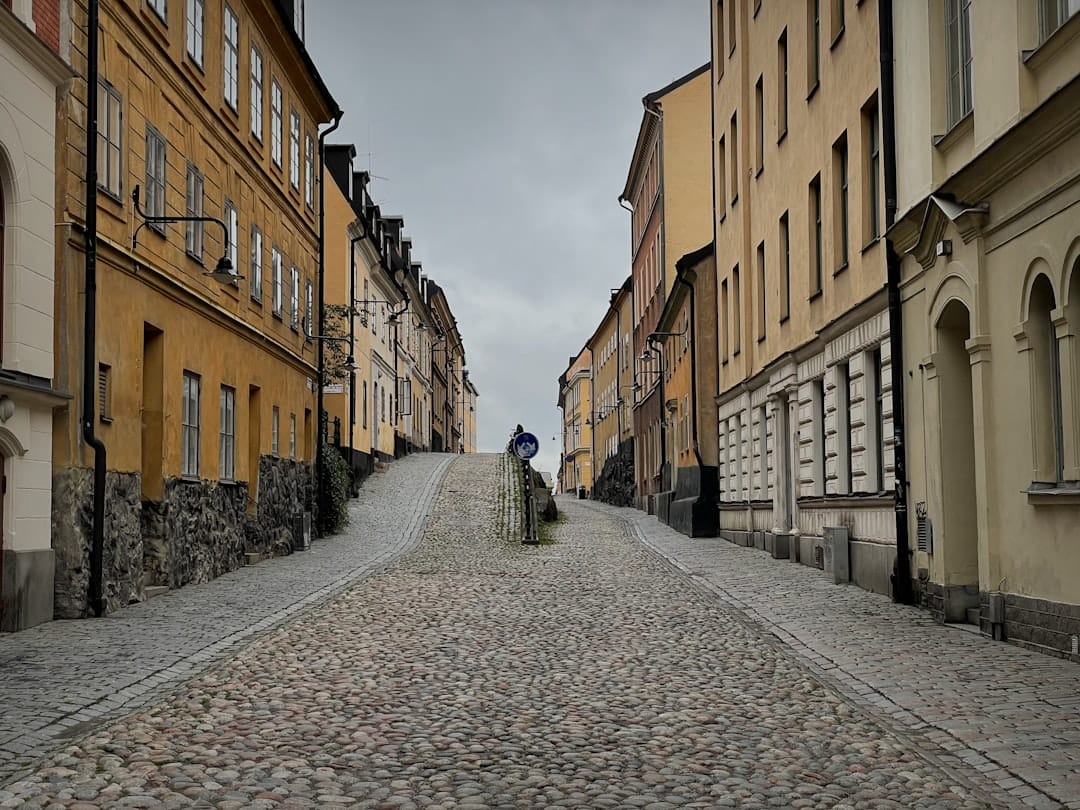
Three days sounds like barely enough time to shake off the fug of a long-haul flight, let alone fall in love with a place. But that assumption underestimates what a well-chosen destination can do in 72 hours. The secret is proximity and density — cities and regions where a short walk takes you from history to food to water to silence, without wasting half a day in transit. Porto, on Portugal's Atlantic coast, is almost unfairly good for a three-day visit. The azulejo-tiled facades, the port wine lodges across the Douro, the pastel de nata warm from the oven — it's a city that front-loads its pleasures and rewards you immediately.
Kotor in Montenegro is another one that punches above its weight for short stays. Tucked inside a medieval walled city at the foot of jagged Adriatic mountains, it has the theatrical quality of a film set, except everything is real and breakfast costs four euros. You can walk the ancient walls in a morning, swim in the bay by afternoon, and eat grilled fish so fresh it barely needs a menu description. For digital nomads who can only spare a long weekend, Montenegro's southern coast offers the kind of concentrated beauty that longer itineraries often dilute.
Closer to Southeast Asia, Penang in Malaysia is a three-day dream for anyone who eats seriously. George Town's UNESCO-listed streets layer Peranakan shophouses, clan temples, and street food stalls serving char kway teow at any hour you care to name. The cost of living is low enough that you'll look at your spending each evening with a degree of mild disbelief. Three days here won't exhaust you — it'll make you quietly rearrange your calendar to come back for longer.
Let's say you arrive in Chiang Mai with a one-way ticket and a loose plan to stay for a month. You rent a studio apartment in the Nimman area for around 350 dollars, find a co-working space a ten-minute cycle away, and spend the first week doing almost nothing except working mornings and wandering afternoons. You discover a noodle shop on a back lane that becomes your Tuesday ritual. You start recognising the woman who sells papaya salad outside the temple. Your laundry lady knows your name. This is slow travel — not a philosophy you read about, but a rhythm you accidentally fall into when you stop rushing.
The defining characteristic of slow travel isn't the pace of your transport or even how long you stay — it's the quality of your attention. It's choosing depth over breadth, neighbourhood over landmark, conversation over itinerary. Oaxaca, Mexico, is a city that almost forces this on you. The mole negro takes three days to make. The weavers in the villages outside town have patterns in their rugs that have been handed down for generations. You can't rush through Oaxaca and understand it. You have to sit with it, eat with it, let it talk.
For remote workers, slow travel destinations aren't just more meaningful — they're more economical. When you stay somewhere for three weeks instead of three days, you stop paying tourist prices. You cook some meals at home. You find the local supermarket instead of the convenience store near the hostel. The longer you stay, the cheaper each day becomes, and the richer your experience grows. It's one of the few genuine bargains in travel.

Georgia — the country, not the state — has been one of travel's best-kept secrets for a decade and is only now beginning to appear on mainstream radar. Tbilisi is a city of radical contrasts: Soviet brutalism next to ornate wooden balconies, techno clubs beneath ancient fortress walls, wine made in buried clay vessels using methods unchanged since the eighth century BC. A generous daily budget here runs to about thirty dollars — and that includes a sit-down dinner with natural wine. The Caucasus mountains are a two-hour marshrutka ride from the capital, and the visa-free access for most nationalities makes it almost absurdly easy to visit.
Vietnam stretches from subtropical mountains in the north to white-sand bays in the south, and it does so at a cost that makes most European city breaks look embarrassing by comparison. Hoi An, in the centre of the country, is the one that tends to grab people by the heart and not let go. Its lantern-lit Old Town sits at the confluence of the Thu Bon River, and the food — white rose dumplings, cao lau noodles, bánh mì from a woman on a bicycle — is some of the most nuanced street cuisine anywhere in the world. A comfortable private room costs fifteen to twenty-five dollars a night. A bowl of pho costs a dollar fifty. The maths are almost unfair.
North Macedonia is perhaps the most underrated country in Europe for budget-conscious travellers who want genuine beauty without the crowds. Lake Ohrid is a UNESCO World Heritage site — both the lake and the town surrounding it — and it has the crystalline clarity of somewhere that hasn't yet been overrun. Byzantine churches cling to hillsides above the water. Restaurants serve lake trout with local wine for under ten euros. The combination of history, landscape, and almost negligible cost makes it one of the strongest slow travel destinations in the Balkans.
Four days is enough to get a genuine sense of a small country if you choose wisely. Slovenia is the obvious answer in Europe — a nation-sized stage set of alpine lakes, vine-covered hills, and a capital city you can walk across in a morning. Fly into Ljubljana, spend two days in the city and Bled, then push south toward the Karst and the coast. You'll come home with photographs that make people ask which expensive resort you went to, and a bank account that tells a very different story.
Jordan rewards a four-day visit with an almost absurd range of experiences. Petra at sunrise — before the tour buses arrive and the light turns from amber to white — is one of those rare travel moments that actually exceeds its own legend. Wadi Rum the following night, sleeping in a Bedouin camp under a sky with too many stars to process, recalibrates something fundamental. The Dead Sea on day three. Aqaba's Red Sea reef on day four. Jordan is not cheap by Southeast Asian standards, but the Jordan Pass covers most entry fees and makes the budget considerably more manageable for a short, well-planned trip.
For remote workers who want to pair productivity with exploration, Estonia is worth serious attention. Tallinn's medieval Old Town is arguably the best-preserved in Northern Europe, and the country's digital infrastructure is among the finest on the planet — logical, given that Estonia invented Skype and runs the world's most advanced e-government system. Four days here gives you time to explore the old city, cycle along the coast to Kadriorg, and still spend a morning working from a beautifully designed café without any guilt whatsoever.
America's scale makes three-day trips feel complicated, but the solution is simple: go small. Not small in ambition — small in geography. New Orleans is perhaps the most sensory-rich city in the country for a short visit. The French Quarter smells of beignets and jasmine and last night's revelry. The music comes from somewhere real — not piped in, not performed for tourists, but erupting from bars and street corners because that's simply how New Orleans functions. Three days here: wander the Marigny, eat a muffuletta at the Central Grocery, take a streetcar out to the Garden District, and sit on a porch as a thunderstorm rolls in from the Gulf. You'll feel like you've been somewhere.
Sedona, Arizona, is the choice for anyone who needs landscape rather than city in their three days. The red rock formations — Cathedral Rock, Bell Rock, the Snoopy Rock that locals pretend isn't shaped like Snoopy — glow at dawn and dusk in colours that make photography feel inadequate. The town itself is overpriced by American standards and occasionally overrun with wellness retreats and crystal shops, but none of that matters much when you're standing alone on a trail at seven in the morning watching the desert come to light. For remote workers, the cafés have good wifi and the scenery has a focusing effect that office windows rarely match.
Savannah, Georgia, offers a third kind of American short break — one built around shade and stillness and squares draped in Spanish moss. It's a city that moves at a slower pace than almost anywhere else in the South, with antebellum architecture, riverside restaurants, and a gentleness that feels deliberate rather than accidental. Three days here is not a compromise. It's enough to fall properly under its spell, to eat shrimp and grits twice and mean it both times, and to sit in one of its twenty-two public squares watching the light change through the live oaks and feel, however briefly, like you live somewhere wonderful.
The best travel, whether you have three days or three months, has always been about the quality of your presence rather than the quantity of your destinations. The slow travel destinations in this guide — from the lantern-lit lanes of Hoi An to the moss-draped squares of Savannah — share one quality that no budget can manufacture: the ability to make you feel genuinely somewhere. Not passing through. Not ticking off. Actually there, with your shoes off, paying attention to the light on the wall.
The world is not as expensive as travel marketing would have you believe, and it is not as thin as a highlights reel suggests. There are places right now — affordable, beautiful, full of life and food and history — waiting for someone with a laptop and an open calendar to arrive, stay a little longer than planned, and leave changed. That's the real promise of slow travel. Not that it costs less, though it does. But that it gives back more.