What should I not pack in my carry-on?
There is a particular kind of freedom that comes with slinging a single bag over your shoulder and walking straight past the baggage claim carousel. No waiting, no hoping your luggage survived the connection in Istanbul, no wrestling an overstuffed suitcase down cobblestone streets at midnight. For digital nomads and long-term travelers, carry-on only travel isn't just a packing style — it's a philosophy, a declaration that you trust yourself to need less than you think you do. But that freedom has a price, and the price is ruthless, honest editing of everything you thought you couldn't live without.
The question most people ask is what to pack. The more useful question — the one that actually changes how you travel — is what not to pack in your carry-on. Because the carry-on isn't just a smaller suitcase. It is a container with rules: airline size restrictions, TSA liquid regulations, security checkpoint realities, and the very physical limits of what you can lift into an overhead bin without pulling something in your shoulder. Understanding those boundaries, and genuinely respecting them, is what separates the carry-on only travel tips that actually work from the aspirational advice that sends you scrambling for a checked bag at the gate.
Whether you're heading out for a two-week work trip through Southeast Asia or embarking on an indefinite stint of slow travel across Europe, the principles are the same. You are not packing for every scenario. You are packing for the most likely ones, and trusting that the rest of the world has pharmacies, laundromats, and Amazon lockers. Let's start at the beginning — with how people actually pull this off — and work our way through the systems, the rules, and the surprisingly easy mistakes that blow up even the most seasoned traveler's carefully curated bag.
How People Actually Travel with Only a Carry-On
The honest answer is that carry-on only travel works because people commit to it before they start packing, not during. The decision gets made at the philosophy level — I will not check a bag on this trip — and then everything else follows from that constraint. When you know the bag has to fit in the overhead bin, you stop asking "should I bring this?" and start asking "what does this replace?" That shift in framing is everything. You're not curating a collection of things you might want. You're building a system where every item earns its weight.
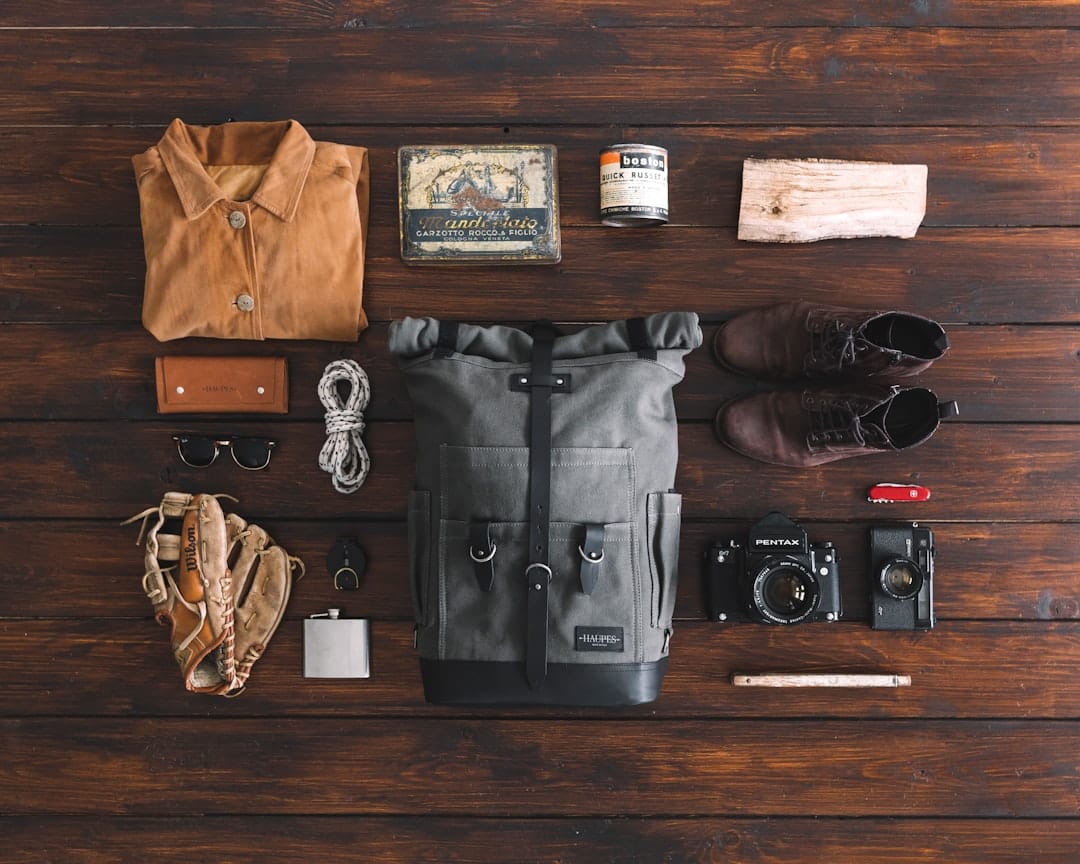
The practicalities involve choosing the right bag for your airline's specific dimensions — and yes, those dimensions vary more than you'd expect between budget carriers and full-service airlines. A bag that sails through a United flight might get gate-checked on Ryanair. Most seasoned carry-on travelers keep a soft-sided bag specifically because it compresses slightly, making it easier to stuff into tight overhead bins or under the seat in front of you. They also wear their bulkiest items on the plane: the heaviest boots, the thickest jacket, the chunky headphones around the neck. The plane becomes a packing extension.
What people don't do — what you absolutely should not do — is pack duplicates of anything just because you have a little space left. That extra pair of jeans "just in case" is the enemy. So is the full-sized bottle of shampoo because the travel size felt too small, or the third pair of shoes because you couldn't decide. Every item in a carry-on must justify its presence against every other item competing for that same cubic inch of space. This is the mindset. The rules we're about to get into are just the scaffolding that holds it up.
The 5-4-3-2-1 Packing Method and What It Actually Means
The 5-4-3-2-1 method is a structured packing formula that gives travelers a concrete ceiling for each clothing category, typically for a one-week trip. The numbers represent: five sets of socks and underwear, four tops, three bottoms, two pairs of shoes, and one jacket or outer layer. It sounds almost too simple, and that's exactly why it works. It removes the deliberation. You don't stand in front of your wardrobe wondering whether to bring four or five shirts. The number is four. Done.
For digital nomads on longer trips, the math shifts slightly — but the principle holds. You're not packing more; you're planning to do laundry. A two-week trip doesn't need two weeks' worth of clothes if you wash things every five or six days. The 5-4-3-2-1 framework functions as your anchor, and you adjust the numbers based on your actual laundry access rather than packing more as a substitute for doing it. This is one of the core carry-on only travel tips that veteran nomads will repeat until they're hoarse: pack for a week, wash as you go, everywhere.
Where the method fails people is in the category of "just one more." One more top because the color scheme isn't quite working. One more pair of shoes because what if there's a nice dinner. The 5-4-3-2-1 method only works if you treat its numbers as hard limits, not suggestions. When you pack outside those boundaries, you're not adding flexibility — you're adding weight, adding decision fatigue when you're getting dressed in a Lisbon apartment at 7am, and adding the risk that your bag won't close cleanly when you need to move fast.

Enjoying this? Get more like it.
Weekly picks for remote workers and digital nomads — tools, destinations, and honest takes, straight to your inbox.
Subscribe free →The 3-1-1 Rule: What It Covers and What People Get Wrong
The 3-1-1 Rule: What It Covers and What People Get Wrong
A reference guide comparing which common liquid and gel items are allowed, restricted, or prohibited under the TSA 3-1-1 carry-on rule.
| Item | 3-1-1 Compliant | Common Mistake |
|---|---|---|
| Toothpaste (≤100ml) | Included | Oversized tube packed |
| Sunscreen (≤100ml) | Included | Spray cans overlooked |
| Full-size shampoo | Not included | Assumed small enough |
| Peanut butter / spreads | Not included | Treated as solid food |
| Prescription liquids | Available | Not declared at security |
| Solid toiletry bars | Included | N/A |
The 3-1-1 rule is the TSA's liquid policy for carry-on luggage, and yes — it applies only to carry-on bags. Checked luggage can hold full-sized liquids. The rule is straightforward in theory: liquids, gels, aerosols, creams, and pastes must be in containers of 3.4 ounces (100ml) or less, all of which must fit in a single clear quart-sized zip-lock bag, and each passenger is allowed just one such bag. That's 3.4 ounces, 1 quart bag, 1 bag per person. Three, one, one.
Where travelers consistently go wrong is misidentifying what counts as a liquid. Toothpaste — liquid. Mascara — liquid. Lip gloss — liquid. Peanut butter, if you're trying to bring a jar through — liquid. Solid sunscreen sticks, solid shampoo bars, and powder-based products are not subject to the rule, which is why many minimalist travelers have quietly become converts to solid toiletries. A shampoo bar replaces a bottle of shampoo and takes up roughly the space of a deck of cards. A solid moisturizer stick replaces a tube of lotion. These aren't gimmicks; they're solutions to a real constraint.
What you should not pack in your carry-on liquids bag: full-sized anything, duplicate products because you weren't sure which one you'd want, or liquids you haven't verified are under 100ml just by eyeballing them. The security bin is not the place to discover that your face wash is technically 120ml. It will be confiscated without ceremony, and the TSA agent will not feel bad about it. Check every label before you pack, every time, even on trips you've done a hundred times before. Rules that seem automatic are the ones that catch you out.
The 3-5-7 Packing Rule: A Framework for Longer Trips
The 3-5-7 rule is less universally standardized than the 3-1-1 — you'll find slight variations depending on who you ask — but the version most useful for long-term travelers goes like this: pack no more than 3 pairs of shoes, no more than 5 tops, and keep your total outfit combinations to at least 7 distinct looks from what you've brought. The magic is in that last number. It forces you to think in outfits rather than individual items, which naturally steers you toward versatile, mix-and-match pieces and away from the one-use special occasion dress you'll wear exactly once.
For digital nomads, this framework is particularly valuable because it nudges you toward a travel wardrobe that works across contexts — a client video call, a co-working space, a beach bar, a moderate hike. Neutral colors, wrinkle-resistant fabrics, and layers do the heavy lifting here. A merino wool base layer might look unremarkable in isolation, but it can be part of seven different combinations depending on what you pair it with. That's the kind of item that deserves a spot in your bag. The sequined top that only works with one specific pair of trousers? That's the kind of item you leave on the bed.
What the 3-5-7 rule really teaches you is to audition your clothing before it goes in the bag. Hold up each item and ask: how many different outfits does this unlock? If the answer is one, it's probably not worth the space. If the answer is four or five, it's a keeper. This mental exercise, done honestly, will clear more space in your bag than any compression cube ever could. And more space in your carry-on means more room for the things that actually matter on a work trip: your laptop, your cables, your backup battery, and the notebook you always tell yourself you'll use more.
The Most Forgotten — and Most Regretted — Things Travelers Leave Behind
Surveys and travel forums consistently surface the same culprits in the "most forgotten items" category, and they're almost never things you'd expect. Chargers top the list — not just phone chargers, but the specific cable for the camera, the USB-C adapter that also works with the laptop, the universal plug adapter that works in the UK and Europe and Southeast Asia. These are small, easy to overlook when you're doing a final sweep of your desk, and genuinely disruptive to lose when you're in a country where the right adapter isn't available at the corner store.
Medication is another category that travelers forget with alarming regularity — not because they forgot they take it, but because it lives on the bathroom shelf rather than in the bag, and the bathroom shelf doesn't get packed until the last ten minutes before the taxi arrives. The rule that experienced travelers swear by: your medication goes in the bag first, not last. Same with your passport, your noise-canceling headphones, and your laptop. The things that would genuinely ruin the trip if you forgot them get packed first and checked last, before you zip anything up.
What people forget to not pack is almost as instructive. Travelers routinely pack items that security will confiscate — water bottles that weren't emptied, pocket knives they genuinely forgot were in the outer pocket, oversized liquids they were hoping might slip through. They pack heavy books they won't finish, or full-sized umbrellas when a packable one would do exactly the same job. They pack sentimental items that shouldn't leave the house at all, and they pack backup items for backup items, stacking redundancy on redundancy until the bag can barely close and they've completely lost track of what's actually in it.
Mastering the carry-on is ultimately an exercise in knowing yourself as a traveler — your actual habits on the road, not your aspirational ones. You don't read three books on a two-week trip. You don't use the formal shoes. You wear the same two pairs of trousers in rotation and don't notice. The gap between who you imagine you'll be and who you actually are while traveling is where half the unnecessary weight lives. Close that gap honestly, and your bag gets lighter almost immediately.
These carry-on only travel tips aren't about deprivation — they're about precision. When you travel light, you move through the world differently. You make the last-minute flight change without panic. You take the night train on a whim. You say yes to the spontaneous detour because your bag fits on the back of a motorbike. That's the real payoff, and it's worth every item you leave behind on the bed.