What is the 5 4 3 2 1 packing trick?
There is a particular kind of freedom that arrives the moment you step off a plane and walk straight past the baggage carousel. No waiting, no watching that conveyor belt loop around for the fifth time, no dragging an oversized suitcase through cobblestone streets or cramming it into an overhead bin with the anxious energy of someone playing Tetris at thirty thousand feet. If you have ever traveled carry-on only, you already know what I mean. And if you haven't — well, this might be the piece of writing that changes how you pack forever.
For digital nomads and location-independent professionals, light packing isn't a party trick — it's infrastructure. The ability to move quickly, cheaply, and without friction is what makes the whole lifestyle work. Budget airlines won't charge you extra. Taxis become easier. Hostels and apartments with no elevator stop being a problem. But getting to that point — genuinely fitting your life into a bag that fits in the overhead bin — requires a system. And one of the most elegant systems out there is something called the 5 4 3 2 1 packing trick.
Whether you're planning a two-week workcation in Lisbon or a three-month slow travel loop through Southeast Asia, the principles behind packing smarter stay the same. In this guide, we're going to walk through the 5 4 3 2 1 method, look at how it interacts with airline rules like the 3-1-1 liquids policy, touch on the lesser-known 3-5-7 framework, and — perhaps most usefully — talk about the things people almost always forget to pack. Consider this your complete briefing before you zip that bag shut.
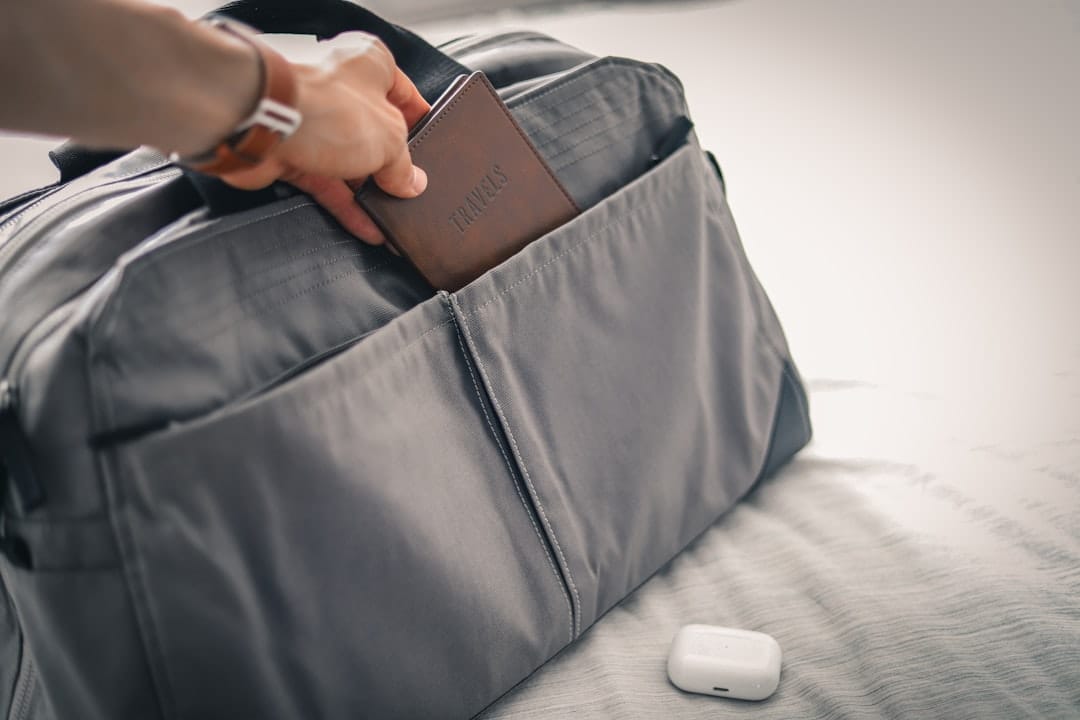
How Do People Actually Travel with Only a Carry-On?
How Do People Actually Travel with Only a Carry-On?
A comparison of carry-on packing strategies used by frequent travellers, rated by ease, space efficiency, and suitability for remote work trips.
| Strategy | 5 4 3 2 1 Method | Capsule Wardrobe | One-Bag Minimalist |
|---|---|---|---|
| Ease of Use | Included | Varies | Upgrade required |
| Space Efficiency | Included | Included | Full access |
| Works for 7+ Days | Included | Included | Limited |
| Remote Work Ready | Included | Partial access | Limited |
| Learning Curve | Standard | Occasional | Extra charge |
| Best For | Recommended | Some locations | Not available |
The honest answer is: they stop thinking about packing as a compression exercise and start thinking about it as curation. Most people overpack because they pack for hypothetical situations — the nice dinner that might happen, the cold snap that might arrive, the gym session they probably won't do. Carry-on travelers pack for the trip they're actually taking, not the fantasy version of it. That mental shift is worth more than any packing cube or compression bag on the market.
Practically speaking, the people who travel carry-on only tend to share a few habits. They choose a capsule wardrobe — a small set of items in neutral colors that mix and match easily, so five pieces feel like fifteen outfits. They lean into merino wool, which is lightweight, odor-resistant, and dries overnight, meaning you can re-wear things without anyone being the wiser. They do laundry at their destination, either using a sink, a laundromat, or a washing machine in their accommodation. And they ruthlessly interrogate every item before it goes in the bag: does this earn its weight?
For remote workers specifically, the calculus includes tech. A laptop, a charger, maybe a portable monitor or a wireless mouse — these things take up real estate and add weight. The trick is to let tech take priority and build your clothing choices around what's left. A slim 13-inch laptop in a padded sleeve weighs far less than a 15-inch in a bulky case. Every gram you save on the margins — your toiletry bag, your shoes, your "just in case" layers — is a gram you can give to the gear that actually powers your work.
The 5 4 3 2 1 Packing Trick, Explained
The 5 4 3 2 1 rule is a structured framework for deciding exactly what clothing to pack, and its genius lies in how specific it is. The numbers refer to the following: five sets of socks and underwear, four tops, three bottoms, two pairs of shoes, and one hat or headwear item. That's it. That's the whole wardrobe. It sounds impossibly small until you lay it all out on your bed and realize it's actually a lot — especially when every piece is chosen to work with every other piece.
Think about what four tops and three bottoms actually gives you. If you're mixing and matching, that's twelve possible outfit combinations before you even consider layering. Add in the shoes — perhaps one casual sneaker and one slightly more elevated option — and you can dress up or down for almost any occasion a nomad is likely to encounter. The hat rounds things off as both a style piece and a functional one, useful for sun protection, bad hair days, or both. For trips of one to three weeks, most people find this framework covers nearly everything without leaving them feeling restricted.
Where the rule gets interesting is in how you adapt it. Traveling somewhere cold? Swap one of your tops for a base layer and treat a warm mid-layer as one of your bottoms slots, metaphorically speaking. Heading somewhere with a serious beach culture? Two of your bottoms could be swimwear and shorts. The 5 4 3 2 1 framework is a skeleton, not a straitjacket. The point is to have a ceiling — a hard cap on clothing items — so you can't keep adding things "just in case" until your bag is bursting at the seams. It's a carry-on only travel tip that doubles as a mindset reset.
Enjoying this? Get more like it.
Weekly picks for remote workers and digital nomads — tools, destinations, and honest takes, straight to your inbox.
Subscribe free →
Is the 3-1-1 Rule Only for Carry-On Luggage?
Technically, yes — the 3-1-1 rule is a carry-on specific regulation, put in place by the TSA in the United States and adopted in similar forms by aviation authorities around the world. In case you need a refresher: you're allowed to bring liquids, gels, and aerosols in containers of 3.4 ounces (100 milliliters) or less, all fitting inside one clear, quart-sized zip-lock bag, with one such bag per traveler. Hence: 3-1-1. Checked baggage has no such restriction, which is why people who check bags can bring full-size shampoo without a second thought.
For carry-on only travelers, the 3-1-1 rule is a constraint worth planning around rather than fighting against. The good news is that most toiletry needs can be met with miniature versions, solid alternatives, or things you simply buy at your destination. Solid shampoo bars, conditioner bars, and solid sunscreen have come a long way in quality and are now genuinely good products, not just travel compromises. A small tube of toothpaste, a solid deodorant, and a tiny moisturizer can last a surprising number of days. And remember — almost everywhere in the world has a pharmacy or a supermarket where you can buy what you need when you arrive.
One nuance worth knowing: some countries have slightly different versions of the liquids rule, and enforcement can vary. In the UK and EU, the limit is the same 100ml per container and one bag per person, but the size of that bag is specified as one liter capacity. Most experienced carry-on travelers keep their toiletry setup consistent and compliant regardless of which airports they're passing through — it eliminates decision fatigue and avoids any unpleasant surprises at the security line when you're half-awake at 5 a.m.
What Is the 3-5-7 Rule for Packing?
The 3-5-7 rule is a slightly different approach to the same problem of overpacking, and it operates on a trip-length logic rather than a fixed item count. The idea is this: for a trip of three days, pack three outfits; for five days, pack five; for seven days, pack seven. Beyond seven days, the rule suggests you stop adding clothes and simply plan to do laundry instead. It's a useful heuristic for shorter trips or for people who find the rigidity of the 5 4 3 2 1 framework a bit constraining.
Where the 3-5-7 rule shines is in helping people break the psychological habit of packing for every possible day. There's something deeply reassuring about knowing that a week-long trip only requires seven outfits — not ten, not fourteen, not "a few extras just in case." For digital nomads on longer stints, it reinforces the laundry mindset: your wardrobe is not your suitcase, it's the combination of what you packed and what you can wash. Once you internalize that, extended travel becomes dramatically lighter.
The 3-5-7 and 5 4 3 2 1 rules aren't mutually exclusive — many seasoned travelers use them together. The 5 4 3 2 1 gives you the specific item breakdown; the 3-5-7 gives you the permission structure to stop at seven days' worth of clothing regardless of how long you're actually going for. Used in tandem, they're a powerful antidote to the "but what if" spiral that ends with you standing in your bedroom at midnight, trying to decide whether to pack a third pair of jeans. Spoiler: you don't need the third pair of jeans.
The Most Forgotten Items When Traveling (And How Not to Leave Them Behind)
Here's the thing about forgotten items: they're almost never the obvious stuff. Nobody forgets their passport or their phone. What gets left behind tends to be the small, quiet, easy-to-overlook things — the items that live in bathroom drawers or on bedside tables and don't announce themselves the way a suitcase does. According to surveys of frequent travelers, the most commonly forgotten items include phone and laptop chargers (especially when they're plugged in and charging the night before departure), medications, sunglasses, and — perhaps most surprisingly — travel adaptors.
For remote workers, the charger situation deserves special attention. Forgetting your laptop charger isn't an inconvenience — it's a crisis. A good habit is to never leave your charger plugged in overnight before a travel day. Pack it the night before, even if it means your device runs on battery for a few hours. The same goes for any adaptor, USB hub, or peripheral that tends to live plugged into a wall. If it has a cable and it powers something important, it gets packed before bed, not in the morning rush.
A packing checklist — a real one, written down and reused — solves almost all of this. It doesn't have to be elaborate. Even a simple note on your phone that you run through every time before you leave a destination can catch the things your half-awake brain will miss. Experienced nomads often have a "departure ritual" that includes a final sweep of every power outlet, every bathroom surface, and every drawer. It takes five minutes and it has saved countless chargers, books, toiletry bags, and — on at least one memorable occasion that a fellow traveler once told me about — an entire laptop left on a hotel room desk.
There's a version of travel that feels effortless — not because it is effortless, but because the systems behind it are solid enough that they fade into the background. The 5 4 3 2 1 trick, the 3-5-7 framework, the 3-1-1 liquids rule, the pre-departure ritual: none of these things are glamorous. They're the scaffolding. But when the scaffolding is in place, you get to walk off a plane and into a new city with everything you need on your back and nothing weighing you down. That feeling, as any carry-on only veteran will tell you, never gets old.
So the next time you open a suitcase and start the ancient, exhausting ritual of "what if I need this," try a different question instead: what would I actually wear, actually use, actually need? Pack that. Leave the rest. The world's best destinations have shops, laundromats, and pharmacies. What they can't give you is the specific joy of breezing through an airport while everyone else waits for their luggage. That particular pleasure, you have to earn — one ruthlessly curated packing list at a time.