What is the 1 to 6 packing rule?
There is a moment every frequent traveler knows intimately — standing at the airline check-in counter, watching the scale tick upward, heart sinking as the agent reaches for the oversize luggage tag. You packed what felt reasonable. A week's worth of outfits, the backup shoes, the full-size shampoo because the travel bottles always leak. And now you are paying for it, literally, in baggage fees and the slow crawl of a heavy suitcase through cobblestoned streets. If you have ever found yourself in that moment and vowed to do better, the 1 to 6 packing rule might be the philosophy that finally sets you free.
The 1 to 6 rule is elegantly simple in concept: one bag, six outfits. That is the entire constraint. Everything you bring for a trip — whether it lasts five days or three weeks — must fit inside a single carry-on bag and amount to no more than six complete outfit combinations. It sounds spartan until you actually try it, and then it starts to feel like the most liberating travel decision you have ever made. For digital nomads and location-independent workers, this approach is not just a packing hack — it is a foundational lifestyle choice that shapes how freely you can move through the world.
The beauty of the rule is that it forces a kind of creative discipline. When you know you only get six outfits, you stop packing aspirationally — those 'just in case' blazers and the fourth pair of sandals that never quite make it out of the suitcase. Instead, you start thinking in systems: capsule wardrobes, mix-and-match neutrals, fabrics that travel well and dry fast. The result is a bag you can hoist into an overhead bin without help, sprint through an airport with, and check into a hostel, co-living space, or boutique hotel with equal ease. You stop being a tourist hauling luggage and start moving like someone who actually lives everywhere.
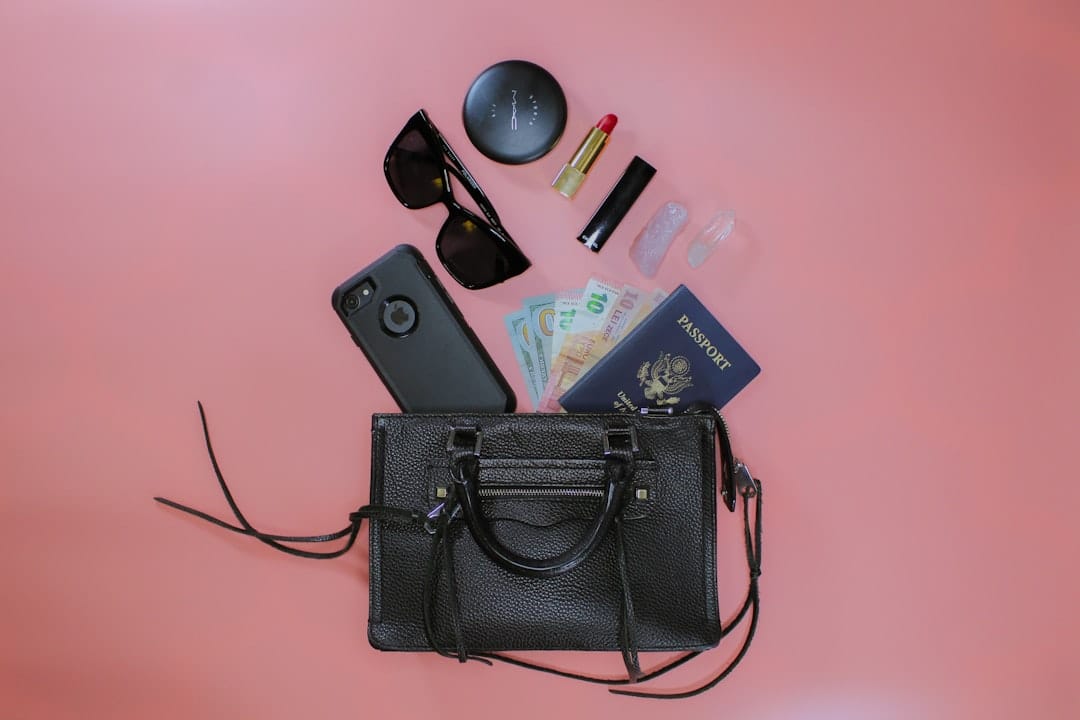
How Carry-On Only Travel Actually Works
The first question most people ask when they hear about carry-on only travel is some version of: but what about laundry? And that is exactly the right question, because laundry is the entire secret. Carry-on only travel is not about wearing fewer clothes — it is about washing clothes more often. When you stop treating laundry as a chore you do at home and start treating it as a regular part of your travel rhythm, everything shifts. A sink wash every few evenings, a laundromat visit once a week, or the laundry service that nearly every decent hostel and co-living space now offers — these are not inconveniences, they are the infrastructure that makes light travel possible.
Beyond laundry, the other pillar of successful carry-on only travel is intentional fabric selection. Merino wool is practically the patron saint of the minimalist packer — it resists odor, regulates temperature across a surprising range of climates, and dries in hours rather than days. Lightweight synthetic blends serve a similar function. When your entire wardrobe breathes, wicks, and dries fast, you can get away with far fewer pieces than you ever imagined. A single merino t-shirt worn three times in a week looks and smells as fresh as the day you packed it. That is not roughing it — that is smart engineering.
The practical carry-on only tips that experienced nomads swear by tend to cluster around a few core habits: always pack by rolling rather than folding to maximize space, use packing cubes to compress clothing and keep your bag organized across multiple moves, and choose a bag that sits at the upper limit of most airline carry-on dimensions — typically around 40 liters — rather than defaulting to something tiny out of misguided ambition. The goal is to fill that bag with only what genuinely earns its weight, and to build a system so repeatable that packing for a three-month stint in Southeast Asia takes you no longer than forty-five minutes.
The 5-4-3-2-1 Packing Trick and How It Relates
If the 1 to 6 rule is the philosophy, the 5-4-3-2-1 trick is one of its most popular practical expressions. The formula breaks down like this: five sets of socks and underwear, four tops, three bottoms, two pairs of shoes, and one hat or accessories piece. The numbers vary slightly depending on who is teaching it — some versions swap in different quantities for different categories — but the underlying logic is consistent. You are building a complete, interchangeable wardrobe from a specific, finite count of items, each chosen to work with everything else in the bag.
What makes this trick genuinely useful is that it shifts packing from an intuitive process — where most of us simply grab things we like until the bag is full — into a structured one. You are not asking 'what might I need?' You are asking 'does this item fit into one of my five designated categories?' If it does not, it stays home. That single cognitive shift eliminates an enormous amount of the anxiety-driven overpacking that most travelers never quite realize they are doing. The 5-4-3-2-1 method works particularly well when combined with a neutral color palette: choose a base color — navy, grey, black, or olive — and ensure every item plays nicely with every other item. Four tops and three bottoms technically give you twelve possible outfit combinations, which is more than enough for most trips.
For digital nomads specifically, the 5-4-3-2-1 framework needs one additional consideration: the work layer. Your laptop, chargers, cables, portable hard drive, and any other tech tools are non-negotiables that take up meaningful space. The wisest approach is to treat tech as its own category, usually housed in a dedicated tech pouch or smaller interior compartment, and then build your clothing count around what space remains. Some nomads find they can comfortably keep to the 5-4-3-2-1 clothing formula while still fitting a 15-inch laptop, a travel router, noise-canceling headphones, and all their accompanying cables into a single well-organized 40-liter pack. It takes a few trips to dial in, but once you find your system, it becomes second nature.
Enjoying this? Get more like it.
Weekly picks for remote workers and digital nomads — tools, destinations, and honest takes, straight to your inbox.
Subscribe free →
The 3-1-1 Rule: Not Just a Carry-On Concern
The 3-1-1 Rule: Not Just a Carry-On Concern
A comparison of how major airline alliances enforce the 3-1-1 liquids rule and what allowances differ across economy, premium, and business cabin classes.
| Feature | Economy | Premium Economy | Business / First |
|---|---|---|---|
| 100ml container limit | Included | Included | Included |
| 1-litre clear bag required | Yes | Yes | Yes |
| Duty-free liquids exception | Selected locations | Selected locations | Available |
| Checked bag for extra liquids | Add-on cost | Included | Included |
| Toiletry kit provided | Not included | Limited | Included |
| Best for 3-1-1 compliance ease | Upgrade required | Recommended | Recommended |
The 3-1-1 rule is a liquids regulation introduced by the TSA in the United States, and it applies specifically to carry-on baggage — though similar rules govern most international security checkpoints. The rule is straightforward: liquids must be in containers of 3.4 ounces (100 milliliters) or less, all containers must fit inside one clear quart-sized zip-lock bag, and each passenger is limited to one such bag. So yes, the 3-1-1 rule is very much a carry-on concern. Checked luggage has no such liquid restriction, which is one of the reasons many travelers default to checking bags when they want to bring full-size toiletries.
For carry-on only travelers, the 3-1-1 rule is less of a burden than it first appears. Once you commit to buying full-size toiletries at your destination — which is almost always possible anywhere you might reasonably want to travel — the liquids bag shrinks to almost nothing. A small travel-size moisturizer, lip balm, a few days' worth of liquid soap to get you started, and perhaps a travel perfume or cologne sample. Solid toiletries sidestep the rule entirely: solid shampoo bars, conditioner bars, solid sunscreen sticks, and solid cologne are all now widely available and have become genuinely effective products rather than the compromised alternatives they once were.
Understanding the 3-1-1 rule also changes how you think about prescription medications, which are technically exempt but still best kept in original containers with clear labeling to avoid any friction at security. The broader lesson here is that carry-on only travel rewards people who think ahead and build systems, rather than those who pack reactively. When you know the rules — the airline's carry-on dimensions, the TSA liquids policy, the checked bag fees on budget carriers — you can engineer your pack around them rather than being surprised by them at the gate.
The 3-5-7 Rule, and Why Frameworks Are a Starting Point
The 3-5-7 packing rule is another numerical framework that has circulated through the travel community, and it works on a slightly different axis than the 5-4-3-2-1 method. In its most common iteration, the 3-5-7 rule governs trip duration rather than item count: pack three outfits for a trip of up to five days, five outfits for trips up to seven days, and seven outfits for anything longer. The idea is to scale your packing in proportion to your trip length, with laundry filling the gaps rather than extra luggage. Some versions of the rule apply it specifically to the number of outfit repeats allowed before washing, rather than the total count of items packed.
What matters more than the specific numbers is the mindset these frameworks cultivate. Whether you follow the 1 to 6 rule, the 5-4-3-2-1 method, or the 3-5-7 framework, you are engaging in the same fundamental exercise: making deliberate, constrained decisions before you pack, rather than grabbing everything that seems like it might be useful. For nomads who are traveling continuously — bouncing between slow travel cities, spending months in a single place, or hopping across time zones for client meetings — the specific rule matters far less than having a rule at all. A system, any well-considered system, beats improvisation every time.
The real evolution happens when you move past frameworks entirely and develop your own deeply personal packing list — one built from actual travel experience rather than theoretical planning. After a few trips living out of a single carry-on, you start to know exactly which items earn their place and which ones have been dead weight all along. That bespoke list, refined through real-world testing, is ultimately more valuable than any numbered rule. The frameworks are the training wheels that get you there.
The Most Forgotten Travel Item (It Is Not What You Think)
Travel surveys and packing forums consistently point to the same forgotten items: phone chargers, adapters, medications, and — perhaps most ironically for minimalist packers — the small everyday items so ordinary that they never make it onto any list. But the most commonly forgotten item is not a physical object at all. It is a document, or more precisely, proof. Travel insurance confirmation. The emergency contact card. The copy of your passport. The local SIM card you ordered online and left sitting on your desk at home. These things cost nothing in terms of weight or space, and yet they are the items most likely to create genuine problems when missing.
For digital nomads, the forgotten item problem extends to the professional realm. The universal travel adapter that you definitely own but cannot locate. The portable battery that was charging on the kitchen counter. The laptop stand that makes working from a co-working space or co-living space actually sustainable for your neck and shoulders. The solution is a digital packing checklist that lives permanently on your phone — not a one-time list you write before each trip, but a master list you refine after every journey, adding whatever you forgot and removing whatever you never used. Over time this list becomes an exact reflection of how you actually travel, not how you imagine you travel.
There is also a category of forgotten item that is uniquely emotional: the comfort object. The travel pillow you keep meaning to replace, the earplugs that would have made that overnight bus tolerable, the pair of flip-flops that turn any bathroom into a slightly more dignified experience. These items weigh almost nothing and take up almost no space, but they quietly transform the quality of a long journey. Experienced carry-on only travelers build them into their systems not because they are strategic, but because they have learned the hard way that comfort on the road is its own kind of productivity. A well-rested, comfortable nomad does better work, makes better decisions, and experiences more of the places they travel through.
At the end of a long travel day, when you roll your single carry-on through the door of whatever city has become your temporary home, there is a quiet satisfaction in knowing that everything you need is right there — clean, organized, and ready. The 1 to 6 packing rule, and the various numerical frameworks that orbit it, are really just invitations to think more carefully about what you actually need versus what you are packing out of anxiety or habit. That distinction, once you really internalize it, does not just change how you travel. It changes how you think about accumulation in general — what earns space in your life, and what you carry simply because you always have.
Whether you are preparing for your first carry-on only trip or refining a system you have been testing for years, the most important carry-on only travel tip is simply this: leave the bag on the floor and walk away from it for an hour. Then come back and take out whatever you added last. Repeat until the bag closes easily and lifts without effort. That, more than any numbered rule, is the real secret. And once you feel the freedom of a bag that weighs almost nothing and holds almost everything you need, you will never willingly haul checked luggage again. Explore more of the world that opens up when you learn to balance work and travel — the lighter you travel, the further you can go.