What are the 5 biggest packing mistakes to avoid?
There's a particular kind of dread that settles in when you're standing at the airline check-in counter, watching the agent weigh your bag, knowing — deeply, in your gut — that it's going to be over the limit. You've been there, or you know someone who has. The frantic reshuffling, the abandoned shampoo bottle, the extra pair of shoes stuffed into a tote bag and carried on as a personal item. It's a rite of passage for travellers who haven't yet cracked the code of packing light. But for digital nomads and remote workers who move between cities, countries, and time zones with regularity, overpacking isn't just inconvenient — it's a genuine drain on time, money, and freedom.
The dream of carry-on only travel isn't about suffering through a week in the same jeans or rationing your toiletries into tiny, sad containers. It's about learning to be deliberate — to choose items that work harder, travel smarter, and free you from the tyranny of baggage fees, carousel waits, and luggage that slows you down between a hostel in Lisbon and a co-working space in Medellín. The best nomads treat their bag like a well-edited wardrobe: nothing wasted, everything earning its place.
So what are the biggest packing mistakes people make — and more importantly, how do you avoid them? Whether you're heading out on your first remote work trip or you're a seasoned nomad who's still sneaking in "just one more" pair of shoes, these carry on only travel tips will help you rethink what's in your bag and why.
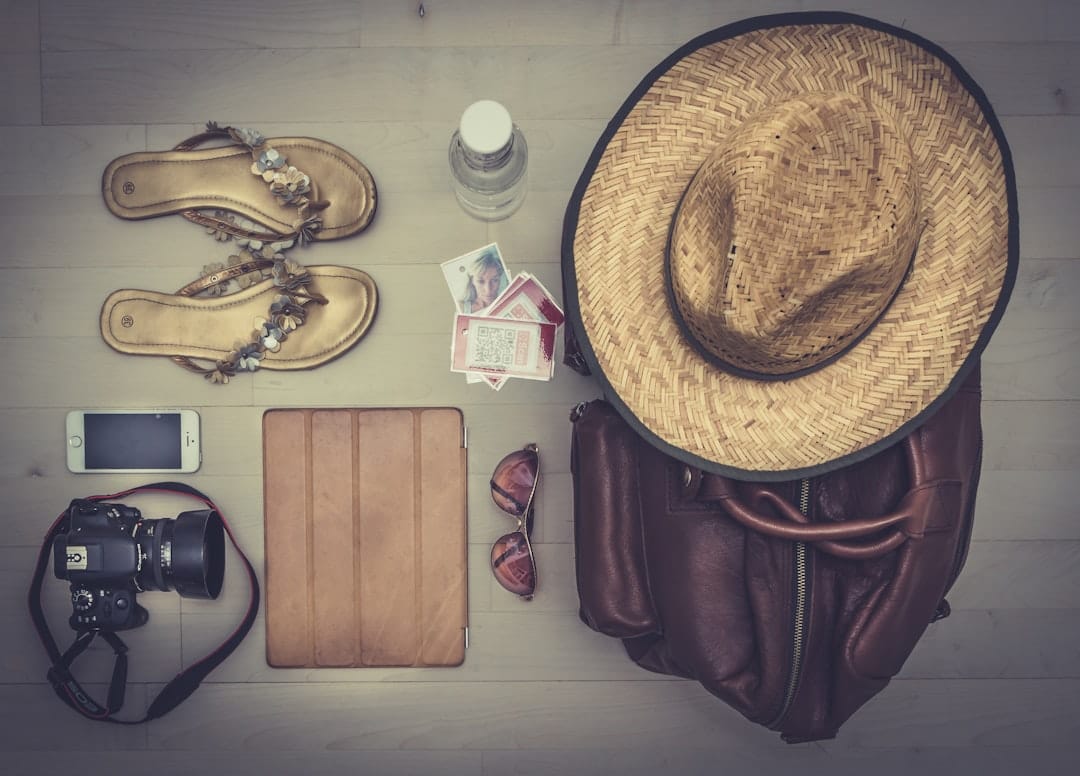
How to Actually Travel with Only a Carry-On
The first and most persistent mistake people make is packing for worst-case scenarios rather than real-life ones. You imagine a sudden formal dinner, a cold snap in an otherwise warm destination, a gym session you might feel inspired to attend — and before you know it, you've packed for three different versions of a trip that will probably look nothing like any of them. Carry-on only travel starts with a mindset shift: pack for the most likely version of your trip, not the most dramatic one.
The practical mechanics of carry-on travel come down to three things: bag size, clothing strategy, and compression. Most airlines allow a carry-on bag of roughly 55 x 40 x 20 centimetres (about 22 x 16 x 8 inches), though this varies, and budget carriers in particular are notoriously strict. Choose a bag that sits at or just under the limit. Then, instead of folding clothes in loose stacks, roll them tightly or use packing cubes to compress your clothing into dense, organised blocks. You'll be amazed how much more fits — and how much easier it is to find things when everything has a designated space.
The second key is building a capsule wardrobe rather than packing full outfits. Choose neutrals that mix and match, fabrics that are lightweight and wrinkle-resistant (merino wool is a nomad favourite for exactly this reason), and pieces that can be dressed up or down. If you're heading somewhere with laundry access — and most co-living spaces and longer-stay accommodations have it — you can comfortably operate on five to seven days' worth of clothing for a trip of any length. The mistake isn't packing too little; it's not trusting yourself to figure out the rest when you get there.
The 5-4-3-2-1 Packing Method That Changes Everything
The 5-4-3-2-1 Packing Method That Changes Everything
A side-by-side comparison of the 5-4-3-2-1 packing method against traditional overpacking and capsule wardrobe approaches across key travel criteria.
| Criteria | 5-4-3-2-1 Method | Traditional Pack | Capsule Wardrobe |
|---|---|---|---|
| Outfit Flexibility | Full access | Full access | Limited |
| Carry-On Friendly | Yes | No | Yes |
| Re-wear Strategy | Included | Not included | Included |
| Learning Curve | Standard | Free | Upgrade required |
| Ideal Trip Length | 4–14 days | Any | 7+ days |
| Overall Value | Recommended | Limited | Occasional |
One of the most common packing mistakes is the absence of any system at all — just throwing things in until the bag is full and hoping for the best. The 5-4-3-2-1 method is a framework that imposes just enough structure to prevent you from over-packing while still giving you flexibility. The numbers represent categories of clothing: 5 sets of socks and underwear, 4 tops, 3 bottoms, 2 pairs of shoes, and 1 jacket or outer layer. That's it. That's your wardrobe.
It sounds spartan until you actually lay those items out and start mixing them. Four tops and three bottoms gives you twelve possible outfit combinations — more than enough for a week, even two, if you're doing laundry mid-trip. The 5-4-3-2-1 rule forces you to be intentional about every item: does this top work with all three bottoms? Is this jacket light enough to pack but warm enough to actually need? Questions like these cut through the fog of "just in case" thinking and replace it with genuine utility.
The shoe allowance of two pairs is where most people stumble, because shoes are bulky and we're emotionally attached to them. The workaround is simple: wear your bulkiest pair on the plane. One pair of versatile everyday sneakers or walking shoes, one pair of sandals or something dressier depending on your destination, and you've covered most scenarios without filling half your bag with footwear. Digital nomads heading to beach destinations or budget-friendly slow travel cities often find that sandals do heavy lifting across both categories — casual daytime wear and relaxed evening out.
Enjoying this? Get more like it.
Weekly picks for remote workers and digital nomads — tools, destinations, and honest takes, straight to your inbox.
Subscribe free →
Yes, the 3-1-1 Rule Still Applies — And Most People Get It Wrong
The 3-1-1 rule is one of the most misunderstood elements of carry-on travel, and getting it wrong at security is one of the most avoidable mistakes there is. The rule, enforced by the TSA in the United States and adopted by most international airports in some form, is this: liquids must be in containers of 3.4 ounces (100ml) or less, all containers must fit in 1 clear, quart-sized resealable bag, and each passenger is allowed 1 such bag. This applies to all carry-on luggage — not just to bags that look like they contain toiletries.
The most common mistake isn't overfilling the containers — it's forgetting what counts as a liquid. Toothpaste is a liquid. Mascara is a liquid. Lip gloss, foundation, hand cream, perfume, even peanut butter (yes, really) — all liquids in the eyes of airport security. People routinely pack these items loose in their bag and get held up, or worse, have items confiscated. The fix is to decant everything into small reusable silicone bottles, buy travel-sized versions, or switch to solid alternatives: shampoo bars, solid moisturisers, and toothpaste tablets are genuinely excellent and take up almost no space or liquid allowance.
It's also worth knowing that 3-1-1 only applies to carry-on bags — checked luggage has no liquid restrictions beyond common sense and airline policies for hazardous materials. But if you're committed to carry-on only travel, that distinction is moot. Your goal is to get everything, including your toiletry bag, through security without drama and into the overhead bin without regret. Solid toiletries, a well-organised quart bag, and a ruthless audit of what you actually use daily versus what you pack "just in case" will get you there.
The 3-5-7 Rule: A Smarter Way to Think About Trip Length
While the 5-4-3-2-1 method addresses what you pack, the 3-5-7 rule addresses how much — specifically, it's a guide to scaling your packing based on the length of your trip. The framework suggests: for a trip up to 3 days, pack only the essentials and one small bag. For 5 days, you're allowed a slightly larger personal item or small carry-on. For 7 days or more, you get a standard carry-on — but nothing larger. The critical insight here is that the quantity of items should not grow linearly with the length of your trip, because beyond a week, you should be doing laundry.
This is the mistake that catches long-term nomads off guard: the assumption that a month-long trip requires a month's worth of clothes. It doesn't. A week's worth of well-chosen clothing, refreshed with laundry every five to seven days, will carry you indefinitely. The real packing error for extended trips isn't underestimating clothing — it's underestimating tech. Cables, adapters, a laptop, a portable monitor for those who work better with dual screens, noise-cancelling headphones, a portable charger: the tech load for a working nomad can easily rival the clothing load, and it's far less compressible.
The 3-5-7 rule also implicitly encourages you to think about your destination's resources before you pack. Are there laundry facilities? (Most good co-living spaces and digital nomad accommodations have them.) Are the toiletries you need available locally? Almost certainly yes, and often cheaper than at home. Can you buy that extra thing if you genuinely need it? Probably. Nomads who've been moving for years will tell you the same thing: shops exist everywhere, and the weight of over-packing costs far more — in fees, in fatigue, in the friction of moving — than the occasional inconvenience of buying something you forgot to bring.
The Most Forgotten Item Isn't What You Think
Ask any experienced traveller what gets forgotten most often and you'll hear a predictable list: phone charger, toothbrush, medications. But the most commonly forgotten items for digital nomads are different — and the forgetting tends to be more consequential. At the top of the list: a universal power adapter. You remember this the hard way, usually at 11pm in a new city when your laptop is at 4% and the only outlet in your accommodation has a different socket shape. A compact, multi-country adapter that handles the UK, EU, US, and AU plugs covers the vast majority of situations worldwide and takes up almost no space.
The second most forgotten category is documentation and access. Not just your passport — that one you remember — but the smaller things: printed (or downloaded offline) booking confirmations, emergency contact information stored somewhere other than your phone, a photocopy of your passport stored separately from the original, and any visa paperwork you might need to show on arrival. For nomads working across borders, keeping a simple document folder in your bag — physical or a carefully organised offline folder on your device — eliminates a surprising amount of stress. These aren't glamorous items, but neither is spending three hours at a foreign airport trying to prove you have an onward ticket.
And then there's the item that's easy to forget because it doesn't feel like a travel item at all: a good pair of earplugs or a sleep mask. Hostels, co-living spaces, early morning flights, thin walls in budget accommodation — the ability to sleep well anywhere is one of the most underrated travel skills, and it starts with packing for it. Burnout is a real risk in the nomad lifestyle, and poor sleep in unfamiliar environments is one of its quieter triggers. A $3 pair of foam earplugs is worth more than a $40 travel pillow.
Packing well is, ultimately, a form of self-knowledge. It requires you to be honest about who you actually are when you travel — not who you imagine you might become in a new city — and to make peace with the fact that you don't need everything to feel prepared. The nomads who move most freely are the ones who've made their peace with a 20-litre bag and discovered, to their surprise, that they miss almost nothing they left behind. Every kilogram you shed from your pack is a small act of liberation: fewer fees, faster movement, less mental load, more presence in the places you're actually in.
The five mistakes — over-packing for imagined scenarios, skipping a clothing system, misunderstanding liquid rules, scaling for trip length instead of laundry access, and forgetting the practical workday essentials — all have the same root cause: packing on autopilot rather than with intention. Slow down before your next trip, lay everything out on the bed, and ask each item to justify its place. Most of the time, the bag that results is lighter, smarter, and more than enough. And on the road, especially in the slow travel cities where nomads are settling in for weeks at a time, enough is more than enough.