What are the best travel hacks for packing?
There is a particular kind of freedom that comes from walking off a plane with everything you own strapped to your back. No baggage carousel. No checked luggage fees. No waiting. For digital nomads and remote workers who hop between cities on a whim, carry on only travel tips are not a nice-to-have — they are the foundation of a genuinely mobile lifestyle. The difference between a smooth trip and a chaotic one often comes down to what you packed before you left the house.
The good news is that packing light is a learnable skill. It is not about deprivation — it is about intention. Once you start applying a few proven frameworks to your packing routine, you will wonder why you ever hauled a 30-kilogram suitcase through cobblestone streets. Whether you are heading out for a two-week workation in Southeast Asia or a quick long-weekend conference in Europe, the same principles apply.
In this guide we are breaking down the most effective packing systems, from numerical frameworks like the 5-4-3-2-1 and 3-5-7 methods to the TSA rules everyone misreads, plus the one item that frequent travellers almost always forget. By the end, you will have a repeatable system that makes packing feel less like a stressful scramble and more like a confident ritual.
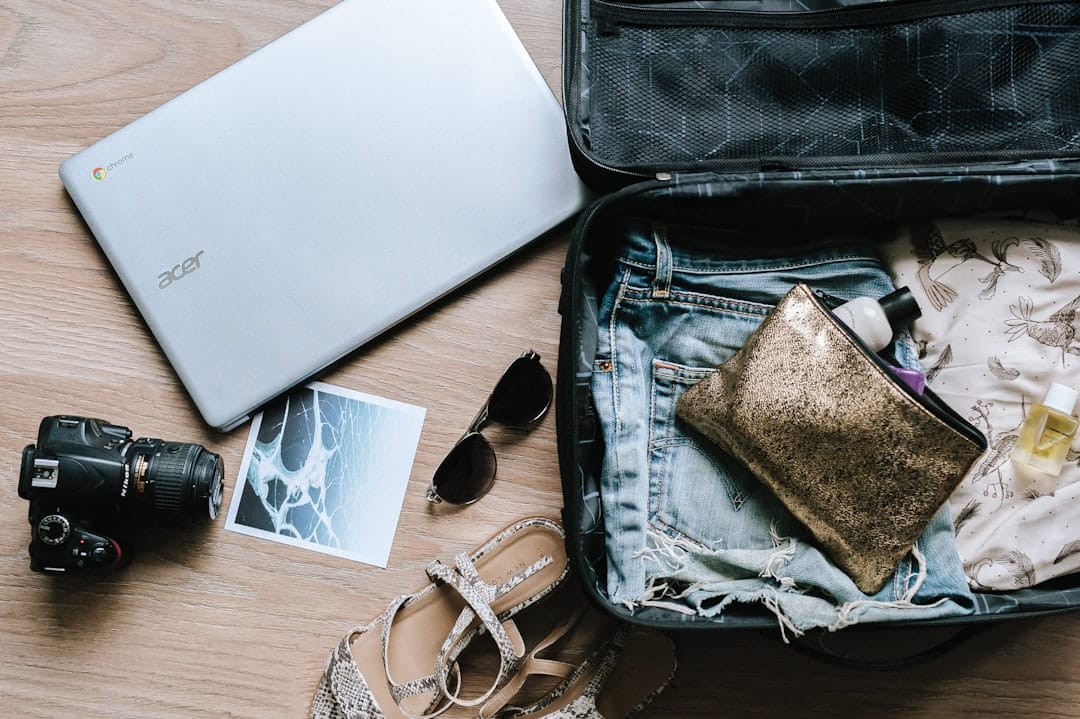
How to Actually Travel with Only a Carry-On
The single biggest shift carry-on travellers make is moving from a suitcase mindset to a capsule wardrobe mindset. Instead of packing an outfit for every single day, they pack pieces that mix and match across multiple looks. Think neutral colours, versatile fabrics, and layers you can wear three different ways. A merino wool t-shirt worn under a blazer looks just as sharp in a client meeting as it does at a rooftop bar — and it dries overnight if you wash it in the sink.
Compression packing cubes are the practical backbone of this approach. They compress soft items into a fraction of their original volume and keep your bag organised so you never have to unpack everything to find a single item. Pair cubes with a dedicated tech pouch for cables, adapters, and your laptop, and you have a system that works whether you are living out of a 20L daypack or a full-size carry-on.
The other carry-on only travel tip that seasoned nomads swear by is doing laundry on the road. Most co-living spaces and budget accommodations have laundry facilities or a nearby laundromat, and if you are staying anywhere for more than three or four days, a mid-trip wash completely removes the need to pack for every single day of the trip. You do not need 14 shirts for a two-week journey — you need seven, maximum.
What Is the 5-4-3-2-1 Packing Trick?
The 5-4-3-2-1 packing trick is a structured clothing formula designed to help travellers pack a week's worth of outfits without overpacking. The numbers break down like this: 5 tops, 4 bottoms, 3 shoes, 2 bags or accessories, and 1 jacket or outerwear layer. It gives you a starting checklist and a hard ceiling so that packing decisions become almost automatic rather than agonising.
For remote workers, the formula works especially well because it creates a clothing wardrobe that functions across work calls, casual co-working, and evening social situations without requiring major wardrobe changes for each context. The 3 shoes allowance is where most people still overpack — a pair of comfortable walking shoes that also pass as smart-casual, sandals, and a packable pair of lightweight trainers will cover almost every scenario. If your trip is purely warm weather, you can easily drop that down to two.
You can read a full breakdown of exactly how to apply this system in practice, including what to do when the formula does not quite map to your destination's climate, over at our dedicated guide on the 5-4-3-2-1 packing trick. The key takeaway is that constraints breed creativity — and in packing, constraints also save you time, money, and back pain.
Enjoying this? Get more like it.
Weekly picks for remote workers and digital nomads — tools, destinations, and honest takes, straight to your inbox.
Subscribe free →
Is the 3-1-1 Rule Only for Carry-On Bags?
Yes — the 3-1-1 liquids rule is specifically a carry-on restriction, not a blanket travel rule. It was introduced by the TSA in the United States in 2006 and has since been adopted in similar forms by most major aviation security authorities worldwide. The rule states that each passenger may carry liquids, gels, and aerosols in containers of 3.4 ounces (100ml) or less, all fitting inside 1 clear quart-sized resealable bag, with 1 bag allowed per passenger. Anything larger must go in checked luggage.
For carry-on only travellers, this rule is one of the most practical challenges to solve. The smartest approach is to switch to solid toiletries wherever possible — solid shampoo bars, conditioner bars, and toothpaste tablets have become widely available and completely sidestep the liquid limit. For the items you cannot replace with a solid version, buy travel-size containers and refill them from larger bottles when you arrive at your destination or when staying somewhere long enough to justify it.
It is also worth noting that rules vary between airports and countries. What passes through security in Bangkok may get flagged in Frankfurt. The safest habit is to always pack your liquids bag at the very top of your carry-on so it can be quickly removed for screening — it speeds up the security line and ensures you never accidentally leave a full-size product in there. If you are uncertain about what else to avoid in your carry-on, our detailed guide on what not to pack in your carry-on walks you through the full list of commonly confiscated items that catch travellers off guard.
What Is the 3-5-7 Rule for Packing?
The 3-5-7 packing rule is a trip-length formula rather than a category-based one. The idea is that for trips up to 3 days, you pack into a personal item only — think a small backpack or tote bag. For trips of 4 to 7 days, you use a carry-on bag. For trips longer than 7 days, you are still using a carry-on, but you plan for laundry access. The underlying principle is that your luggage size should never scale linearly with your trip length — instead, your packing strategy should adapt.
This is particularly useful for remote workers doing slow travel across multiple countries. If you are spending three weeks rotating between Lisbon, Chiang Mai, and Medellín, you do not need a bigger bag — you need a smarter laundry system and a wardrobe that functions in different climates. Many experienced nomads who practise this rule find they actually pack less the longer their trip is, because they stop treating it like a vacation and start treating it like a life they are living.
The 3-5-7 rule also pairs well with the capsule wardrobe approach mentioned earlier. If you are moving cities every week or two as part of a slow travel circuit — something we have covered in depth in our guide to slow travel cities for digital nomads in 2025 — keeping your bag light means each move is fast, cheap, and low-stress. You can take budget airlines without paying checked luggage fees, hop on trains without wrestling your bags into overhead storage, and arrive at a new apartment without feeling like you need a recovery day just from the travel itself.
The Most Forgotten Item When Travelling (And How to Never Forget It Again)
The Most Forgotten Item When Travelling (And How to Never Forget It Again)
A comparison of three popular packing checklist apps across key features to help travellers avoid forgotten essentials.
| Feature | PackPoint | TripList | Unipack |
|---|---|---|---|
| Smart Reminders | Included | Add-on cost | Included |
| Weather Integration | Included | Not available | Included |
| Custom Categories | Limited | Included | Included |
| Offline Access | Included | Included | Upgrade required |
| Free to Use | Free | Free | Add-on cost |
| Best For | Recommended | Upgrade required | Selected locations |
Surveys and anecdotal reports from frequent travellers consistently point to the same answer: phone and laptop chargers — or more specifically, the right adapter for the destination. It sounds embarrassingly simple, but it is the item that causes the most mid-trip panic. A universal travel adapter is one of the highest return-on-investment items you can own as a remote worker. Buy a good one, keep it permanently in your travel bag, and you will never have this problem again.
Beyond adapters, the other items that appear most frequently on forgotten-item lists include prescription medications, reusable water bottles, and physical copies of important documents. For remote workers specifically, a backup portable battery bank is often left behind — and given that many nomads work from cafes, parks, and transit, a dead laptop battery mid-deadline is a genuine productivity emergency. A compact 20,000mAh power bank weighs less than 400 grams and can be a business trip lifesaver.
The single most effective fix for forgotten items is a master packing list saved to your phone or a notes app. Not a list you recreate every trip — a permanent, evolving document that you check off before every departure. Divide it into categories: tech, toiletries, documents, clothing, and work essentials. Every time you land at a destination and realise you forgot something, add it to the list immediately. Within four or five trips, the list becomes nearly foolproof. Your future self will thank you every time you zip that bag with total confidence.
Packing light is ultimately a practice, not a personality trait. The first few times you try to go carry-on only, you will probably still over-pack a little. You will arrive at your hotel, open your bag, and realise half of what you brought never left its packing cube. That is fine — it is part of the learning process. The goal is not perfection on the first trip but steady iteration toward a system that feels completely natural.
Apply the frameworks in this guide — the capsule wardrobe approach, the 5-4-3-2-1 formula, the 3-5-7 trip-length rule, and the permanent packing list — and you will have a toolkit that covers almost every travel scenario a digital nomad will face. Master your carry-on, and you master a significant slice of the nomad lifestyle itself. Less friction at the airport means more energy for the work and the adventure waiting on the other side.