The "creeping" homogenisation of digital nomad destinations
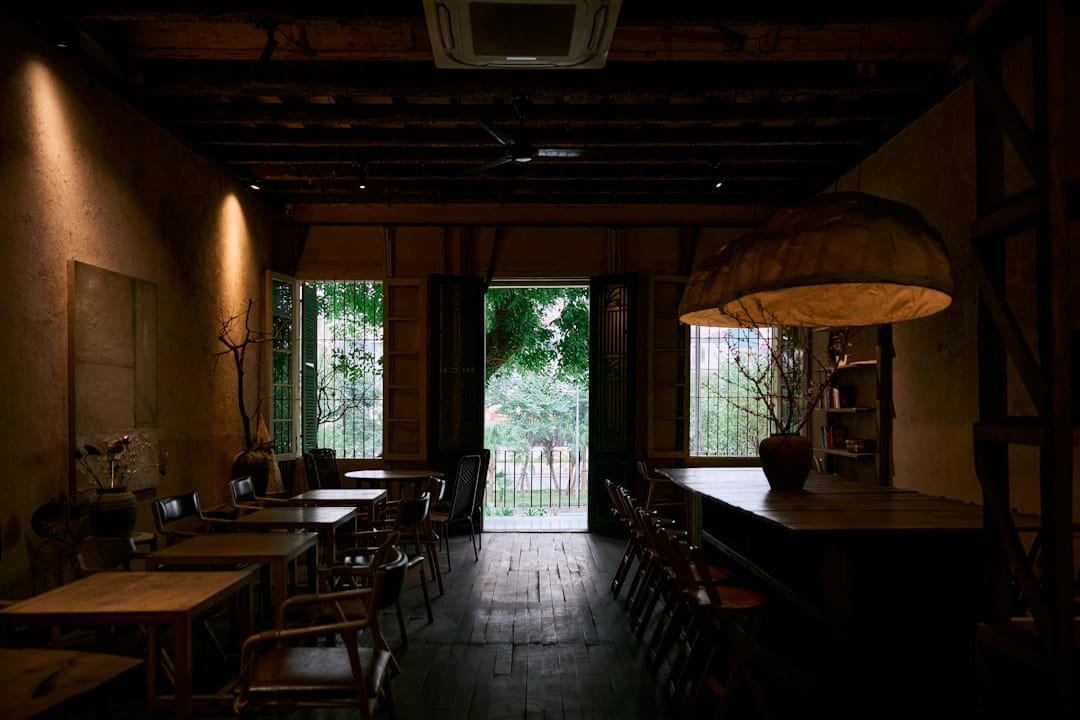
There's a moment that arrives in nearly every popular nomad town now, and it tends to arrive while you're sitting in a café you chose almost at random. The walls are exposed brick or painted a soft sage green. There's a monstera in the corner. The menu offers oat-milk flat whites, avocado on sourdough, and a turmeric latte that costs roughly the same whether you're in Lisbon, Bali, Mexico City, or Tbilisi. The Wi-Fi password is printed on a little wooden tag. The playlist is that particular brand of mellow lo-fi that has somehow become the global anthem of people typing on laptops. And you realise, with a small jolt, that you could be anywhere.
This is the creeping homogenisation of digital nomad destinations, and it is one of the quieter paradoxes of the lifestyle. We leave home in search of difference — new textures, languages, rhythms, foods — and yet the infrastructure that makes remote work possible has a way of smoothing those differences down. The same coworking chains, the same brunch aesthetic, the same Notion-templated city guides. The very tools that let you land softly in a new place are, slowly, making every place feel a little more like the last.
None of this is a reason to stop travelling. But it is worth understanding how it happens, what it costs the places you pass through, and — most usefully — what you can do to push back against it in small, deliberate ways. Because the antidote to sameness isn't a better app. It's a different way of moving through the world.
How the Sameness Sets In
Homogenisation rarely happens in a dramatic sweep. It seeps in. A neighbourhood gets a reputation as nomad-friendly, a few cafés add fast fibre and English menus, a coworking space opens, and within a couple of seasons the area has reorganised itself around a particular kind of visitor with a particular set of expectations. The landlord who used to rent a flat to a local family discovers they can charge triple for a monthly furnished stay marketed to remote workers. The corner shop becomes a smoothie bar. The cycle accelerates because it's profitable, and because it's legible — visitors trust what they recognise.
The aesthetic itself is a kind of shorthand. Exposed Edison bulbs, reclaimed wood, neutral palettes and a wall of trailing plants signal, instantly and across continents, "you can work here, and you'll feel at home." That reassurance has real value when you're jet-lagged and disoriented. But the more a place leans on that visual language to attract remote workers, the more it sheds whatever made it specific. The texture of a city is in its irregularities — the chaotic market, the family-run cantina with no menu, the bar where nobody speaks your language. Homogenisation is the gradual sanding away of exactly those edges.
There's also an algorithmic layer to all of this. The destinations that trend are the ones that photograph well and rank well, and so attention concentrates in a handful of neighbourhoods worldwide. Everyone reads the same listicles, books the same well-reviewed coworking desks, and shows up on the same three streets. The result is a feedback loop: popularity breeds infrastructure, infrastructure breeds more popularity, and the long tail of genuinely distinct places goes quietly unvisited.
What It Actually Costs — For You and for the Place
For the traveller, the cost is subtle but real: a slow erosion of the very reason you left. If you can recreate your home routine, your home foods, and your home social bubble anywhere on earth, then geography stops meaning very much. You start to experience cities as interchangeable backdrops for the same Zoom calls. Many people who hit a wall of restlessness or disillusionment on the road are, without naming it, reacting to this flattening. Travel that doesn't change you isn't really travel — it's relocation with extra steps, and it can quietly contribute to the kind of fatigue that creeps up on long-term nomads.
For the destination, the costs are more concrete. Rents rise faster than local wages. Long-term residents get priced out of neighbourhoods their families have lived in for generations. Businesses reorient toward visitors who'll be gone in a month, and away from the people who actually live there year-round. A street that once had a butcher, a hardware shop and a school-run café becomes a corridor of remote-work-friendly brunch spots that empty out in the low season. The local economy becomes dependent on a population that, by definition, isn't committed to staying.
It's worth being honest that as a digital nomad you are part of this dynamic, not an observer of it. That's not a guilt trip — it's simply the starting point for travelling more thoughtfully. You can't undo the larger forces of global remote work, but the granular choices of where you stay, where you spend, and how long you commit do add up. Slow travel and a bit of financial intentionality, the kind covered in this guide to budgeting for digital nomads, turn out to be as much about ethics as about money.
Enjoying this? Get more like it.
Weekly picks for remote workers and digital nomads — tools, destinations, and honest takes, straight to your inbox.
Subscribe free →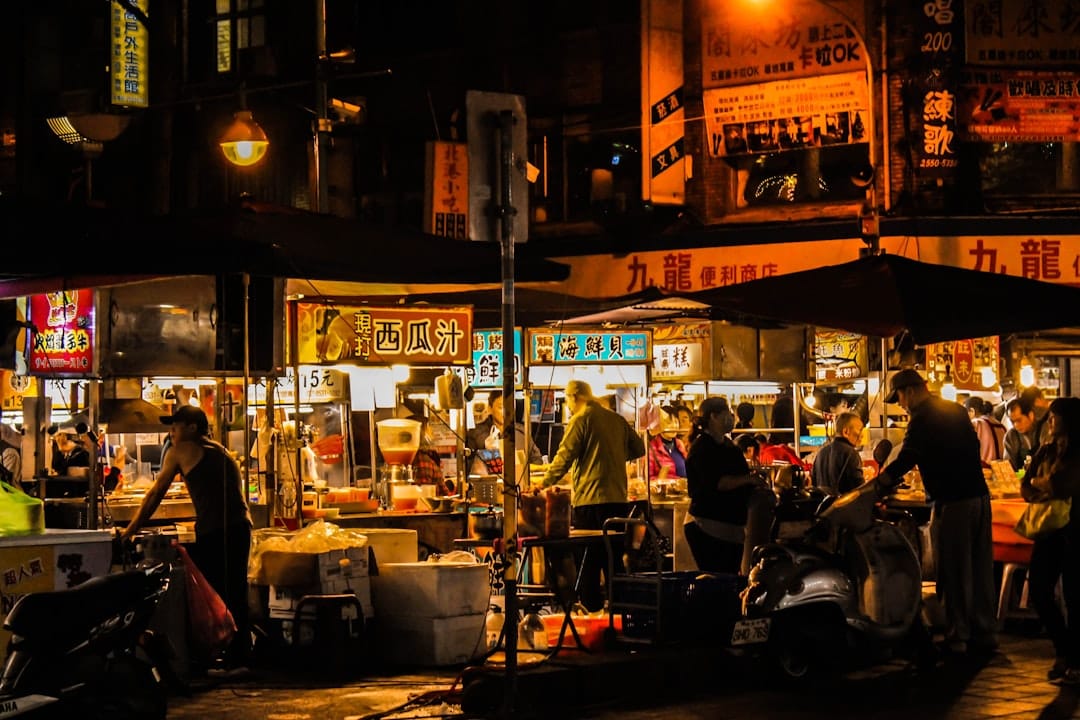
How to Travel Against the Grain
How to Travel Against the Grain
Practical strategies for nomads to resist homogenisation through intentional choices in timing, location, and engagement.
| Strategy | Effort Level | Local Benefit | Authenticity Gain |
|---|---|---|---|
| Stay in off-season months | Low | High | Significant |
| Learn basic local language | Moderate | Very high | High |
| Participate in local volunteering | High | Very high | Very high |
| Stay in secondary cities | Low | High | High |
| Build relationships with locals first | High | Very high | Exceptional |
The single most powerful lever you have is time. Speed is what drives homogenisation — the faster you move, the more you depend on standardised, legible infrastructure to land softly. Slow down and the whole equation changes. Stay three months in one place instead of three weeks and you'll find the unbranded café two streets back from the famous one, learn enough of the language to order off the local menu, and start recognising faces. The repeat-customer relationship is impossible to build in a week, and it's exactly that relationship that connects you to a place's real texture.
Choose your geography deliberately, too. Instead of defaulting to the three neighbourhoods that every guide names, pick a town one tier down — a secondary city, a smaller coastal place, somewhere that hasn't yet been optimised for remote work. The Wi-Fi might require a little research, but the trade-off is a place that still feels like itself. Resources like this round-up of slow travel cities for digital nomads on a budget can point you toward destinations that reward patience rather than punishing it. The point isn't to chase obscurity for its own sake — it's to break the algorithmic herd instinct that funnels everyone to the same handful of streets.
Finally, spend like a resident rather than a tourist. Buy your produce from the market, not the imported-goods supermarket. Eat where the locals eat, even when there's no English menu and no curated playlist. Rent directly from a local owner where you can rather than through platforms that hoover up the margin. Each of these choices keeps a little more money circulating in the local economy and a little less flowing toward the standardised infrastructure that flattens everything out.
Common Mistakes That Speed Up the Flattening
Common Mistakes That Speed Up the Flattening
Comparison of high-impact mistakes that accelerate destination homogenisation and their consequences for local culture.
| Mistake | Impact on Locals | Impact on Authenticity | Reversibility |
|---|---|---|---|
| Clustering in one neighbourhood | Displacement & rising rents | Erases local identity | Difficult |
| Using only English-speaking services | Language decline | Reduces cultural exchange | Moderate |
| Eating at international chains | Local restaurants close | Cuisine homogenises | Very difficult |
| Booking standardised hostels only | Independent guesthouses fail | Reduces character | Moderate |
| Ignoring local events & festivals | Weakens community bonds | Tourism becomes disconnected | Easy |
The first and most common mistake is treating the nomad bubble as the destination. It's easy to land somewhere new and immediately gravitate to the coworking space, the nomad meetup, and the expat-heavy bar — and then spend three months in a country without ever really leaving the bubble. There's nothing wrong with community; the right co-living space or networking event can be genuinely grounding, and finding good people on the road matters for your wellbeing. The mistake is letting that bubble become the entire experience, so that you're effectively living in a portable version of the same place no matter where the airport is.
A second mistake is over-indexing on convenience. The instinct to minimise friction — to find the fastest Wi-Fi, the most familiar food, the smoothest possible workday — is understandable, especially when you're juggling deadlines and timezones. But friction is often where the actual travelling happens. The fumbled conversation at the market, the wrong bus, the meal you couldn't pronounce: these are the moments that imprint a place on your memory. Optimising them all away leaves you with an efficient, frictionless, and ultimately forgettable stay. If a smoother workflow is the goal, it's better to build that into your tools and routine rather than into your choice of neighbourhood.
The third mistake is moving too fast to ever build a relationship with anywhere. Constant churn — a new city every two or three weeks — forces you back onto standardised infrastructure every single time, because you never stay long enough to learn the local alternatives. It's also a fast track to burnout. Slowing down isn't just better for the places you visit; it's better for you, protecting against the low-grade exhaustion that comes from perpetual logistics and shallow first impressions.
Choosing Accommodation and Community Without Defaulting to the Template
Where you sleep shapes everything else. A purpose-built nomad apartment block can be efficient and sociable, but if it's full of people who fly in for a month and never leave the building, it can also be the most homogenised space in the whole city — a sealed environment that could be teleported anywhere. When you're weighing options, look for places embedded in actual neighbourhoods, run by people who live there, with a mix of long-term locals and visitors rather than a monoculture of transient remote workers. The guidance in this comparison of co-living spaces for remote workers is useful precisely because it pushes you to think about community quality, not just the photos and the Wi-Fi speed.
Community is not the enemy of authenticity, but it has to be chosen with care. The healthiest setups tend to be the ones that connect you outward into the local life of a place rather than inward into a closed expat loop — the host who introduces you to their favourite family-run restaurant, the long-stay resident who's learned the language and can translate the neighbourhood for you, the coworking space that hires and serves locals rather than just hosting foreigners. These are the relationships that make a city feel like a city rather than a backdrop.
Practically, that means asking different questions when you book. Not just "how fast is the internet" but "who else lives here, and for how long?" Not just "is it walkable to cafés" but "are those cafés serving the neighbourhood or just serving people like me?" The answers won't always be perfect, and there's no purity test to pass. But the habit of asking reshapes where you end up — and it's the accumulation of those small reshaped decisions, across thousands of travellers, that determines whether a place keeps its character or quietly dissolves into the global template.
The homogenisation of nomad destinations isn't a conspiracy and it isn't anyone's villainy. It's the natural drift of an economy organising itself around a mobile, convenience-seeking population — and it accelerates whenever any of us reaches reflexively for the familiar. The good news is that the forces pulling against it are entirely within your control: slow down, go one tier off the well-trodden path, spend like someone who lives there, and lean into friction instead of optimising it away.
Do that, and the reward is the thing you came for in the first place: a world that still surprises you, cities that feel unmistakably themselves, and the rare, grounding sense of having actually been somewhere — not just opened your laptop in a different time zone. The template will keep spreading. You don't have to live inside it.