How to pack 2 weeks of clothes in a carry-on?
Two weeks. One bag. No checked luggage fees. If that sounds like a fantasy, you haven't yet cracked the art of carry-on only travel. For digital nomads and location-independent professionals, mastering this skill isn't just about saving money at the airport — it's about moving faster, staying flexible, and never waiting at a baggage carousel again. Whether you're hopping between coworking cities or extending a client trip into a mini adventure, fitting 14 days of clothes into a single carry-on is entirely achievable.
The secret isn't owning less. It's packing smarter. With the right frameworks, a disciplined approach to fabrics, and a few tested systems, you can build a two-week wardrobe that fits in the overhead bin without sacrificing versatility or professionalism. These carry on only travel tips will change the way you think about every trip you take.
This guide breaks down the most effective packing methods used by frequent travellers, explains the rules you actually need to know, and gives you a clear action plan so you can walk out the door with everything you need and nothing you don't.
How People Actually Travel with Only a Carry-On
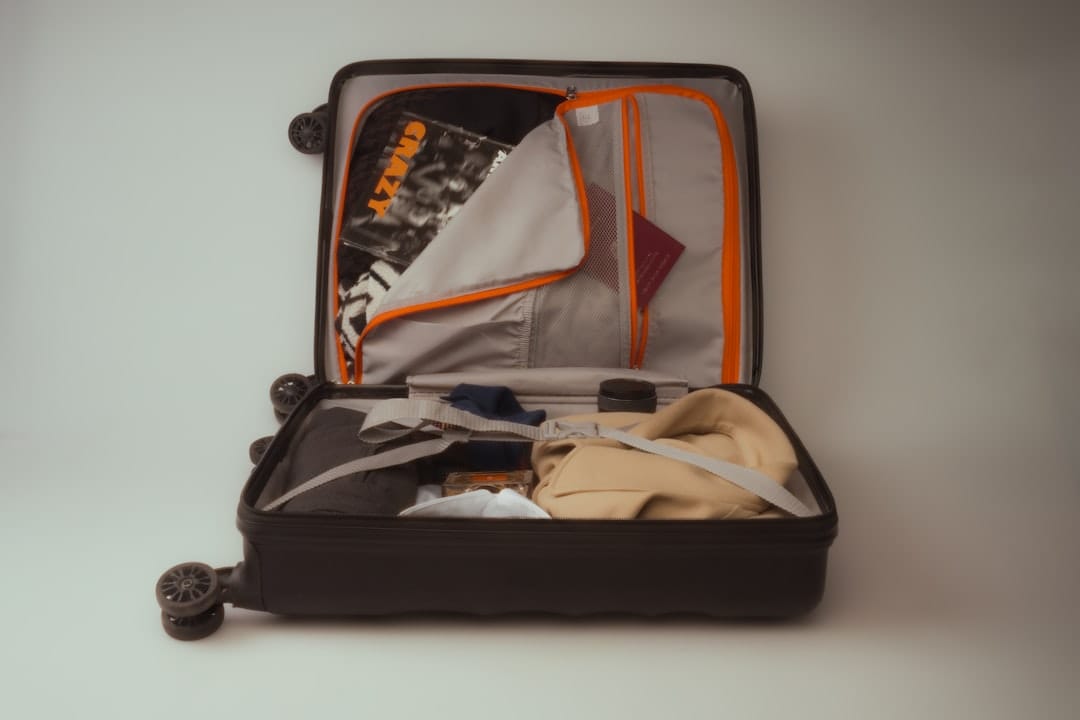
The foundation of carry-on only travel is a shift in mindset. Most people pack for every possible scenario — the fancy dinner that might happen, the cold snap that probably won't, the gym session they'll realistically skip. Experienced carry-on travellers pack for the most likely scenarios and handle exceptions by doing laundry or buying a single item locally. That mental shift alone will cut your bag weight by a third.
The practical starting point is choosing the right bag. Most airlines allow a carry-on of around 55 x 40 x 20 cm and a personal item such as a backpack or tote. A 40-litre bag used alongside a slim daypack gives you significant capacity without tipping over airline limits. Pair that with compression packing cubes, which can reduce the volume of clothing by 30 to 50 percent, and you suddenly have far more room than you expected.
Fabric choice is equally important. Merino wool, lightweight technical fabrics, and wrinkle-resistant blends are the wardrobe staples of seasoned nomads. A merino t-shirt can be worn two or three times between washes without odour, and it dries overnight in a hotel bathroom. Swap out bulky cotton basics for merino or synthetic alternatives and you'll immediately notice the difference in both weight and packability. Plan to do laundry once mid-trip — most Airbnbs, hostels, and coworking-friendly hotels offer washing facilities — and two weeks of clothes suddenly requires far fewer actual items.
What Is the 5-4-3-2-1 Packing Method?
What Is the 5-4-3-2-1 Packing Method?
A comparison of three popular packing methods showing what each allows for a 2-week trip.
| Feature | 5-4-3-2-1 Method | 3-5-7 Method | Capsule Wardrobe |
|---|---|---|---|
| Total Items | 15 pieces | 15 pieces | 10–12 pieces |
| Outfit Variety | High | Moderate | Limited |
| Easy to Remember | Yes | Yes | Varies |
| Suits 2-Week Trips | Yes | Partial | Partial |
| Repeat Outfit Risk | Low | Moderate | High |
| Best for Carry-On | Recommended | Upgrade required | Recommended |
The 5-4-3-2-1 method is one of the most popular packing frameworks among frequent travellers, and for good reason — it gives you a concrete item count to build from rather than a vague instruction to pack light. The numbers represent specific clothing categories: 5 sets of socks and underwear, 4 tops, 3 bottoms, 2 pairs of shoes, and 1 hat or accessory. It was originally designed for one-week trips, but it scales directly to two weeks when combined with a mid-trip laundry session.
To make it work for 14 days, treat the framework as your reset point rather than your entire wardrobe. Pack to the 5-4-3-2-1 formula, do laundry on day seven, and repeat. You're essentially cycling through the same capsule wardrobe twice. The key is making sure your four tops and three bottoms are genuinely mix-and-match — neutral colours, compatible styles, and versatile enough to work for both a coworking space and a casual dinner. A navy linen shirt, a black crew-neck tee, a white button-down, and a lightweight hoodie, for example, can produce twelve distinct outfit combinations with three bottoms.
Footwear is where most people go wrong. Two pairs of shoes sounds restrictive, but it works if you choose wisely. A versatile sneaker that handles both walking and casual work settings, paired with one pair of sandals or a dressier flat, covers almost every situation you're likely to encounter. Wear your bulkier pair on travel days to keep them out of your bag entirely. Shoes are the heaviest, most space-hungry items you'll pack, so every pair you cut makes a significant difference.
Enjoying this? Get more like it.
Weekly picks for remote workers and digital nomads — tools, destinations, and honest takes, straight to your inbox.
Subscribe free →
Is the 3-1-1 Rule Only for Carry-On Luggage?
Yes — the 3-1-1 rule is a carry-on specific regulation, not a general packing guideline. It's a security requirement introduced by the TSA in the United States and adopted in similar forms by aviation authorities around the world. The rule states that liquids, gels, creams, and aerosols must be in containers of 100 ml or 3.4 oz or less, all stored in a single transparent, resealable plastic bag no larger than one litre, with one bag allowed per passenger. Anything larger must go in checked luggage.
For carry-on only travellers, the 3-1-1 rule shapes your entire toiletry strategy. The practical solution is to go minimal and solid wherever possible. Solid shampoo bars, conditioner bars, solid sunscreen, and concentrated toothpaste tablets have become standard kit for long-term nomads. They don't count toward your liquids allowance, they last longer gram for gram than their liquid equivalents, and they eliminate leakage entirely. For liquids you can't replace — specific medications, contact lens solution, a preferred serum — decant into small silicone travel bottles and plan carefully to fit everything inside that single clear bag.
One underused strategy is buying toiletries at your destination. If you're staying somewhere for two weeks, a quick supermarket stop on arrival to buy shampoo, conditioner, and body wash means you board the plane with almost no liquid burden at all. Many accommodation options also provide basics — check before you pack. Keeping your liquids bag as lean as possible frees up real estate in your carry-on for the things that actually matter.
What Is the 3-5-7 Packing Rule?
The 3-5-7 rule is a slightly looser packing framework that works well for travellers who need a bit more flexibility — especially those attending client meetings, conferences, or events alongside regular workdays. It translates to: 3 pairs of shoes, 5 bottoms, and 7 tops. Compared to the 5-4-3-2-1 method, it gives you more top options and slightly more footwear flexibility, which can be useful when your trip mixes professional and casual contexts.
The trade-off is volume. Seven tops and five bottoms is a larger clothing load, so applying the 3-5-7 rule to a carry-on requires strict discipline around fabric weight and compression. Each item should be lightweight, wrinkle-resistant, and multi-purpose. A blazer that works over a t-shirt for a meeting and over a dress for dinner, a pair of tailored joggers that pass in a smart-casual setting, and a versatile midi skirt that dresses up or down — these are the kinds of pieces that make the 3-5-7 rule viable in a single bag.
Both the 5-4-3-2-1 and 3-5-7 frameworks are tools, not rules. Use whichever gives you a useful constraint to plan around, then adapt it to your specific trip. The goal is to make a deliberate decision about every item before it goes in your bag — not to follow a formula blindly. What both methods do is force you to think in outfits rather than individual items, which is the real skill underlying all effective carry-on packing.
The Most Forgotten Item When Travelling — and How Not to Miss It
Packing light is only half the battle. The other half is not leaving anything critical behind. Surveys and travel forums consistently point to the same categories of forgotten items: charging cables and adapters, prescription medications, and travel documents or their digital backups. These aren't glamorous oversights, but they can derail a trip or a work day in ways that a forgotten pair of jeans simply won't.
The most reliable solution is a permanent packing checklist that you refine over time. Keep it in a notes app or a document you can access from your phone, and run through it every single time you pack — even if you've made the same trip a dozen times. Divide it into categories: documents, electronics, toiletries, clothing, and work essentials. For digital nomads, that work essentials section should include your laptop charger, any dongles or adapters, a portable battery, noise-cancelling headphones, and a universal travel adapter. These are the items that feel obvious until the moment you're sitting in a coworking space in Lisbon realising your EU adapter is still plugged into the wall in London.
A practical pre-departure habit used by experienced nomads is the three-pass pack. First pass: lay everything out on the bed before it goes in the bag. Second pass: cut anything you're unsure about — if you're debating it, leave it. Third pass: walk through your checklist after the bag is closed to catch anything that didn't make it in. It sounds slow but takes less than ten minutes and eliminates the frantic airport text to a flatmate asking them to post you your forgotten charger.
Packing two weeks of clothes into a carry-on is a learnable skill, not a talent. The first time you do it, it takes effort and feels like a compromise. By the fifth trip, it feels like the only sensible way to travel. You'll move faster through airports, avoid fees, never stress about lost luggage, and arrive at your destination with everything you actually need — because you chose it deliberately.
Start with one framework — the 5-4-3-2-1 method is the easiest entry point — build your capsule wardrobe around neutral, multi-wear pieces, sort your liquids before you even open your suitcase, and use a checklist to catch what your brain will inevitably try to skip. Do that consistently and carry-on only travel stops being a challenge and starts being your default. That's when the real freedom of location-independent life clicks into place.