Remote work is reshaping San Francisco, as tech workers flee and rents fall
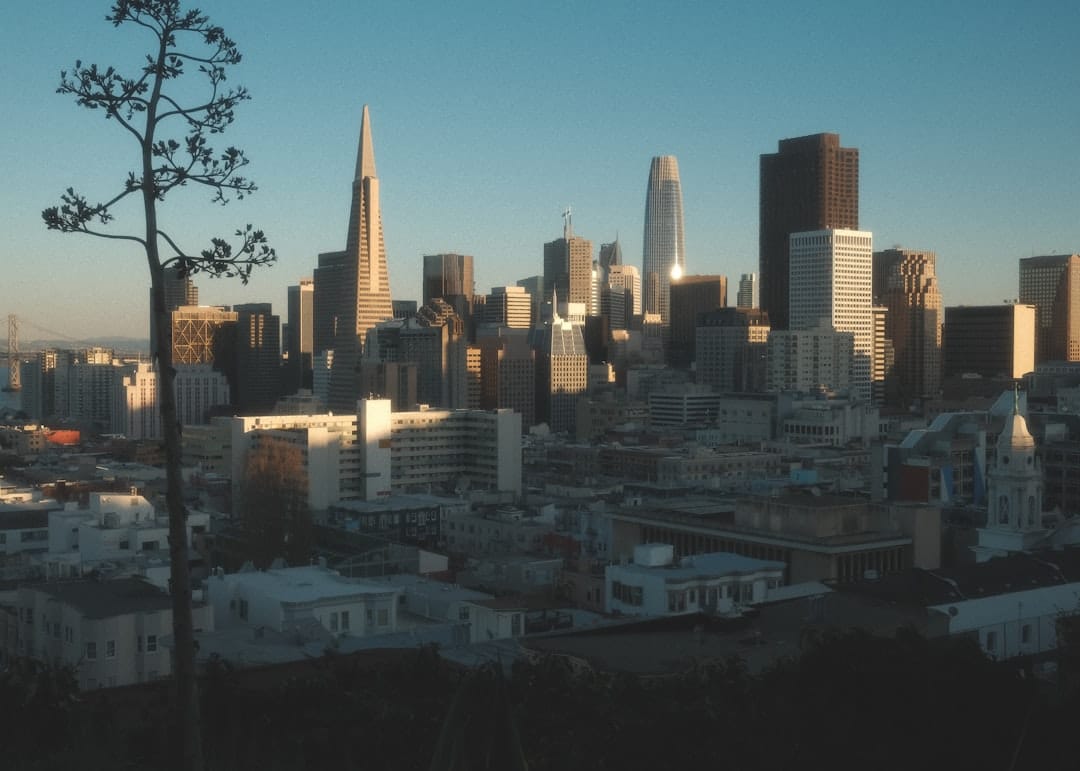
There was a time, not so long ago, when a studio apartment in San Francisco cost more than a mortgage in most of the country, and a spot at a Mission District coffee shop felt like a rite of passage for anyone trying to make it in tech. The city hummed with a particular kind of ambition — venture money, glass-walled offices, the sense that the future was being built one floor at a time. Then the world changed, laptops migrated to kitchen tables, and the geography of work quietly came undone.
If you've been watching from a rented villa in Lisbon or a co-living loft in Mexico City, you already sense the shift. Remote work didn't just give individuals freedom — it loosened the grip that a handful of expensive cities held over an entire industry. San Francisco, long the beating heart of that industry, has become the clearest case study in what happens when the office stops being the centre of gravity. Rents have softened, apartments sit empty in neighbourhoods that once had waitlists, and the exodus of tech workers has rewritten the rules of a place that seemed immune to change.
This isn't a eulogy for the city — San Francisco is far from finished. But for anyone thinking about where to live, work, and build a location-independent life, the story of what's happening here holds lessons that reach far beyond the Bay. It's a window into how remote work reshapes not just careers, but the cities we thought were permanent.
The Great Unbundling of Work and Place
For most of the last century, work and place were welded together. If you wanted the salary, you accepted the commute, the cost of living, and the assumption that your body needed to be within a few miles of a specific building. San Francisco perfected this arrangement, concentrating the highest-paying jobs in the smallest, priciest sliver of real estate imaginable. The result was a city where a six-figure income could still feel precarious, and where the pressure to be present was as much cultural as contractual.
Remote work snapped that link. Once a software engineer realised they could ship code from a mountain town in Colorado or a beach in Bali and still collect a Bay Area paycheque, the calculus changed overnight. Why pay four thousand dollars a month for a one-bedroom when the same money buys a spacious life almost anywhere else on earth? The answer, for tens of thousands of people, was that there was no good reason at all. And so they left — not in a dramatic wave, but in a steady, deliberate drift that landlords felt in their vacancy rates and city planners felt in their tax projections.
What makes this moment so instructive is that it exposes a truth the old system worked hard to obscure: the value was never in the location, it was in the work. Once that became obvious, the premium a city could charge for proximity started to erode. If you're weighing your own leap into location independence, it's worth reading how others have handled the transition from a fixed nine-to-five to a mobile life — the emotional shift often matters more than the logistics.
What Falling Rents Actually Reveal
The headline numbers are striking. In the years following the remote-work boom, San Francisco rents fell more sharply than in almost any other major American city, with median asking prices dropping by double digits at their lowest point. Neighbourhoods that had been synonymous with bidding wars suddenly advertised concessions — a month of free rent, waived deposits, the kinds of sweeteners unthinkable in the old market. For those who stayed, it was a rare taste of leverage. For those who left, it was confirmation they'd read the moment correctly.
But a falling rent chart tells only part of the story. What it really reveals is a city recalibrating its relationship with the people who live in it. When the highest earners can work from anywhere, a city can no longer assume they'll pay any price to stay. This forces a reckoning about what a place actually offers beyond a job — culture, community, climate, the texture of daily life. San Francisco has these in abundance, but for years they were bundled into the price of the office. Strip the office away, and residents began to ask whether the remaining value justified the cost.
For the location-independent worker watching this unfold, there's a practical takeaway. Cities are now competing for you in ways they never had to before. Lower rents in San Francisco are one signal; the rise of dedicated remote-work visas elsewhere is another. Places like Croatia have gone as far as offering long-stay arrangements to attract exactly the kind of worker San Francisco is losing. The whole planet is repricing itself, and the smart move is to treat your location as a decision you make deliberately rather than one you inherit.
Enjoying this? Get more like it.
Weekly picks for remote workers and digital nomads — tools, destinations, and honest takes, straight to your inbox.
Subscribe free →
Where the Tech Workers Actually Went
The exodus wasn't random. Watch the flows carefully and patterns emerge. A large contingent stayed within reach of the Bay, decamping to Lake Tahoe, Sacramento, or the quieter towns of Northern California where the same salary suddenly bought a garden and a home office instead of a cramped share. Others went further, chasing states with no income tax — Austin, Miami, and the sprawling suburbs of the Sun Belt absorbed waves of former San Franciscans who kept their jobs but shed their overheads.
Then there's the group that went truly global. Freed from any single office, they discovered that a Bay Area income stretches almost absurdly far in the right corners of the world. Lisbon became a magnet, as did Mexico City, Medellín, and a scattering of affordable, well-connected hubs across Southeast Asia and Eastern Europe. Many of these are exactly the kinds of places that show up on lists of budget-friendly slow travel cities — destinations that offer a high quality of life without the crushing cost structure of a legacy tech hub.
What's fascinating is how many of these movers didn't buy a house at all. Instead, they leaned into flexibility, cycling through co-living spaces and short-term rentals that let them test a city before committing. This is the quiet infrastructure of the new nomad economy — a network of furnished, community-oriented spaces designed for people whose income no longer ties them to a zip code. For someone leaving a place like San Francisco, that flexibility is a feature, not a compromise; it turns a wrenching relocation into a series of low-stakes experiments.
Lessons for Anyone Building a Location-Independent Life
Lessons for Anyone Building a Location-Independent Life
Comparison of key lifestyle factors for tech workers choosing between staying in a major tech hub and relocating to an emerging remote destination.
| Factor | Major Tech Hub | Emerging Remote Hub |
|---|---|---|
| Monthly Cost | $3,500–4,500 | $1,200–1,800 |
| Networking Opportunities | Frequent in-person | Online-focused |
| Internet Reliability | Enterprise-grade | Good but variable |
| Time Zone Alignment | US-based teams | International overlap |
| Quality of Life | Fast-paced, competitive | Relaxed, exploration-friendly |
| Best for Remote Workers | Ambition-driven | Lifestyle-optimized |
Illustrative figures — composed for shape, not sourced
The San Francisco story carries a warning wrapped inside its opportunity. The first lesson is that geographic arbitrage — earning in a strong currency while spending in a cheaper one — is one of the most powerful financial levers available to a remote worker, but it's not a set-and-forget strategy. Tax residency, visa rules, and cost of living all shift, and the savings evaporate quickly if you don't stay informed. Treat your location like an active part of your financial plan, not a footnote.
The second lesson is subtler and more human. Many who fled San Francisco were surprised by what they missed. It wasn't the rent or the traffic; it was the density of ambition, the chance encounters, the sense of being surrounded by people building the same kind of future. Remote work can deliver a beautiful apartment and a low cost of living, but it can just as easily deliver isolation. This is why the healthiest nomads build community deliberately — through coworking spaces, local meetups, or co-living communities that host events and networking. The best of these recreate the serendipity of a great city without the cost of admission.
The third lesson is about pace. The people who left San Francisco most successfully weren't the ones who sprinted to the cheapest possible destination and burned out chasing novelty. They were the ones who slowed down, put down temporary roots, and let a place reveal itself over weeks and months rather than days. Slow travel isn't just gentler on the nervous system; it's smarter economically, since monthly rates almost always beat nightly ones, and it gives you the time to actually work well. Freedom without structure has a way of curdling into exhaustion, and the antidote is intention.
What San Francisco's Future Tells Us About Our Own
It would be a mistake to read San Francisco's story as a simple tale of decline. Cities are resilient in ways that spreadsheets rarely capture. Lower rents have already begun to draw a different crowd — artists, founders priced out during the boom years, and younger workers who see opportunity where others saw only exodus. The very affordability that signalled crisis is now seeding a quieter renewal, one apartment and one storefront at a time. A city that empties out at one price point tends to refill at another, often with more diversity and less monoculture than before.
For the remote worker, the deeper lesson is that no place is permanent, and that's precisely what makes this era so extraordinary. The old bargain — trade your freedom for access to opportunity — has been rewritten. You can now choose the mountain town, the coastal capital, the historic quarter of a city you never imagined you could afford, and carry your livelihood with you. San Francisco taught the world how much it could charge for proximity. Remote work is teaching the world what happens when proximity stops mattering.
So watch San Francisco not as a spectator to someone else's misfortune, but as a preview of the choices now open to you. The city that once defined the geography of ambition is being reshaped by people who decided ambition could live anywhere. The question worth sitting with is a simple one: if you could work from anywhere, and the old excuses no longer applied, where would you actually want to be? For a growing number of people, the honest answer looks nothing like the place they started — and everything like the life they always meant to build.