Why Remote Work Beats the Office (Even When You're Not Happy)
There is a particular kind of honesty that arrives on the days remote work isn't glamorous. The coffee has gone cold, the Wi-Fi is stuttering, a deadline is breathing down your neck, and the room feels smaller than it did an hour ago. On mornings like these, it is tempting to romanticise the office — the buzz of colleagues, the ritual of the commute, the clean separation between work and the rest of life. But sit with that feeling for a moment, and something curious happens. Even on the bad days, even when you are not happy, the choice to work remotely still quietly wins.
This is not a story about hustle culture or curated laptop-on-a-beach photos. Anyone who has actually lived this life knows those images are a fraction of the truth. Remote work has its own frictions: isolation, blurred boundaries, the strange guilt of freedom. And yet, when you weigh the trade-offs honestly, the case for staying out of the office holds up even when the shine has worn off.
So let's do exactly that. Let's set aside the marketing gloss and look at why remote work remains the better arrangement for so many people — not because it makes every day joyful, but because it gives you something more durable than momentary happiness: agency, time, and the raw material to build a life on your own terms.
The Difference Between Happy and Free
The Difference Between Happy and Free
Comparison of happiness drivers and freedom factors across office and remote work environments.
| Factor | Office | Remote Work |
|---|---|---|
| Schedule Control | Limited | Full autonomy |
| Location Flexibility | Fixed desk | Work anywhere |
| Interruptions & Distractions | Frequent meetings | You control depth |
| Social Connection | Daily in-person | Intentional only |
| Work-Life Boundary | Clearer separation | Requires discipline |
Illustrative figures — composed for shape, not sourced
Happiness is a weather system. It moves through you — sunny one afternoon, overcast the next — and no job, remote or otherwise, can hold it steady. If you measure remote work against a standard of constant contentment, you will be disappointed, because that standard would fail the office too. The office simply hides its dissatisfaction better, dressing it up in the theatre of looking busy, the small talk by the kettle, the shared complaint that makes misery feel communal.
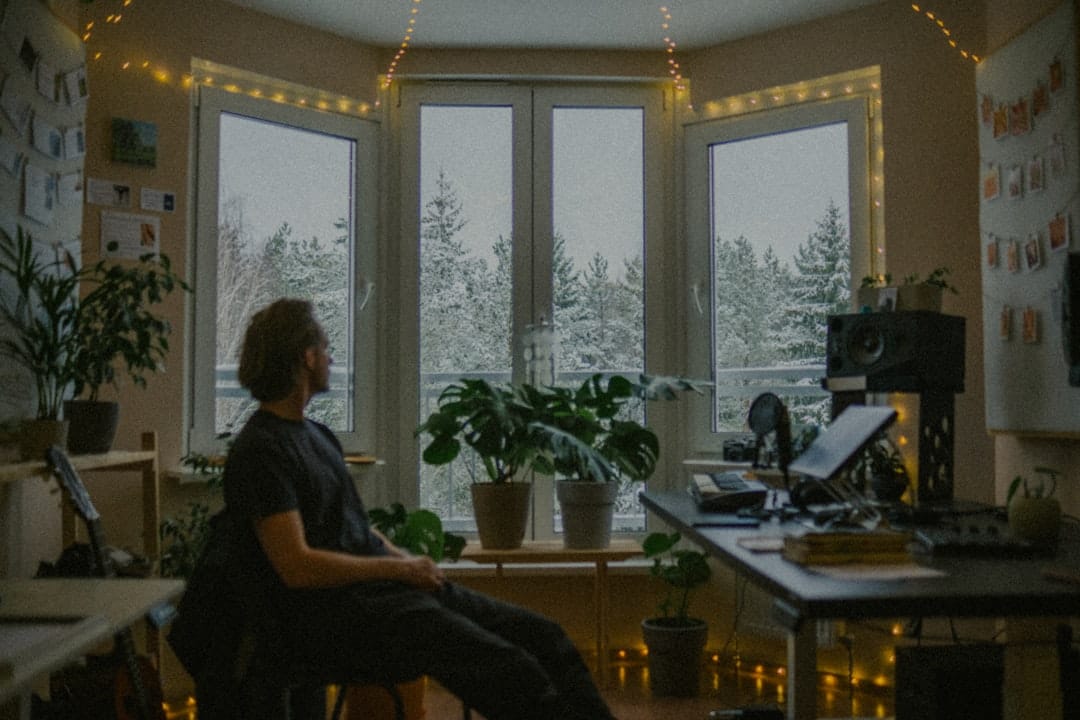
Freedom is different. Freedom is structural. It is the fact that when you are not happy at home, you can open a window, take a walk at eleven in the morning, or pack a bag and work from a town by the sea for a fortnight. You can rearrange your entire environment around the way you actually feel, rather than performing composure under fluorescent lights until five o'clock releases you. That capacity to respond — to move, to adjust, to reshape your day — is worth more than the fleeting mood of any single afternoon.
This is the quiet truth beneath so much remote work discourse. The point was never that you would float through your days in a state of bliss. The point was that the container of your life would finally belong to you. Some days you will fill that container with joy, other days with frustration or boredom — but it is yours to fill. A bad day at home is still a day you got to choose the terms of.
The Hidden Cost of the Commute Nobody Adds Up
Consider the arithmetic that rarely makes it into the debate. A modest daily commute of forty-five minutes each way adds up to roughly seven and a half hours a week — very nearly a full working day spent standing on platforms, sitting in traffic, or being pressed against a stranger's shoulder on a crowded carriage. Over a year, that is close to two entire weeks of waking life dedicated to the act of arriving somewhere. Remote work hands those weeks back to you, no negotiation required.
But the commute costs more than clock time. There is the low, grinding stress of it — the rush, the delays, the mental energy spent simply managing the transit. There is the money: fuel, fares, the lunches bought out of convenience, the wardrobe maintained for appearances. And there is the invisible tax on your evenings, when you arrive home already depleted, with just enough left over to reheat dinner and stare at a screen before it begins again. Even a mediocre day of remote work spares you all of this, and mediocre days spared of that friction quietly accumulate into a calmer, more spacious life.
What you do with the reclaimed hours matters, of course. Some people pour them into sleep, others into exercise, family, side projects, or simply the unglamorous but restorative act of being unhurried. If you are making the leap for the first time, it helps to plan for this deliberately — there is real wisdom in a thoughtful transition from a 9-to-5 to a location-independent life rather than an abrupt jump. The freed-up time is a gift, but like any gift it rewards intention.
Enjoying this? Get more like it.
Weekly picks for remote workers and digital nomads — tools, destinations, and honest takes, straight to your inbox.
Subscribe free →
When the Office Was Never the Source of Joy Either
There is a subtle trick the mind plays when remote work goes through a rough patch. You begin to imagine the office as a place of easy camaraderie and effortless focus, forgetting the reality you actually lived: the meetings that could have been emails, the interruptions every eleven minutes, the open-plan hum that made deep concentration nearly impossible, the politics of who sat where and who spoke when. Nostalgia sands off the sharp edges. If you are unhappy working remotely today, it is worth asking honestly whether the office would have solved that unhappiness or merely disguised its source.
Very often the discontent is not about location at all. It is about the work itself, or the manager, or a season of life that feels heavy regardless of where you sit. Moving that same discontent into an office would only add a commute, a dress code, and an audience to it. The genuine problems — a project that has lost meaning, a boundary you have failed to set, a body craving more rest — travel with you. Remote work does not create these; it simply removes the distractions that once let you avoid noticing them.
That confrontation is uncomfortable, but it is also a strange kind of gift. When the office is no longer around to absorb your dissatisfaction and repackage it as normal, you are forced to look directly at what is actually wrong. And once you can see it clearly, you can begin to fix it — which is something the daily performance of office life rarely permits.
Fixing the Unhappiness Instead of Blaming the Freedom
So what do you do on the days remote work leaves you flat? The instinct is to blame the arrangement itself, to fantasise about handing back your freedom in exchange for the structure of an office. Resist that instinct, and instead treat the unhappiness as information. Very often the fix is environmental. A cramped, cluttered, poorly lit corner of a bedroom will drain anyone, and no amount of willpower compensates for a space that fights you. Investing a little thought into a calmer, more intentional home office can transform how the same hours feel.
Other times the problem is isolation, and that too has answers that do not involve surrendering to a commute. A change of scenery — a co-working space, a café with good light, a spell in a community of other remote workers — can restore the sense of belonging the office once provided, without its rigidity. Co-living arrangements in particular have become a quiet remedy for the loneliness that dogs long stretches of solo remote work, offering ready-made human contact at the end of a working day. The office is one solution to connection; it is not the only one, and it is far from the best.
And when the flatness runs deeper — when it starts to look less like a bad week and more like genuine depletion — the answer is rest, not relocation to a cubicle. Burnout is real, and it stalks remote workers precisely because the boundaries are so easy to erase. Learning to protect your evenings, take actual holidays, and notice the early warning signs of remote-work burnout is not a luxury but a core skill of this life. The office would not have saved you from exhaustion; it would only have added a commute to it.
The Long Game: What You're Really Building
Step back far enough and the daily fluctuations of mood start to matter less than the trajectory they sit on. Remote work is a long game, and its rewards compound quietly. Each week you keep your commute hours is a week invested elsewhere. Each skill you build managing your own time, structuring your own days, and holding yourself accountable without a supervisor over your shoulder is a skill that makes you more capable, more employable, and more free. You are not just doing a job from home — you are becoming the kind of person who can work from anywhere, which is a fundamentally different and more resilient position to occupy.
There is also the matter of geography as opportunity. When your income is no longer chained to a specific building in a specific expensive city, the whole map opens up. You can base yourself somewhere the cost of living gives your money room to breathe, somewhere the pace suits you better, somewhere the mornings feel worth waking up for. The exploration of affordable slow-travel cities built for remote workers is not escapism — it is the practical exercise of a freedom the office simply cannot offer, no matter how good the perks in the break room.
This is why remote work wins even on the days it doesn't feel like winning. You are trading the false comfort of an externally imposed structure for the harder, better work of building your own. That construction is not always pleasant. Some days the scaffolding wobbles and the whole thing feels precarious. But you are building something that is genuinely yours, and the discomfort of that is the discomfort of growth rather than the numbness of resignation.
So the next time a grey afternoon has you idealising the office, try to see the trade clearly. The office would give you back a manufactured routine, a socially sanctioned way to be unhappy in company, and the small dignities of a commute and a lanyard. Remote work asks more of you — more self-discipline, more honesty about what actually ails you, more effort to stay connected — but in return it hands you the one thing worth more than a good mood: the ability to shape your days around your real life rather than the other way round.
Happiness will come and go regardless of where you sit. Freedom, once you have tasted it and learned to tend it, is far harder to give up — and far more worth keeping, even on the days it doesn't make you smile.