Could a €1 house in Italy actually work for a digital nomad, or is it mostly fantasy?
You've seen the headlines, the ones that flicker across your feed somewhere between a coworking deal in Lisbon and a flight alert for Bangkok: a stone house in a sun-bleached Italian village, yours for the price of an espresso. One euro. The images do the heavy lifting — crumbling shutters the colour of faded sea glass, a terracotta roofline tumbling down a hillside, an old man on a Vespa idling in a square where nothing has changed in three hundred years. It is the kind of fantasy that lodges itself somewhere behind your ribs and refuses to leave.
But you work for a living, and you work from anywhere, which means you are not browsing these listings the way a retiree might — as a romantic project to fill the years. You are doing the maths. You are wondering whether a €1 house could become a base, a place to anchor a roving life, a corner of the Mediterranean with your name on the deed and your laptop on the kitchen table. The question is whether the dream survives contact with reality, or whether it dissolves the moment you read the fine print.
The honest answer is that it can work — but almost never in the way the headline implies. Let's walk through it properly, the way you'd walk through one of these villages on a slow afternoon, noticing the cracks in the plaster and the smell of woodsmoke and the realities nobody photographs.
What the €1 Actually Buys You
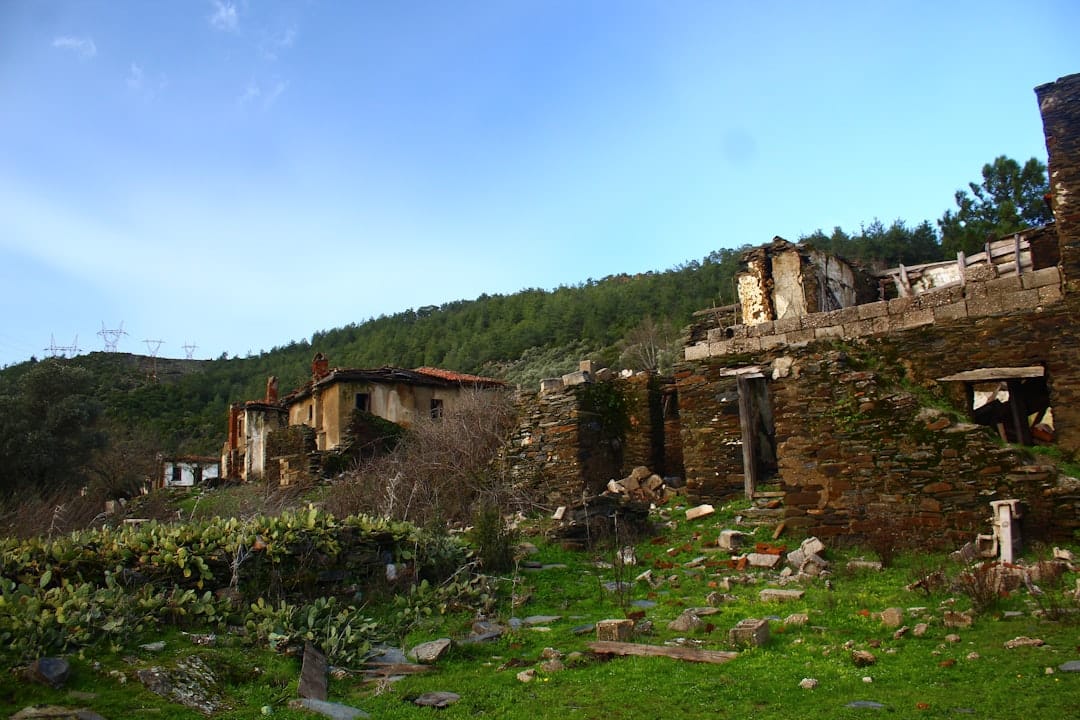
Start with the headline number, because it is the most misleading part of the whole arrangement. The €1 is not really a price — it is an invitation. Dozens of small Italian comuni, mostly in the deep south and on the islands, watched their populations drain away over the past half-century as young people left for cities and work. Empty houses became a liability: collapsing roofs, blocked streets, a slow rot at the heart of the village. Selling these properties for a symbolic euro is a municipality's way of recruiting people willing to breathe life back in.
In exchange for that euro, you typically sign a binding commitment to renovate. The contracts vary by town, but most require you to begin works within a set window — often a year — and complete a substantial restoration within two or three. Many ask for a security deposit, refundable on completion, somewhere between €2,000 and €5,000, which evaporates if you stall. You are not buying a finished home; you are adopting a derelict shell and pledging, under contract, to rescue it.
And the shells are genuinely derelict. We are talking about properties with caved roofs, missing floors, no functioning plumbing or wiring, sometimes shared structural walls with neighbouring ruins that complicate everything. The €1 buys you the right to spend a great deal more. For a digital nomad weighing this against, say, a year of comfortable monthly rentals across several countries, that distinction is the entire decision.
The Real Budget Nobody Photographs
Here is where the fantasy meets the spreadsheet. A full renovation of a small stone village house in southern Italy realistically runs anywhere from €30,000 to €60,000, and considerably more if you want anything resembling a modern finish, a proper bathroom, insulation that holds through a damp Sicilian winter, and a kitchen you'd actually enjoy cooking in. Plenty of restorations creep past €80,000 once unexpected structural problems surface — and with century-old buildings, they always surface.
Then layer on the costs that never make the brochure: notary fees, surveyor reports, an architect or geometra to file plans and navigate the bureaucracy, translation of documents, and the persistent friction of doing all of this in a language and legal system that may not be your own. Italian renovation permits can take months. Tradespeople in remote villages are scarce, in demand, and operate on a timeline that has nothing to do with your Gantt chart. Budgeting carefully matters here more than almost anywhere, and it's worth reading up on budgeting for the digital nomad life before you commit a single euro to a derelict house abroad.
For a location-independent professional, the more sobering cost is time. A renovation demands your physical presence, your decisions, your patience — repeatedly, over years. You cannot manage a knocked-through wall and a temperamental roofer from a coworking space in Medellín. The euro is cheap; the project is expensive in exactly the currency a nomad guards most jealously, which is freedom of movement.
Enjoying this? Get more like it.
Weekly picks for remote workers and digital nomads — tools, destinations, and honest takes, straight to your inbox.
Subscribe free →
Can You Actually Work From a Village Like This?
Can You Actually Work From a Village Like This?
Connectivity and infrastructure comparison across three typical Italian village types.
| Factor | Town (10k+ people) | Small village (2–5k) | Isolated village (<1k) |
|---|---|---|---|
| Broadband speed | 50–100 Mbps | 15–40 Mbps | 5–15 Mbps |
| 4G/5G coverage | Reliable | Patchy | Unreliable |
| Co-working spaces | Available | On request | Not available |
| Backup internet | Easy to arrange | Limited options | Very difficult |
| Best for remote work | Recommended | Possible | Not recommended |
Suppose the house is restored and the dust has settled. The question that should keep any remote worker awake is deceptively simple: is the internet good enough? Many of the villages running these schemes are precisely the places that got left behind, which often means patchy mobile coverage and fibre that arrives slowly, if at all. Before you fall for a listing, you need to investigate the connectivity with the rigour of someone whose income depends on a video call not freezing — because it does. A 4G router as backup, a check of carrier coverage maps, and an honest conversation with locals about whether the signal drops when it rains: these are non-negotiable.
Assuming the connection holds, the working life can be extraordinary. Imagine a morning routine built around a stone-walled room you restored yourself, the shutters open onto a valley, the only interruption a church bell and the espresso machine. Productivity in a space this calm is a real phenomenon, and the principles of building a focused environment carry over directly — it's worth applying the same thinking you'd use to build a remote work sanctuary to a corner of an old Italian house.
But isolation is the quieter risk. These villages are often half-empty by design, the cafés sparse, the nearest proper supermarket a winding drive away, the social scene measured in handfuls of elderly residents rather than a thrumming nomad community. If you draw energy from coworking buzz and spontaneous networking, a depopulated hill town may slowly erode your wellbeing. For some, the solitude is the whole point; for others, it tips quietly into the kind of loneliness that fuels burnout. Be brutally honest with yourself about which one you are.
A Smarter Way to Test the Dream First
If the idea still pulls at you after all that, the wisest move is not to buy — it is to live. Pick a region you're drawn to, whether the sun-baked interior of Sicily or the wild folds of Calabria or a forgotten corner of Abruzzo, and spend a slow season there first. Rent a place by the month, work your normal hours, shop where the locals shop, and find out whether the romance survives the third consecutive grey afternoon. This kind of slow, deliberate travel is the best stress-test there is, and the approach behind choosing slow travel destinations on a budget applies neatly to scouting an Italian base.
Living locally also teaches you the things no online listing reveals: which towns have a doctor, where the bus actually goes, how the bureaucracy treats foreigners, and whether the village welcomes newcomers or merely tolerates them. You'll meet the geometra and the builders in person, gather realistic renovation quotes, and discover whether your fantasy village is one euro of opportunity or one euro of regret. Some buyers fall in love with a neighbouring town instead and buy a modest, already-habitable house for €25,000 — far less drama, far more livable, and often the smarter trade.
And remember that a base does not have to be a binary. Many location-independent professionals keep a renovated Italian retreat as a slow-season anchor and continue to roam for the rest of the year, splitting their time between the stone house, a winter near a warmer coast, and the occasional stint in a co-living hub when they crave company again. The house becomes one node in a wider, freer life rather than a cage built from your savings.
The Common Mistakes That Sink People
The Common Mistakes That Sink People
Key pitfalls and warning signs when buying €1 properties in Italian villages.
| Mistake | Risk level | How to avoid it |
|---|---|---|
| Ignoring structural surveys | Critical | Hire licensed engineer |
| Underestimating renovation time | High | Add 40% to timelines |
| Skipping legal checks | Critical | Work with solicitor |
| Overestimating internet reliability | Medium | Test 4G and ISP contracts |
| Not visiting in off-season | High | Spend winter months there |
The first and most expensive mistake is underestimating the renovation. People sign the contract on a wave of feeling, secure the keys to a ruin, and only then discover the roof timbers are gone, the foundations are damp, and the quote has doubled. Always commission an independent structural survey before you commit, and pad your budget by at least thirty per cent for the surprises that century-old stone reliably delivers. The contracts are binding; the deposit is forfeitable; enthusiasm is a poor substitute for due diligence.
The second is ignoring the bureaucracy. Buying property in Italy as a foreigner involves a codice fiscale, a notary, potentially a non-EU residency consideration depending on your passport, and a paperwork trail that does not bend to your timeline. Hire a trusted local lawyer who is independent of the seller, and never sign a document you cannot fully understand. The third mistake is romanticising the location at the expense of practicality — choosing a breathtaking but impossibly remote village with no reliable internet, no medical access, and a two-hour drive to the nearest airport, then realising your working life cannot actually function there.
The final mistake is treating the house as the destination rather than a tool. A base only serves you if it makes your life richer, calmer, and more sustainable. If the project consumes your savings, chains you to one province for three years, and leaves you too anxious to enjoy the view, the euro was never cheap at all. Weigh it honestly against the alternative: years of flexible, low-commitment living across many places, with none of the structural risk.
So, could a €1 house in Italy actually work for a digital nomad? Yes — for the right person, with the right budget, the right tolerance for bureaucracy, and a genuine love of slow village life rather than just its photographs. It rewards those who treat it as a multi-year project with eyes wide open, not a shortcut to a Mediterranean fairytale. For everyone else, it remains a beautiful, expensive fantasy wearing the costume of a bargain.
The smartest path forward is rarely the euro itself — it's the season you spend living the dream before you sign for it. Go slowly. Test the internet, the isolation, the rhythm of the village against the realities of your work. Do that honestly, and you'll know whether the stone house is your future home or simply a lovely story you tell at the coworking table. Either answer is worth more than the price of an espresso.