Minimalist Travel Capsule: How to Avoid Overpacking
There is a particular kind of dread that arrives the night before a trip. The bed is buried under clothing, the suitcase yawns open like a hungry mouth, and somehow the decision of whether to bring the second pair of jeans feels heavier than the jeans themselves. You stand there, paralyzed by the imagined versions of the trip — the formal dinner that may never happen, the sudden cold snap, the hypothetical hike. And so you pack for all of them. You pack for fear.
The result is a bag you resent. You drag it up cobbled stairs in a Lisbon guesthouse, wedge it into the overhead bin while a queue forms behind you, and pay the excess baggage fee with the quiet shame of someone who knew better. The cruel irony is that you'll wear roughly a third of what you brought. The rest just travels along as ballast — a portable monument to indecision.
There is a better way, and it doesn't require willpower or a degree in folding origami. It's a method — a capsule wardrobe built for movement — and once you internalize it, you'll wonder how you ever travelled any other way. This is the art of minimalist packing for travel: not deprivation, but precision. Let's build your capsule from the ground up.
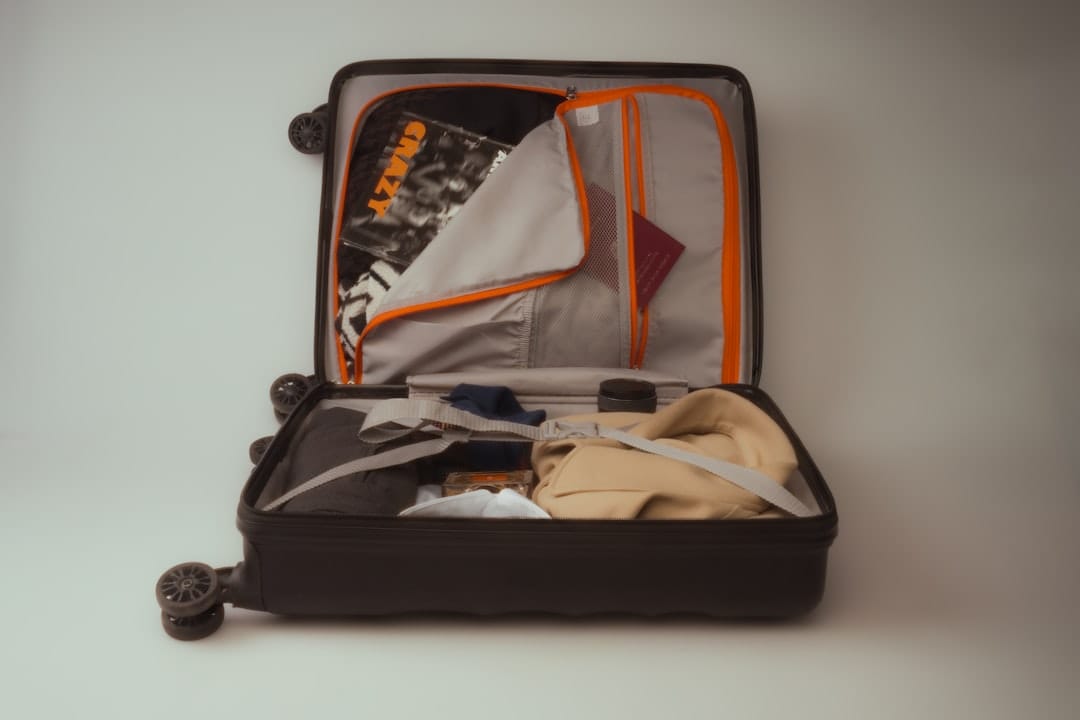
Why We Overpack (And Why It Quietly Ruins Trips)
Overpacking is rarely about logic. It's emotional. Every extra item is a small insurance policy against an imagined disaster — being underdressed, being cold, being unprepared. The mind treats packing as a way to control an uncertain future, and the more uncertain the trip feels, the more we stuff into the bag. A long, open-ended journey with no fixed itinerary tends to produce the heaviest suitcases, precisely because there are more unknowns to defend against.
But here's the truth that experienced travellers learn the hard way: the things you fear almost never happen, and when they do, the solution is usually a five-minute walk to a shop. Forgot a charger? Every city on earth sells them. Sudden cold front? A cheap second-hand jumper costs less than the excess baggage fee you paid to bring your own. The world is not a wilderness without supplies. It is, for the most part, full of stores, laundromats, and pharmacies. When you trust the destination to provide the rare exception, you free yourself from carrying the rule.
The hidden cost of overpacking is not just the strained shoulder or the baggage fee. It's the friction it adds to every transition. A heavy bag makes you reluctant to move, reluctant to switch cities on a whim, reluctant to take the train instead of the taxi. For anyone living the location-independent life, that friction is the enemy of spontaneity. Travelling light isn't a party trick — it's a posture toward the world. It says you'll adapt rather than anticipate, that you'll meet the trip where it actually is rather than where you imagined it might be.
The Capsule Method, Step by Step
A travel capsule is a small, deliberately limited collection of clothing where every piece works with every other piece. The principle is interchangeability. Start by choosing a single neutral base palette — black, navy, grey, beige, olive. Pick two of these as your anchors. When your trousers, shorts, and outer layers all live in the same family, anything pairs with anything, and a handful of items suddenly multiplies into dozens of outfits. This is the quiet mathematics that makes light packing possible.
A workable capsule for most trips looks something like this: five tops, two bottoms, one dressier layer, one warm layer, one packable jacket, two pairs of shoes (one comfortable for all-day walking, one that reads slightly smarter), and roughly a week of underwear and socks. That's it. The number sounds frighteningly small until you do the combinatorial math — five tops and two bottoms alone yield ten distinct looks, and that's before you add the layers. You are not packing outfits. You are packing a system that generates outfits.
The keystone of the whole method is laundry. Once you accept that you will wash clothes during your trip — in a hostel sink, a laundromat, or a co-living space's communal machine — the entire calculus changes. You are no longer packing for the length of the trip; you are packing for the length of your laundry cycle. A two-week journey and a two-month journey can ride in the very same carry-on. This single mental shift is what separates the seasoned minimalist from the anxious over-packer, and it's especially natural if you're staying in places designed for longer stays, like the kind of co-living spaces remote workers tend to favour, where laundry facilities come standard.
Enjoying this? Get more like it.
Weekly picks for remote workers and digital nomads — tools, destinations, and honest takes, straight to your inbox.
Subscribe free →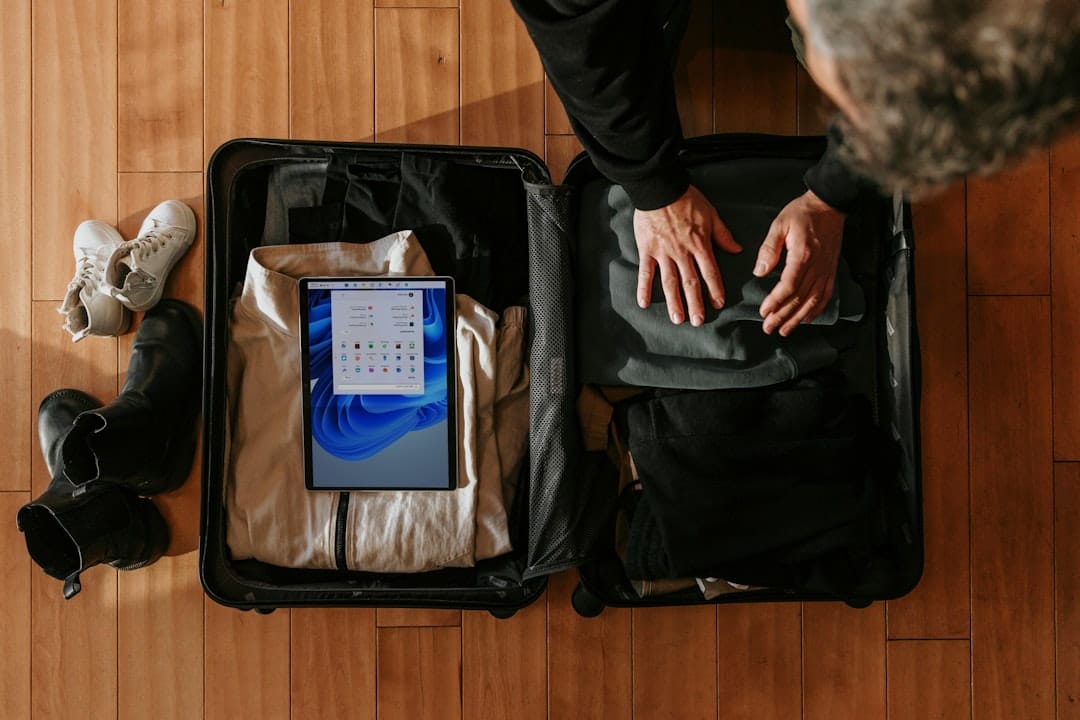
Choosing Fabrics That Earn Their Place
Choosing Fabrics That Earn Their Place
Performance comparison of fabric types for minimalist travel packing.
| Fabric Type | Wrinkle Resistance | Quick Dry | Durability |
|---|---|---|---|
| Merino Wool | Excellent | Moderate | Very High |
| Nylon Blend | Good | Excellent | High |
| Cotton | Poor | Slow | Moderate |
| Linen | Very Poor | Moderate | Moderate |
Not all clothing is created equal when you're living out of a single bag. The fabric matters more than the cut, because the right material does double or triple duty. Merino wool is the quiet hero of minimalist travel: it regulates temperature, resists odour to an almost suspicious degree, and dries quickly when you rinse it overnight. A single merino t-shirt can be worn for days between washes without offending anyone, which is precisely the kind of quiet efficiency a small wardrobe depends on.
Beyond merino, look for technical synthetics and blends that dry fast and shrug off wrinkles. Avoid pure linen and cotton for anything you need to look presentable in — both crease the moment you fold them and take an age to dry. A useful test before any item enters the bag: scrunch it in your fist for ten seconds and watch what happens. If it springs back smooth, it travels well. If it holds the wrinkle like a grudge, it stays home. Your future self, ironing nothing in a tiny guesthouse room, will thank you.
Versatility should also guide your choices. A dark, knee-length dress or a pair of well-cut chinos can carry you from a coworking desk to a dinner table to a long walk along the water without a costume change. The most valuable garments in a capsule are the chameleons — pieces that shift their register depending on what you pair them with and how you carry yourself. When every item can play several roles, you simply need fewer of them, and the bag grows lighter without the wardrobe feeling smaller.
Adapting Your Capsule to the Destination
The capsule is a framework, not a fixed list, and it bends to where you're going. For a stretch of warm, slow days in a coastal town, the warm layer shrinks to a single light jumper for breezy evenings, and the swimwear and linen-blend shirts take its place. If you're chasing the sun toward one of the affordable beach remote work destinations, you can shed half your bulk before you even leave home. Heat forgives a small wardrobe.
Cold and variable climates are where minimalists earn their stripes, and the secret is layering rather than bulk. Three thin layers worn together are warmer than one thick coat, and they pack down far smaller and adapt to a wider range of temperatures. A merino base, a light insulating mid-layer, and a packable wind-and-rain shell will carry you from a frosty morning to a mild afternoon and back. The packable shell, in particular, is worth its weight in gold — it crushes down to the size of a fist and waits patiently for the day the weather turns.
Then there's the matter of culture and context. Some destinations call for modest dress at religious sites; others lean formal in the evenings. A single scarf or sarong solves a surprising number of these problems — covering shoulders in a temple, dressing up a plain outfit, doubling as a blanket on a cold bus. When you're moving between very different places over a long trip, as so many do when they embrace slow travel across budget-friendly cities, these small multipurpose items become the connective tissue that holds the whole capsule together.
Common Mistakes That Sneak Weight Back In
Common Mistakes That Sneak Weight Back In
Comparison of common packing mistakes and practical solutions for staying minimal.
| Mistake | Impact | Solution |
|---|---|---|
| Duplicate Toiletries | Adds 1–2 kg | Use travel-size bottles |
| Multiple Shoes | Adds 2–3 kg | Maximum 3 pairs total |
| "Backup" Clothing | Adds 1.5–2 kg | Laundry every 3–4 days |
| Electronics Cables | Adds 0.5–1 kg | One universal charger |
Even with a capsule in hand, old habits creep back. The most common relapse is the "just in case" item — the formal blazer for a meeting that's only a possibility, the heels for a night out that may never materialize. The fix is a simple rule: if an item only earns its place for a single, hypothetical occasion, leave it. You can rent, borrow, or buy for the rare real exception far more cheaply than you can carry the imagined one across three countries.
Another quiet saboteur is toiletries. Full-size bottles are heavy, leak-prone, and almost always available to buy at your destination. Decant what you genuinely need into small containers, and accept that shampoo and toothpaste are not rare commodities anywhere humans live. Electronics are the other place weight accumulates without notice — duplicate cables, redundant adapters, gadgets you'll touch once. Pare the tech kit down to what your work and life actually require, and consult a focused list of essential remote work tools rather than packing for every conceivable scenario.
Finally, beware the souvenir creep and the slow accumulation of trip. Bags have a way of filling to whatever size they are, so the discipline doesn't end when you zip up at home — it continues every time you're tempted to buy a bulky keepsake or accept a free tote. A useful ritual is the mid-trip audit: lay everything out, notice what you haven't worn, and either start wearing it or be honest that it was a mistake. The capsule is a living thing, and tending it is part of the practice.
The first time you walk through an airport with everything you need slung lightly over one shoulder, something shifts. You move faster. You skip the baggage carousel entirely. You step off the train and into a new city without the gravitational drag of a bag you have to fight. The freedom is almost physical — and it changes how you travel, making you bolder, more willing to say yes to the unplanned detour because nothing is weighing you down.
Building a travel capsule is less about owning less and more about trusting more — trusting that the world will provide, that laundry exists, that you are adaptable enough to meet whatever comes. Start small, refine after each trip, and let the method teach you what you actually need. The lighter you pack, the lighter you'll feel, and the more room you'll have for the only thing worth collecting on the road: the experience itself.