8 Little Known Travel Hacks for Flying Carry-on Only (Secret Packing Tips)
There's a peculiar freedom that comes with boarding a plane with nothing but a single carry-on bag. No waiting at baggage claim. No risk of lost luggage. No wrestling with oversized suitcases through narrow hostel staircases. For remote workers and digital nomads constantly moving between cities and countries, carry-on-only travel isn't just a preference—it's a lifestyle philosophy. It forces you to be intentional about what matters, to travel lighter, and to move faster between destinations.
But here's what most travel guides won't tell you: carry-on-only packing isn't about deprivation. It's about strategy. After years of moving through airports in Southeast Asia, Eastern Europe, and beyond, I've collected a arsenal of unconventional techniques that transform what seems impossible—fitting a entire life into 22 inches of luggage—into something almost elegant. These aren't your standard roll-your-clothes-tight tips. They're the kind of hacks that frequent flyers whisper about in airport lounges, the secrets that let you arrive in Bangkok with everything you need and nothing you don't.
In this guide, I'm sharing eight little-known packing hacks that will fundamentally change how you travel. Whether you're heading out for a two-week sprint or planning to stay nomadic indefinitely, these techniques will help you pack smarter, travel lighter, and reclaim the joy of moving without being weighed down by luggage.
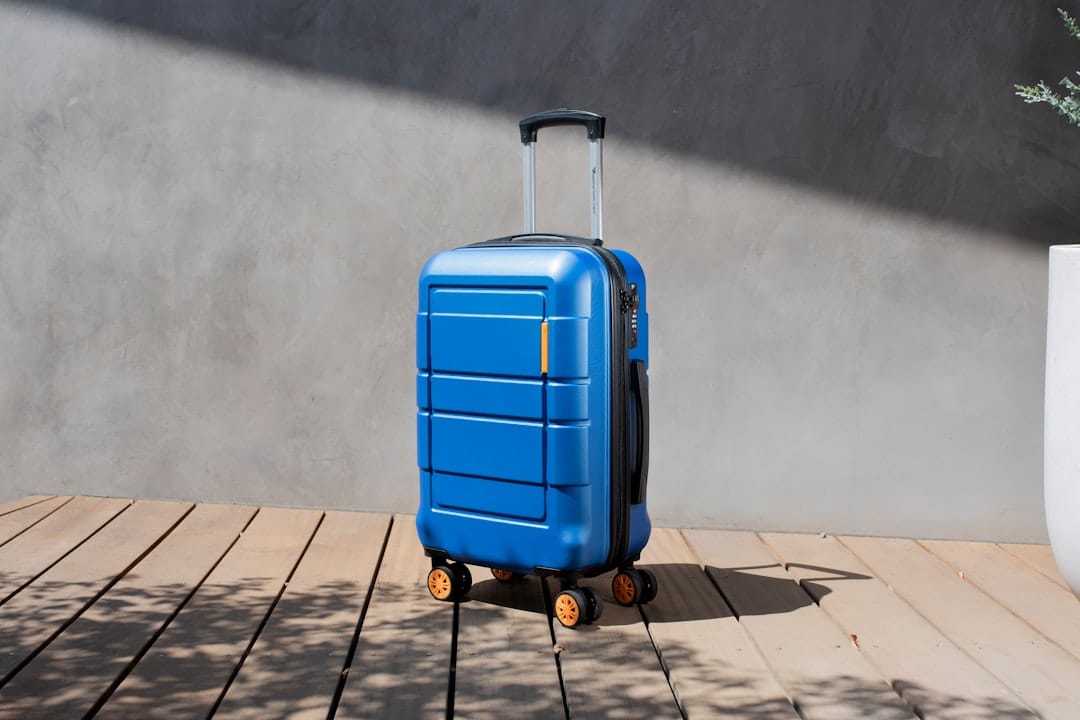
Most travelers make a critical mistake before any trip: they shop. A few new outfits, some travel-specific clothes, a shiny new compression bag system. But this compounds the problem you're trying to solve. Instead, I operate by a different philosophy: work exclusively with what's already in your closet. This forces you to be ruthlessly honest about what you actually wear. Pull out five to seven base pieces you already own—neutral tops, versatile bottoms, one or two lightweight layers. These should be items you've worn dozens of times and know function well. The magic happens when you realize that clothes you've been wearing for months (or years) already work for travel. They're broken in, they fit, and you know their limitations.
The real hack here is understanding color coordination and fabric weight. Choose a color palette where every top pairs with every bottom. Dark jeans become your workhorse. A gray merino wool blend shirt works as both a casual piece and a base layer. A lightweight cardigan that costs nothing in luggage weight becomes your temperature control. When every single item in your bag can mix with every other item, you're not making outfit compromises—you're making 20+ combinations from 7 pieces. I've traveled for months through varying climates with nothing but this approach, and I've never once felt underdressed or over-packed.
Here's a secret that seems obvious once you hear it but changes everything: wear your bulkiest shoes through the airport. Most people pack their chunky hiking boots or substantial sneakers into their luggage, wasting precious space. Instead, put them on before you walk through security. This single decision frees up approximately 15% of your bag's volume. But it goes deeper than just the spatial math. I fill the interior of shoes with small items—rolled socks, underwear, a phone charging cable. Shoes are essentially free storage if you're strategic about it. The fabric weight you save by wearing your heaviest footwear instead of packing it means you can bring additional layers or a second pair of lighter shoes without increasing your overall bag weight.

This approach also solves a less obvious problem: footwear transitions. If you're landing in a place with different weather or activity levels than where you departed, you've got your comfortable traveling shoes on your feet and can pack a second pair suited to your destination. The people I know who travel carry-on only almost always have two pairs of shoes—one versatile pair worn during travel, and one packed. They achieve this without baggage bloat because they've already allocated that weight.
Enjoying this? Get more like it.
Weekly picks for remote workers and digital nomads — tools, destinations, and honest takes, straight to your inbox.
Subscribe free →Material choice is where most people leave kilograms of unnecessary weight on the scale. A standard cotton shirt might weigh 200 grams. A merino wool shirt of similar dimensions weighs 130. Over seven days of clothing, that's nearly half a kilogram saved—weight you can redirect toward experiences, better accommodations, or simply having more breathing room in your bag. Merino wool is almost miraculous for travel because it regulates temperature, resists odor (meaning you can wear items more times between washes), and compresses remarkably well. I have a single merino shirt that I've worn for entire three-week journeys as my primary top layer, rotating it with one linen piece.
Linen is your friend for warm climates. Yes, it wrinkles—but it also breathes like nothing else, and those wrinkles often read as intentional on linen rather than sloppy. A linen shirt weighs almost nothing and packs down to the size of a paperback. The investment in better fabrics up front pays continuous dividends. When you're moving between climate zones frequently, as many digital nomads do, having clothes that work across temperature ranges without requiring multiple iterations of the same garment type is transformative. I've built entire travel wardrobes around two merino pieces and one linen piece as my core, supplemented by whatever existing cotton items I already owned.
The Capsule Wardrobe Rule: Buy Nothing New Before Your Trip
Feature comparison of capsule wardrobe strategies for carry-on-only travel.
| Feature | Mix-and-Match | Color Block | Neutral Base |
|---|---|---|---|
| Number of pieces | 10–15 items | 8–12 items | 12–18 items |
| Outfit combinations | 25+ outfits | 15–20 outfits | 30+ outfits |
| Packing complexity | Moderate | Low | Low |
| Best for trip length | 2–3 weeks | 1–2 weeks | 3+ weeks |
| Recommended approach | Moderate | Best choice | Premium option |
This is the hack that nobody discusses but that actually determines whether carry-on-only travel is feasible for your specific trip. Before packing a single item, spend 15 minutes researching laundry infrastructure at your destination. Are you staying in an Airbnb with a washing machine? A hostel with laundry facilities? A co-living space frequented by other digital nomads who've discovered a affordable laundromat? This single piece of information determines how many days of clothes you actually need to pack. If you're somewhere with easy, cheap laundry access (Southeast Asia and Eastern Europe are exceptional for this), you can pack four to five days of clothes instead of seven. That's the difference between a bulging carry-on and one that zips effortlessly.
I've learned this through hard experience. In cities like Chiang Mai or Lisbon, I can drop clothes at a laundromat for $2-4 and have them back in 24 hours. That means my actual packing formula becomes: (days until laundry access × 1.5) = number of outfit rotations needed. If I'm arriving on a Monday and there's laundry on Tuesday, I truly only need two day's worth of clothes, not seven. This paradigm shift is why some travelers move on carry-on for six months and others can barely manage two weeks. The people succeeding have built their packing around their destination's infrastructure, not around worst-case scenarios.
Before anything goes into your carry-on, ask a brutal question: does this item serve at least two distinct purposes? A scarf can be a neck warmer, a beach cover-up, an accent piece, a makeshift pillow, a headwrap. A lightweight button-up shirt works as a casual piece, a professional layer for video calls, a beach cover-up, and a light jacket. A pair of neutral pants becomes both casual and professional. This isn't about finding items that technically could be used in multiple ways—it's about items that you will genuinely use in multiple ways during your trip. That compression packing cube? It only stores things. The scarf does five things. The scarf stays; the cube goes. Most travelers pack items that serve a single purpose and hope they'll be glad they're there. Instead, pack only items you know you'll use multiple times, in multiple contexts, across multiple days.
This principle extends to tech and toiletries too. Your phone charger's USB cable can double as a backup cable for other devices. A small bar of soap is both a shower soap and a laundry detergent. A lightweight cardigan isn't just layering—it's your evening wear, your professional layer, and your plane comfort blanket. When you ruthlessly apply this multi-purpose filter, you end up packing perhaps 60% of what you'd normally bring. The remaining 40% represents items you would have carried but barely used. For remote workers especially, where much of your time is spent in accommodations anyway, this approach is particularly powerful. You're not packing for nightlife or formal events—you're packing for comfortable, productive daily life.
Carry-on-only travel is fundamentally about reframing constraints as benefits. The limitations of a single small bag force you to be intentional, to prioritize quality over quantity, and to move through the world more fluidly. These eight hacks aren't complicated tricks that require special equipment or advanced knowledge. They're philosophies about how to think about packing—understanding fabric weights, embracing laundry infrastructure, applying rigorous multi-purpose criteria, and choosing versatility over options. When you combine these approaches, something almost magical happens. You arrive at your destination with exactly what you need, nothing you don't, and the physical and psychological freedom that comes from traveling light. That's the real hack: not fitting more into less space, but needing less in the first place.