Your Ultimate Packing Strategy for Any Trip Duration
There is a particular kind of quiet that settles over you the moment a bag is packed well. You stand at the door, the weight balanced evenly across your shoulders, and you know — without checking, without that gnawing second-guess — that everything you need is right there with you. No bulging zippers, no last-minute reshuffling on the airport floor, no overweight-baggage anxiety at the check-in desk. Just you, a thoughtfully assembled kit, and the open road ahead.
For anyone who lives between places — chasing wifi through coworking cafés, settling into a new city for a month, or hopping a weekend train to somewhere unmapped — packing is not a chore to be dreaded. It is a skill, and like any skill, it rewards practice and a clear strategy. The goal is not simply to bring less for the sake of bringing less. The goal is to bring exactly enough, so that the act of moving through the world becomes lighter in every sense of the word.
This is your complete guide to building a packing strategy that flexes to any trip duration — a long weekend, a two-week sprint, or an open-ended season of slow travel. The principles of minimalist packing travel stay constant whether you are gone for three days or three months. What changes is the rhythm, not the rules. Let's build a system you can trust.
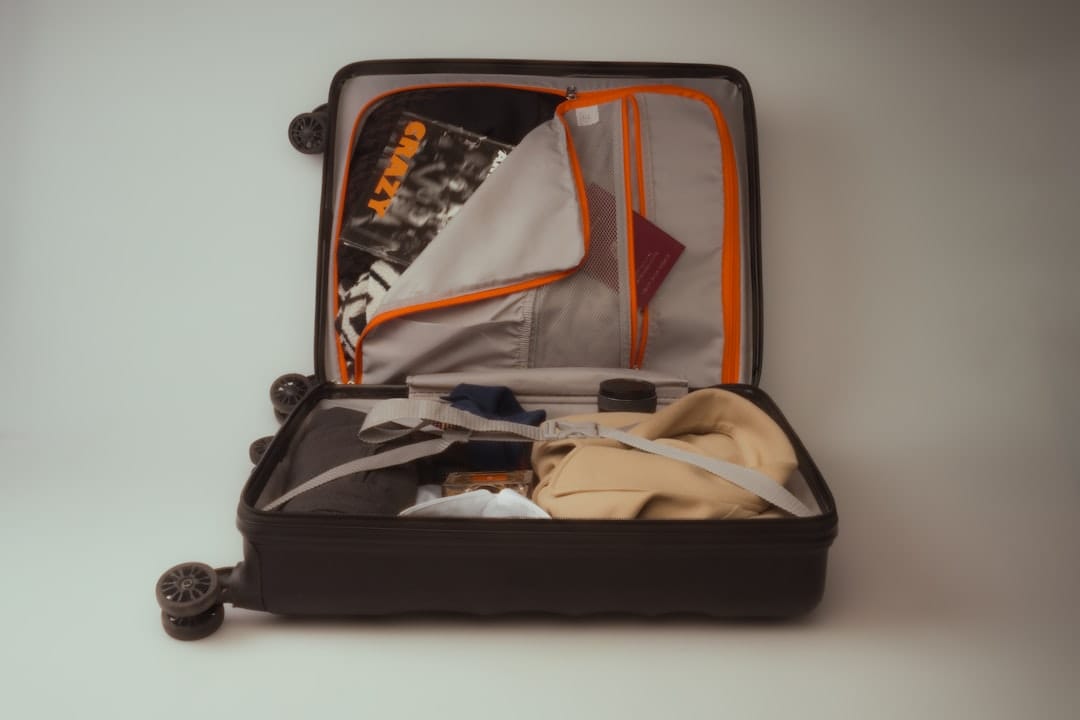
The One-Bag Mindset: Why Less Becomes More
The One-Bag Mindset: Why Less Becomes More
Benefits and trade-offs of single-bag travel versus traditional multi-piece luggage.
| Consideration | One-Bag Travel | Traditional Luggage |
|---|---|---|
| Airport mobility | Unlimited | Limited |
| Packing capacity | 20–40 litres | 50+ litres |
| Daily carry ease | Yes | No |
| Best for nomads | Frequent moves | Long stays |
The single most transformative decision you can make is to commit to carry-on only — and ideally, a single bag — regardless of how long you are away. This sounds counterintuitive. Surely a three-month trip demands more than a weekend away? In practice, it demands almost exactly the same. You wear the same clothes on repeat whether you are gone for ten days or ten weeks; the difference is simply how often you do laundry. Once you internalise that truth, the whole equation changes.
The one-bag mindset forces a beautiful discipline. Every item has to earn its place, because space is finite and finite in a way you can feel on your back. You stop packing for the imaginary version of the trip — the formal dinner that never materialises, the hiking expedition you half-intend to do — and you pack for the trip you will actually take. Experienced travellers find that the vast majority of what gets crammed into a large suitcase is fear, not function. It is the just-in-case items that never come out, weighing you down through every transit, every staircase, every cobbled street.
There is freedom on the other side of this restriction. A single bag means you never wait at a carousel, never pay a checked-bag fee, never lose your belongings to a misrouted flight. You move through airports and train stations with a lightness that lets you say yes to the spontaneous — the earlier connection, the walk to your accommodation instead of the taxi, the detour through an old town you weren't planning to see. This ethos sits at the heart of the digital nomad way of living lean and intentionally, where mobility is a kind of wealth.
Building Your Core Capsule Wardrobe
At the centre of any good packing system is a capsule wardrobe — a small collection of garments that all coordinate, layer together, and serve more than one purpose. The trick is to choose a single cohesive colour palette before you pack a single thing. Pick two or three neutral base colours — charcoal, navy, olive, sand — and one accent. When everything shares a palette, every top works with every bottom, and a handful of pieces suddenly multiplies into dozens of outfit combinations. You will look more put-together with ten coordinated items than you ever did with thirty mismatched ones.
Favour fabrics that work hard for you. Merino wool is the quiet hero of long-term travel: it resists odour, regulates temperature in both heat and cold, dries overnight, and can be worn many times between washes. Technical synthetics and merino blends do the same. The aim is a wardrobe of versatile layers rather than bulky single-season pieces. A light merino tee, a long-sleeve layer, a packable insulated jacket, and a weatherproof shell will carry you from a sweltering coastal café to a chilly mountain morning without ever needing a bulky coat that swallows half your bag.
Footwear is where many packers come undone. Shoes are heavy, bulky, and tempting to over-bring. Limit yourself to two pairs at most: one comfortable, neutral walking shoe you can wear all day and dress up modestly, and perhaps one lighter option such as sandals or minimal trainers depending on your destination. Wear the bulkiest pair in transit so it never has to fit inside the bag at all. The same logic applies to your heaviest jacket — put it on for the flight and reclaim that precious volume.
Enjoying this? Get more like it.
Weekly picks for remote workers and digital nomads — tools, destinations, and honest takes, straight to your inbox.
Subscribe free →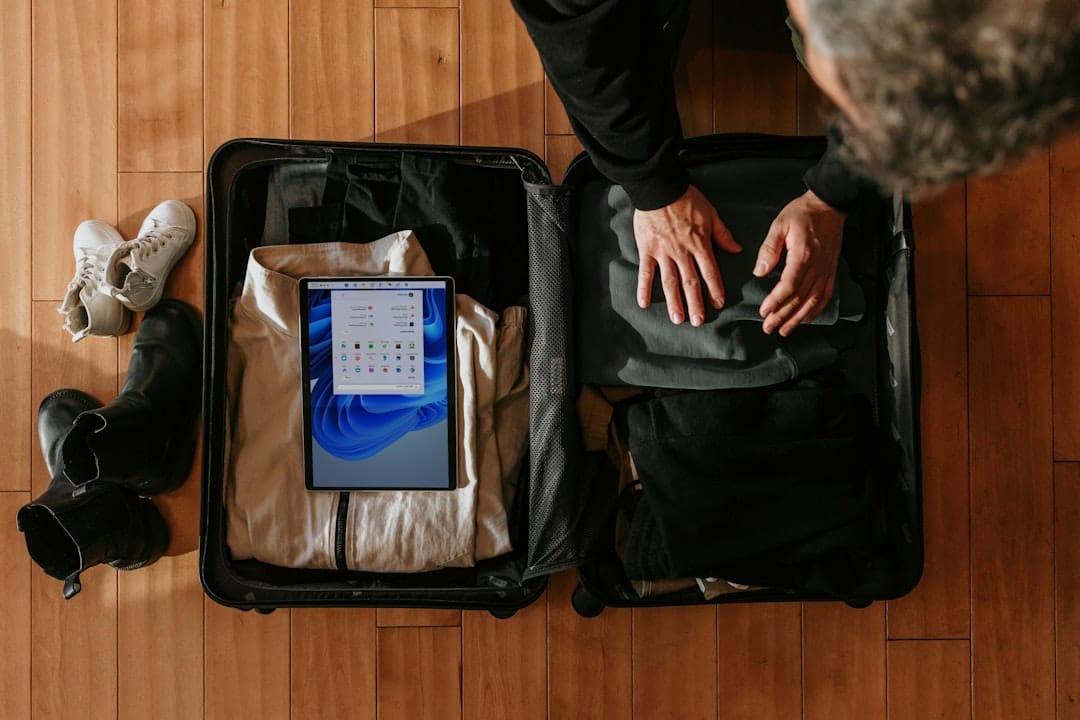
Scaling for Duration: The Laundry Pivot
Here is the mental shift that lets a weekend bag stretch into a months-long companion: you are not packing for a duration, you are packing for a laundry cycle. Decide how often you are willing to do laundry — every five days, every week — and pack enough to comfortably cover that interval plus a small buffer. A rule that serves almost everyone well is to plan around roughly a week of essentials. Five to seven of each base item — underwear, socks, tops — and two or three bottoms is genuinely all most people need, whether the trip lasts one week or twelve.
For shorter trips, the strategy tightens rather than expands. On a two- or three-day weekend you might skip laundry entirely and simply bring exactly what you'll wear, with one spare in case of spills. On longer stays — particularly the slow-travel rhythm of a month in one city — laundry becomes part of the texture of the place. You find the neighbourhood laundromat, the apartment with a washing machine, the co-living space that does it for you. Many of the best co-living spaces for remote workers include laundry facilities precisely because they understand how their residents live and move.
Carry a small flat sink stopper and a tube of concentrated travel detergent and you unlock the ability to wash essentials anywhere — a hotel sink, a hostel bathroom, a borrowed balcony line. A merino tee rinsed at night is dry by morning. This single habit decouples the size of your bag from the length of your trip entirely. Once you trust it, the difference between a one-week packing list and a six-month one effectively disappears, and the only thing scaling up is your confidence.
The Tech, Tools, and Organisation That Hold It Together
The Tech, Tools, and Organisation That Hold It Together
Comparison of packing organisation systems and their key features for different travel styles.
| Feature | Packing Cubes | Compression Bags | Tech Organisers |
|---|---|---|---|
| Space savings | Moderate | High | Minimal |
| Easy access | Yes | Partial | Yes |
| Item visibility | Full access | Limited | Dedicated slots |
| Best for | Clothing | Bulk items | Cables & gear |
For the location-independent professional, the work kit deserves as much thought as the wardrobe — arguably more, because it is what keeps the income flowing. Build a tech pouch that holds everything in one place: a compact universal adapter that handles every region's sockets, a multi-port GaN charger so a single brick powers your laptop, phone, and headphones at once, a couple of short braided cables, and a slim power bank. A pair of noise-cancelling headphones earns its space many times over when you need to take a call from a noisy café or carve out focus on a long flight. These are among the must-have tools for a seamless remote work routine that turn any corner of the world into an office.
Organisation is what separates a packed bag from a chaotic one. Packing cubes are the unglamorous backbone of the whole system — they compress soft items, keep categories separated, and let you find a clean shirt without excavating the entire bag. Dedicate one cube to tops, one to bottoms and underlayers, and a small one to socks and underwear. A separate toiletry kit, kept permanently stocked and ready, means you can leave on short notice without rebuilding it each time. Decant liquids into small refillable bottles and keep them under the carry-on limits so security is never a problem.
Think in zones and you'll never lose anything. Documents and valuables live in one accessible pocket; tech in its pouch; the day's essentials in an easy-reach compartment. A packable daypack that folds to the size of a fist is worth its weight in gold — it becomes your café-work bag, your day-trip carrier, your grocery runner, all without taking up meaningful space when stowed. The most reliable system is the one you can pack and unpack on autopilot, because the less mental energy packing consumes, the more you have for the actual experience of travel.
Common Packing Mistakes and How to Sidestep Them
The most common mistake is packing for the weather you imagine rather than the weather that exists. People bound for a tropical destination still tuck in a heavy sweater for the imagined cold evening, and people heading somewhere temperate over-pack summer wear. Check the actual forecast and historical averages for your specific dates, then trust the data over the daydream. Layers solve the genuine variability far better than a single bulky item ever will, and almost anything you truly need can be bought locally if a cold snap genuinely surprises you.
Another frequent error is bringing full-sized everything — shampoo bottles, thick books, multiple gadgets that do overlapping jobs. Consolidate ruthlessly. Your phone replaces a camera, a guidebook, a torch, and a notebook for most travellers. Solid toiletries — shampoo bars, solid deodorant — save space and skip liquid restrictions entirely. And resist the urge to pack a separate outfit for every imagined occasion; the dinner shirt that also works for a meeting and a casual evening out is worth three single-purpose garments.
Finally, beware the souvenir creep and the slow accumulation that swells a bag over a long trip. Build in a buffer of empty space — leave your bag deliberately under-full when you depart, so there is room for the things you'll inevitably acquire. For those embracing a slower, city-by-city style of travel, a periodic purge keeps the bag honest — every month or so, lay everything out and be ruthless about what you have not touched. If it hasn't earned its place in four weeks, it likely never will.
A great packing strategy is, in the end, an invisible thing. When it works, you barely think about it — you simply move, arrive, work, and explore, unburdened by the friction of too much stuff. The principles hold steady across every trip length: commit to a single bag, build a coordinated capsule, scale by laundry rather than by days, organise in zones, and prune relentlessly. Master these and the question of trip duration stops mattering, because the same trusted kit carries you through a weekend and a season alike.
Pack once, pack well, and let the bag fade into the background. The reward is presence — the freedom to give your full attention to the place you're in and the life you're building on the move, rather than the weight on your shoulders. That, more than any clever gadget, is what minimalist packing truly buys you.