Best Countries to Live on $800/Month (2026 Nomad Guide)
There's a moment that happens to almost every remote worker — usually somewhere between the third invoice of the month and the fourth scroll through an Instagram feed full of sun-drenched terraces and cobblestone alleys — when the question stops being hypothetical. What if I actually did it? What if I packed the laptop, cancelled the lease, and moved somewhere the dollar stretches twice as far? The math starts to look almost offensive in its simplicity. Your salary stays the same. Your rent drops by seventy percent. Suddenly you're not just getting by — you're actually living.
The good news is that the world is full of places where $800, $1,000, or $2,000 a month doesn't just cover your bills — it covers your bills, your morning espresso ritual, your weekend trip to a volcano, and a decent bottle of wine on a Friday evening. The less glamorous news is that not every cheap destination is created equal, and the difference between a place that feels like an adventure and one that feels like a compromise usually comes down to knowing what you're actually getting for your money.
This guide is for the remote worker who is done daydreaming and ready to get practical. We've broken it down by budget — from the genuinely bare-bones $800 threshold all the way up to the comfortable, well-rounded $2,000 life — with real destinations and honest takes on what your money actually buys you in each one. No rose-tinted promises. Just the kind of honest, on-the-ground picture that helps you make a decision you'll still feel good about six months in.

The Cheapest Countries in the World for Remote Work
If the goal is pure cost minimization without sacrificing the basics of a functional remote work life — reliable internet, decent food, a safe place to sleep — Southeast Asia remains the undisputed champion. Vietnam, in particular, has quietly become one of the most remarkable value propositions on the planet for location-independent workers. In cities like Hanoi and Da Nang, you can rent a clean, modern studio apartment for $250 to $350 a month, eat extraordinarily well at local restaurants for $2 to $4 a meal, and sit in a café with fibre-speed wifi nursing a Vietnamese iced coffee that costs less than a dollar. The country has an energy to it — chaotic and warm and perpetually in motion — that tends to get under your skin in the best possible way.
Cambodia and Laos push the budget ceiling even lower, though they come with trade-offs — internet infrastructure in Laos in particular can be inconsistent outside of Vientiane, which matters enormously when your livelihood depends on a stable connection. Indonesia's island of Bali deserves a mention, though its increasingly international scene means it sits in a slightly higher bracket than it did five years ago. Still, away from Seminyak and Canggu's tourist corridors, you'll find entire neighbourhoods where life moves slowly, the food is extraordinary, and your rent might be $300 for a place with a garden.
Further west, Georgia — the small Caucasus nation, not the American state — has become a genuine darling of the nomad community, and for good reason. Tbilisi is a city of extraordinary architectural beauty, legendary hospitality, and food and wine culture that would make an Italian blush. It's also genuinely cheap. Rent in a central apartment can run as low as $300 to $400 a month, and the country's liberal visa policy (most nationalities can stay for up to a year without a visa) makes it one of the most frictionless long-stay destinations on earth.
Where in the World Can You Actually Live for $800 a Month?
Eight hundred dollars a month sounds impossibly tight if you're used to Western living costs. But in the right places, it's not just survivable — it's genuinely comfortable. The key is understanding that $800 is a liveable budget in countries where local purchasing power makes your dollar work two or three times harder than it does at home. In Da Nang, Vietnam, for example, you can reasonably expect to cover a furnished studio ($280), three meals a day at local restaurants ($90 to $120), a scooter rental ($30), fast internet ($10), and still have a couple of hundred dollars left for weekend trips, coworking day passes, and the odd cold beer on the beach.
Bolivia is one of South America's most overlooked destinations for budget-conscious nomads. Sucre, the country's constitutional capital and a UNESCO World Heritage city of startling whitewashed beauty, offers furnished apartments from as little as $200 a month. Food is cheap, the altitude keeps things cool, and the city has a small but growing community of expats and remote workers. The trade-off is that it's relatively remote, flight connections can be inconvenient, and healthcare infrastructure is more limited than you'd find in larger nomad hubs. But for someone who wants a genuinely off-the-beaten-path experience at minimal cost, Sucre delivers something most more popular destinations simply can't.
Nepal is another destination that surprises people with how far $800 can stretch. Kathmandu, for all its sensory intensity, has a surprisingly functional digital infrastructure in the central neighbourhoods, and the combination of cheap accommodation, astonishingly inexpensive food, and the sheer drama of the landscape surrounding the city creates a quality of life that's hard to put a price on. If $800 is your ceiling and you want to feel like you're genuinely somewhere extraordinary rather than simply somewhere cheap, Nepal belongs near the top of your shortlist.
The $900 to $1,500 Sweet Spot: Where Comfort Meets Value
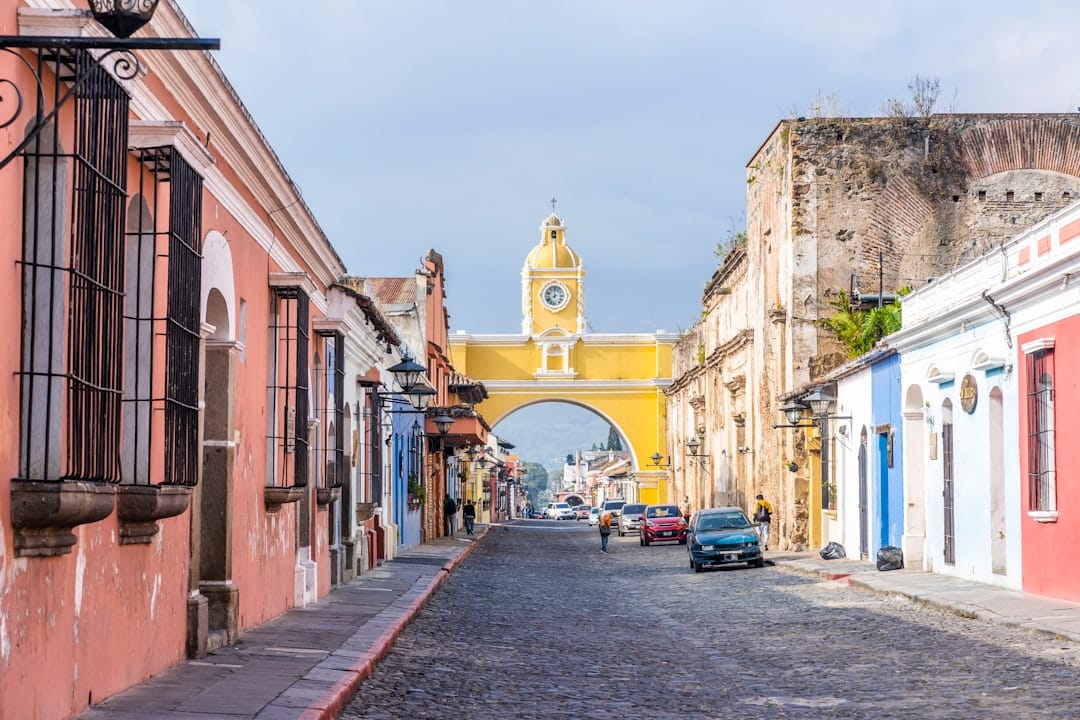
Nudge your budget up to the $900 to $1,500 range and the world opens up considerably. This is the bracket where you start to have genuine choices — not just between destinations, but between lifestyles within those destinations. In Medellín, Colombia, one of the most talked-about nomad cities of the last decade, $1,200 a month gets you a modern apartment in El Poblado or Laureles, unlimited filter coffee at the proliferation of excellent cafés, a full coworking membership, and enough left over to explore the city's vibrant restaurant and cultural scene on weekends. Medellín has the kind of energy that makes you productive — something about the perpetual spring climate and the ambition of the city rubs off on you.
Mexico deserves particular attention in this budget range. Oaxaca has become something of a cultural obsession for a certain kind of slow-travel nomad — and rightly so. The food scene alone, built on centuries of indigenous culinary tradition, would justify the move. But Oaxaca also offers a genuinely liveable infrastructure, reasonable apartment prices (typically $400 to $600 for a good one-bedroom in a central neighbourhood), and a creative community of artists, chefs, and remote workers that makes it one of the more socially rich bases you'll find anywhere. A $1,200 monthly budget here covers everything comfortably, with room to take a mezcal-tasting class on a Tuesday afternoon just because you can.
For those who want to stay closer to European time zones without paying European prices, Albania has quietly emerged as one of the continent's most compelling budget destinations. Tirana is scrappy and fascinating, but it's the coastal town of Saranda — looking out across turquoise water toward the Greek island of Corfu — that tends to stop nomads in their tracks. At $900 to $1,200 a month, you can live well here, with fresh seafood on your table most evenings and a genuinely beautiful Mediterranean environment that most visitors only experience on package holidays.
Living Well for $2,000 a Month: The Destinations That Punch Above Their Weight
At $2,000 a month, you're no longer in the territory of scrappy budget travel. You're in the territory of genuinely comfortable living — and in many parts of the world, comfortable slides easily into luxurious. Chiang Mai, Thailand, is perhaps the most famous example. A city that has hosted nomads for longer than most, it has developed an entire infrastructure around the lifestyle — hundreds of coworking spaces, cafés purpose-built for working hours, and a social scene that means you'll never struggle to find community. At $2,000 a month in Chiang Mai, you can afford a spacious condo with a pool, eat well every single day — switching freely between excellent street food and upscale Thai restaurants — and still bank meaningful savings.
Portugal — specifically Lisbon and Porto — sits at the upper edge of this bracket, and it's worth being honest that $2,000 a month in Lisbon requires some intentionality now that the city has become genuinely expensive by its own historical standards. But it remains very much doable, especially if you're willing to live in one of the city's outlying neighbourhoods rather than the tourist heartland of Alfama or Bairro Alto. And what you get for that money is one of Europe's most beautiful, walkable, and culturally rich cities, Atlantic beaches within thirty minutes, and the full legal infrastructure of EU residency if you pursue one of Portugal's several digital nomad visa pathways.
Buenos Aires is another city that rewards the $2,000-a-month nomad in ways that are difficult to quantify purely in budget terms. Argentina's complex economic situation — particularly for those earning in dollars or euros — has historically created extraordinary purchasing power for foreign earners, and while the specifics shift with the exchange rate, the fundamental value proposition remains compelling. The city itself is staggering: grand European-style boulevards, world-class steak, tango in the streets, a literary and artistic culture that feels almost intoxicating to live inside. At $2,000 a month, you can live like you're earning considerably more, in a city that will surprise you every single day.
The truth is that the question of where to go is really a question of what kind of life you want to lead — and the remarkable thing about remote work is that you actually get to choose. Whether your budget is $800 or $2,000, there are places in the world where that money buys you not just lower costs, but a fundamentally richer daily experience than you'd find in the city where you currently pay rent. The trade-offs are real — visa constraints, healthcare access, distance from family, the emotional complexity of perpetual movement — but so are the rewards.
The best advice anyone gave me before I made the jump was this: don't think about it as leaving something behind. Think about it as choosing something better. The spreadsheet is important — budgets matter, costs matter, practical infrastructure matters enormously when your work depends on it. But the destinations that stick with you, the ones you end up calling home for longer than you planned, are the ones that gave you more than value for money. They gave you a life that surprised you. Start with the budget. Then go find the surprise.