What is the largest size suitcase you can take as a carry-on?
There is a particular kind of dread that settles in your chest when you see the gate agent eyeing your bag. You have packed strategically, rolled everything with military precision, sat on the zipper, maybe even worn your heaviest shoes and your bulkiest jacket onto the plane — and still, somehow, you are not entirely sure your carry-on is going to make it through without being gate-checked into the hold. If you travel frequently, especially as a digital nomad moving between cities every few weeks, that uncertainty is not just stressful. It costs you time, money, and the kind of easy spontaneity that makes the lifestyle worth living in the first place.
The question of what is the largest size suitcase you can take as a carry-on is deceptively simple. On the surface it sounds like it should have a clean, universal answer — a single set of dimensions stamped into the consciousness of every traveller like a passport number. In reality, carry-on size limits vary by airline, by aircraft type, by route, and sometimes by the mood of whoever is working the gate that morning. Understanding the landscape of these rules, and knowing exactly how close to the edge you can push your luggage, is one of the most practical skills a frequent flyer can develop.
This guide is for the traveller who wants to bring as much as the airline will allow without checking a bag — the person who has learned that carry-on only is not just a cost-saving move but a philosophy, a commitment to moving through the world with ease and intention. We are going to walk through the actual numbers, the fine print that airlines hide in plain sight, and the practical strategies that seasoned nomads use to maximise every cubic centimetre of their allowable overhead space.
The Industry Standard — and Why It Is Not Actually Standard
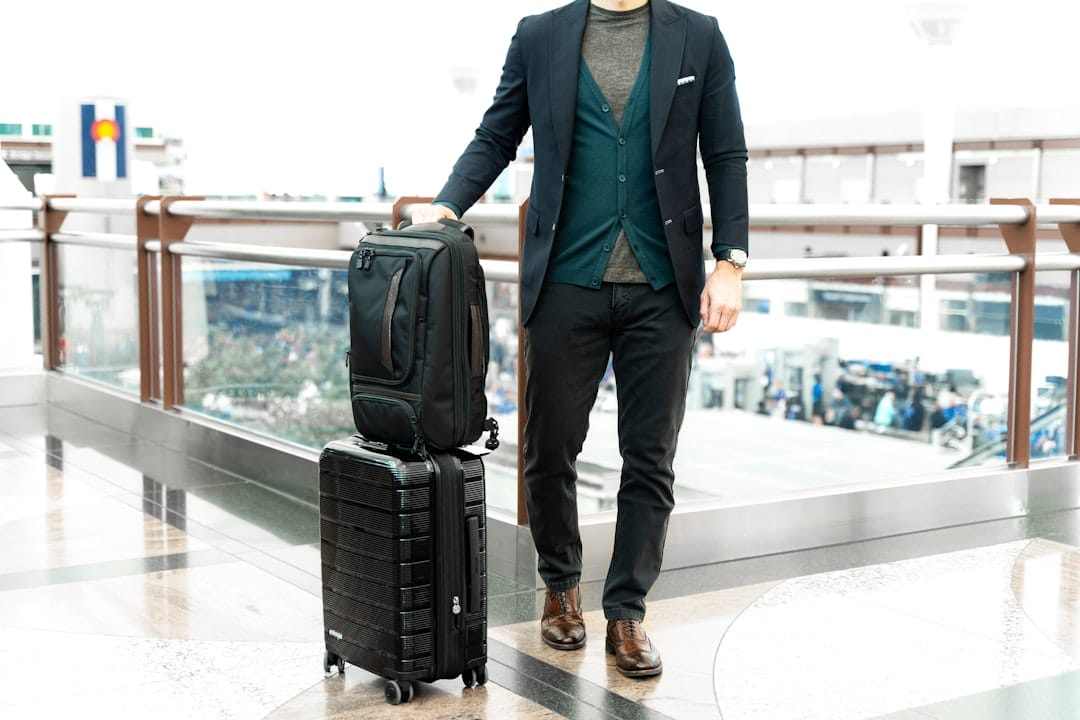
If you ask most frequent flyers what the standard carry-on size is, they will tell you 22 x 14 x 9 inches, or roughly 56 x 36 x 23 centimetres. That figure is not wrong — it represents the dimensions adopted by the major US carriers including American Airlines, Delta, and United, and it has become something of an unofficial industry benchmark. The idea is that a bag fitting within those measurements will slide into the overhead bin of most commercial aircraft without drama. For a full-sized rolling carry-on, this typically translates to what the luggage industry calls a 22-inch bag, referring to the height of the case.
But here is where things get complicated. Those dimensions are the outer limit set by major US carriers on wide-body, full-service domestic and international routes. The moment you step outside that world — onto a budget European carrier, a regional turboprop, or a Southeast Asian low-cost airline — the rules shift dramatically. Ryanair, for example, allows a maximum cabin bag of 40 x 20 x 25 centimetres for standard passengers and 55 x 40 x 20 centimetres for those who have purchased priority boarding. EasyJet allows 56 x 45 x 25 centimetres. Wizz Air goes up to 55 x 40 x 23 centimetres. These are all materially different from the American benchmark, and from each other.
The practical upshot is that there is no single largest carry-on size that works universally across all airlines. What there is, however, is a sweet spot — a bag size that threads the needle between the most common restrictions well enough to get you through the vast majority of flights without incident. Most experienced nomads land on a 55 x 40 x 20 centimetre bag, or something very close to it, as the most broadly accepted size across both budget and full-service carriers globally. It is not perfect for every airline, but it is a reasonable diplomatic compromise.
How Airlines Actually Measure — and When They Do Not
One of the dirty little secrets of air travel is that enforcement of carry-on size limits is inconsistent at best. Most full-service airlines — your long-haul carriers, your major domestic operators — rarely measure bags at the gate. They rely on the visual judgement of staff and the physical reality of overhead bin space. If your bag looks roughly the right size and fits in the bin, nobody is going to pull out a tape measure. This is why you will regularly see bags that are technically over the limit sailing through boarding without a second glance, while smaller bags get pulled for gate-checking when a flight is particularly full.
Budget carriers are a different story. Ryanair and Wizz Air, in particular, are known for their sizer boxes at the gate — rigid metal frames that your bag must fit into before you are allowed to board. These are not suggestions. If your bag does not fit, you pay to check it, and those fees can be eye-watering, sometimes exceeding the cost of the original ticket. If you are flying budget carriers regularly as part of a nomadic itinerary, buying a bag specifically sized to pass those sizer boxes is not optional; it is essential financial hygiene.
There is also the question of how dimensions are counted. Some airlines include wheels and handles in their stated measurements; others do not. A bag listed by the manufacturer as 22 inches might actually measure 24 inches including its wheels and telescoping handle, pushing it over the limit on carriers that measure the full external footprint. Always check whether an airline's stated dimensions refer to the body of the bag or to its total external size, and cross-reference that with the actual measurements of any bag you are considering buying. The difference of a couple of centimetres can genuinely matter.
Enjoying this? Get more like it.
Weekly picks for remote workers and digital nomads — tools, destinations, and honest takes, straight to your inbox.
Subscribe free →
The Best Carry-On Sizes for Different Types of Nomad Travel
The Best Carry-On Sizes for Different Types of Nomad Travel
A comparison of carry-on bag size options across short hops, multi-destination trips, and long-term nomad travel to help digital nomads choose the right fit.
| Feature | Compact (40L) | Mid-Size (45L) | Max Cabin (55L) |
|---|---|---|---|
| Fits all major airlines | Yes | Yes | Limited |
| Fits budget carriers | Yes | Varies | Not supported |
| Fits under seat | Yes | Varies | Not available |
| Capacity for 7+ days | Partial | Yes | Yes |
| Laptop + gear friendly | Limited | Full access | Full access |
| Best for | Weekend trips | Recommended | Selected locations |
If you are primarily flying full-service carriers on North American or transatlantic routes, you have the most room to work with. A 22 x 14 x 9 inch rolling suitcase — the full American standard — is your ceiling, and bags like the Away Carry-On, the Rimowa Essential Cabin, and the Travelpro Platinum Elite are designed to hit those dimensions precisely. These bags offer a meaningful volume advantage over their European budget-carrier counterparts, typically landing somewhere between 35 and 45 litres of packing space, which is enough for a week or more of travel if you pack thoughtfully.
If your itinerary is heavy on European budget carriers or Southeast Asian low-cost airlines like AirAsia or Scoot, you need to size down. The 55 x 40 x 20 centimetre format is your friend here, though even that is too large for Ryanair's most restrictive tier. Many nomads in this situation opt for a structured cabin bag rather than a rolling suitcase — something in the 35 to 40 litre range that can be compressed slightly to fit through a sizer box. The Osprey Farpoint 40, the Cabin Zero Classic, and similar hybrid bags have built dedicated followings among budget-carrier veterans precisely because they navigate this compromise well.
For the truly multi-airline nomad — someone who might be flying United one week and Wizz Air the next — the honest answer is that no single bag is universally optimal. Many experienced travellers in this situation keep two bags: a larger rolling carry-on for full-service routes and a smaller, softer bag for budget carrier trips. It is an added layer of logistical complexity, but it is often cheaper than paying checked baggage fees and far less stressful than gambling at the gate.
Weight Limits, Personal Items, and the Art of the System
Size is only half the equation. Many airlines — particularly budget carriers — also impose weight limits on carry-on bags, and these can catch travellers off guard in ways that size limits do not. Ryanair allows a maximum of 10 kilograms for its priority cabin bag. EasyJet is more generous at 15 kilograms, while many full-service carriers like British Airways and Lufthansa impose a 23-kilogram limit on cabin bags, which is effectively no limit at all for most travellers. If you are packing a laptop, camera gear, or other electronics, weight can add up faster than you expect, and a bag that passes the size test might still get you charged at a weight-checking gate.
Most airlines also allow a personal item in addition to a carry-on — typically a handbag, laptop bag, or small backpack that fits under the seat in front of you. Dimensions for personal items usually fall around 18 x 14 x 8 inches, or 45 x 36 x 20 centimetres, though again this varies by carrier. Savvy nomads treat their personal item with the same strategic seriousness as their carry-on, using it to house their laptop, travel documents, and anything they might need during the flight, while reserving the overhead bin bag for clothing and gear. Maximising both allowances together is where the real packing efficiency lives.
One more thing worth noting: some airlines have begun cracking down on the personal item in ways they historically have not. If a flight is very full and overhead bins are at capacity, gate staff may start scrutinising personal items that look suspiciously large. A laptop backpack stuffed to its absolute outer limit is technically a personal item; a clearly overstuffed duffle bag wedged on top of your carry-on is not going to be treated the same way. Knowing the specific rules of each airline you fly — and erring on the side of conservatism when you are unsure — is simply good travel practice.
At the end of the day, the largest carry-on you can bring aboard any given flight is the largest carry-on that airline will allow on that specific aircraft — and the only way to know that number with certainty is to look it up before you book. The good news is that this is information every airline publishes, and spending five minutes on their baggage policy page before purchasing a ticket can save you a genuinely unpleasant interaction at the gate. Build the habit of checking every time you fly a new carrier, and keep a notes file on your phone with the dimensions for the airlines you use regularly. It sounds like a small thing, but for a nomad who flies dozens of times a year, it is the kind of detail that quietly makes the whole lifestyle run more smoothly.
The freedom of carry-on only travel is real and worth protecting. Not having to wait at baggage claim, not worrying about delayed or lost luggage, not paying checked bag fees on every leg of a multi-city trip — these are genuine quality-of-life advantages that compound over months and years of nomadic travel. Get your bag dimensions right, know the rules of the carriers you fly, pack with intention, and you will move through airports with the kind of quiet confidence that only comes from knowing exactly where you stand.