What is the 5 4 3 2 1 packing rule?
There's a particular kind of dread that settles in around midnight before an early flight — the open suitcase on the floor, piles of clothes arranged in rough category heaps, and the creeping suspicion that you've somehow packed everything you own yet still forgotten something essential. If you've lived this scene, you're not alone. Packing is one of those skills that sounds deceptively simple until you're standing at an airport check-in desk being told your bag is four kilograms over the limit and you have to choose between your favorite jacket and your laptop charger. Most of us were never actually taught how to pack; we just fumbled our way through it trip after trip, gradually accumulating our own chaotic systems.
For digital nomads and long-term travelers, overpacking isn't just an inconvenience — it's a genuine quality-of-life issue. Every extra kilogram you haul through cobblestone streets, up narrow stairwells in Portuguese guesthouses, or across three connecting airports is weight that chips away at the joy of being mobile. The freedom of location independence loses some of its luster when you're wrestling a 30-kilogram monster through the Metro. That's precisely why a growing community of seasoned nomads swears by a beautifully simple framework called the 5 4 3 2 1 packing rule — a method that turns the overwhelming chaos of "what do I bring?" into a clean, repeatable formula.
Whether you're heading out for a week-long work-from-anywhere stint in Lisbon or embarking on a multi-month slow travel adventure through Southeast Asia, understanding what is the 5 4 3 2 1 packing rule — and actually applying it — can completely transform the way you move through the world. Let's unpack it, properly.
The Numbers Behind the Rule
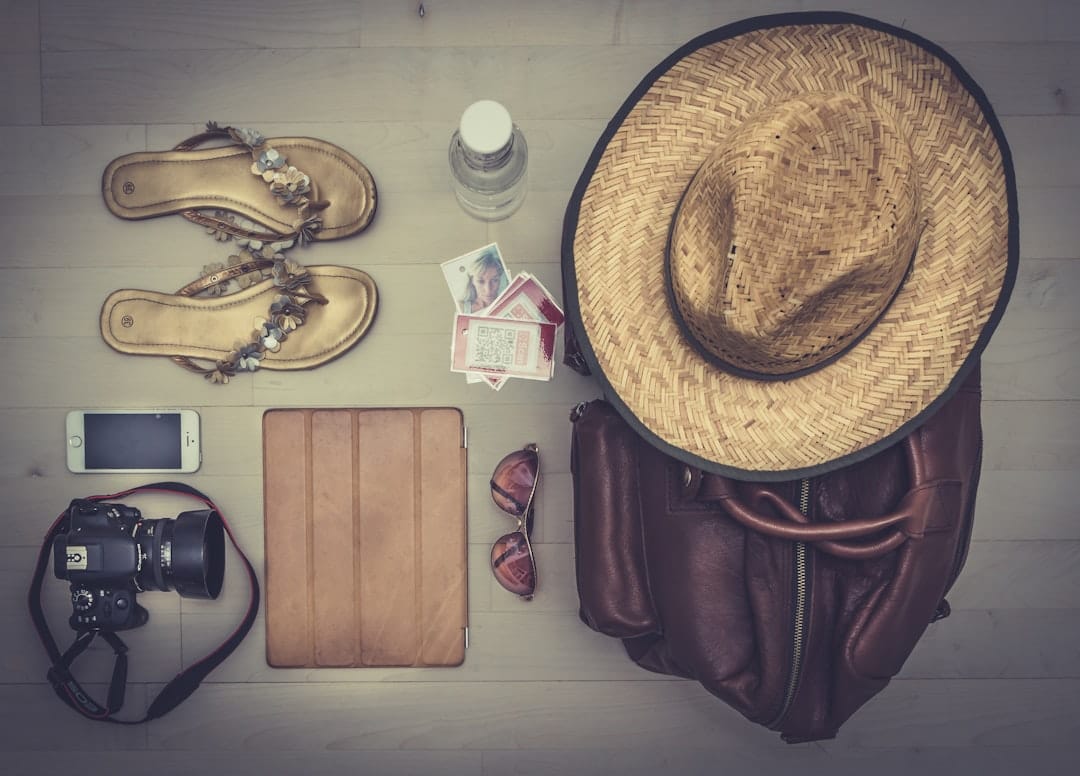
The 5 4 3 2 1 packing rule is a clothing-focused formula designed to help travelers pack efficiently for any trip lasting roughly five to seven days — though with laundry access, it scales beautifully for much longer journeys. Each number corresponds to a category of clothing: 5 tops, 4 bottoms, 3 shoes, 2 outerwear pieces, and 1 formal or occasion outfit. That's it. The whole system fits neatly inside a single carry-on bag when you choose wisely, and it eliminates the paralysis of staring at your wardrobe wondering which version of yourself you need to pack for.
Think of the five tops as your daily workhorses — t-shirts, blouses, or lightweight shirts that can handle a full day of sightseeing, a coffee-shop work session, or an evening wander through a night market. The four bottoms cover your core situations: a pair of jeans for cooler evenings, linen trousers for warm days, shorts for the beach or casual afternoons, and perhaps a versatile skirt or joggers depending on your style. Three shoes sounds like a lot until you realize you're accounting for walking shoes or sneakers, sandals, and one pair of smarter footwear for dinners or client meetings. The two outerwear pieces might be a light packable rain jacket and a warmer layer — think merino wool cardigan or a compact puffer. And the single formal or occasion item is your insurance policy: one dress, one blazer-and-trouser combination, or whatever your version of "dressed up" looks like.
What makes this rule genuinely useful isn't just the numbers themselves — it's the mental constraint they impose. When you know you're limited to five tops, you stop grabbing "just in case" items and start thinking intentionally about versatility and outfit combinations. You suddenly become very interested in neutral colors, fabrics that don't wrinkle, and pieces that transition seamlessly from a video call backdrop to a sunset rooftop bar.
Why Digital Nomads Fall in Love with This System
The nomad lifestyle has a beautiful irony at its core: the more you own, the less free you feel. Remote workers who've been living out of a bag for any length of time tend to arrive at minimalism not as an aesthetic choice but as a practical necessity. Every item you carry has a cost — in airline fees, in physical strain, in the cognitive overhead of managing your belongings. The 5 4 3 2 1 rule aligns perfectly with this ethos because it gives you a framework that's strict enough to prevent overloading but flexible enough to adapt to any climate or context. You're in Chiang Mai one month and Tbilisi the next? The formula stays the same; only the specific items within each category shift.
There's also the very real financial dimension. Checked baggage fees have crept up dramatically across most airlines, particularly budget carriers in Europe and Asia — the very airlines that nomads rely on for affordable inter-city hops. Mastering the carry-on life isn't just convenient; over a year of frequent travel, it can save you several hundred dollars. And for those exploring budget-friendly slow travel cities, keeping travel costs down means more money left for the experiences that actually matter — a cooking class in Bologna, a motorbike day trip in northern Vietnam, or simply a nicer co-living space with a proper desk setup.
Beyond the financial argument, there's a quieter psychological benefit that regular travelers rarely talk about openly: knowing exactly what you have removes decision fatigue. When your entire wardrobe is ten to fifteen pieces that all work together, getting dressed in the morning — even in an unfamiliar city, even when you're jet-lagged and have a client call at nine — becomes effortless. Your mental energy stays reserved for the things that actually require it.
Enjoying this? Get more like it.
Weekly picks for remote workers and digital nomads — tools, destinations, and honest takes, straight to your inbox.
Subscribe free →
Adapting the Rule for Long-Term and Slow Travel
Adapting the Rule for Long-Term and Slow Travel
A comparison of how the 5-4-3-2-1 packing rule should be adapted across three common long-term travel scenarios.
| Adaptation Area | 1–4 Week Trips | 1–3 Month Stays | 6+ Month Nomadism |
|---|---|---|---|
| Base Rule | Standard 5-4-3-2-1 | Slight expansion | Personalised system |
| Laundry Access | Occasional | Frequent | Frequent |
| Shoes Allowed | 2 pairs | 2–3 pairs | 3+ pairs |
| Climate Flexibility | Limited | Partial access | Full access |
| Luggage Type | Carry-on only | Carry-on only | Carry-on + personal item |
| Best For | Short-haul nomads | Slow travellers | Long-term nomads |
The obvious question when you first encounter the 5 4 3 2 1 rule is: but what about a month-long trip? Or three months? The answer is that the formula doesn't change — your relationship to laundry does. Long-term travelers quickly discover that access to laundry facilities is one of the most important things to research before booking accommodation, right alongside Wi-Fi speed and desk setup. Most co-living spaces, hostels, and even many Airbnbs include laundry access, and in many parts of the world, drop-off laundry services are extraordinarily affordable — in Bali or Hanoi, you can have a full bag of clothes washed, dried, and folded for less than the cost of a coffee back home.
The real adaptation for slow travelers lies in fabric choices and the concept of a capsule wardrobe. Merino wool is the fabric that nomad communities evangelise about with almost cultish devotion — and for good reason. It regulates temperature, resists odors, dries quickly, and doesn't wrinkle. A merino t-shirt worn on Monday can be worn again on Wednesday without anyone being any the wiser. Synthetic performance fabrics offer similar benefits at a lower price point. When every piece in your 5 4 3 2 1 lineup is made from travel-friendly fabric, the formula stretches from a week to a month without effort. You're essentially rotating a small, high-quality wardrobe rather than depleting a large mediocre one.
For nomads who move between very different climates — say, from a Nordic winter to a Southeast Asian summer within the same trip — the rule still holds, but you layer strategically rather than packing duplicates. A packable down jacket compresses to the size of a grapefruit. Merino base layers work in cold and warmth alike. The three-shoe rule becomes particularly important in climate transitions: one pair of warm-weather shoes, one pair that handles cooler weather or rain, and one versatile middle-ground option that does double duty. It requires more thought upfront, but that's precisely the point — think once, pack once, move freely.
What the Rule Doesn't Cover — and How to Handle It
The 5 4 3 2 1 rule is explicitly a clothing framework, and it's worth acknowledging upfront that clothing is only part of the packing equation for a remote worker. Your tech setup — laptop, chargers, adapters, headphones, backup battery — occupies its own category entirely and needs its own system of ruthless editing. The rule's spirit, though, applies directly: bring only what you genuinely use, and question every "just in case" item with honest scrutiny. A spare keyboard? Only if you're staying somewhere long enough to justify it. A second monitor? Only if your destination doesn't have a coworking space or library where you can borrow one. Many experienced nomads find that pairing the 5 4 3 2 1 clothing rule with a strict single-bag policy for tech creates a complete system that keeps total luggage to one carry-on and one personal item.
Toiletries and personal care items are the other common overpacking trap. Most destinations have pharmacies and supermarkets where you can replace anything that runs out or that you forgot. Decanting your go-to products into travel-sized containers, relying on solid toiletries where possible (shampoo bars, solid conditioner, and bar soap are game-changers for carry-on compliance), and buying locally when needed removes the need to pack a bathroom cabinet. It also keeps you well under the liquid limits that define what you can and can't bring in a carry-on bag on most international flights.
It's also worth considering what you don't need to pack at all when your accommodation is well-chosen. Staying in co-living spaces, for instance, often means access to shared amenities — yoga mats, beach towels, kitchen equipment, board games, even bikes — that would otherwise add bulk to a bag. If you're curious about how the right accommodation can genuinely lighten your travel load, exploring top co-living spaces for digital nomads is a genuinely practical starting point — the right space does half your packing for you before you've even opened the suitcase.
The freedom to move easily — to say yes to a last-minute weekend in a new city, to show up somewhere without the physical and mental drag of an overstuffed bag — is one of the core pleasures of the nomadic life. The 5 4 3 2 1 packing rule is less a rigid constraint and more a kind of permission structure. It gives you clear limits that paradoxically free you from the endless negotiation of what to bring. Once you've packed according to the formula a few times, it becomes second nature — a ritual that signals you're genuinely prepared, genuinely light, and genuinely ready to go wherever the work and the curiosity take you.
Start simple. Pick your next trip — even a short one — and try it. Choose five tops that genuinely excite you, four bottoms that all work with most of those tops, three pairs of shoes that cover your likely scenarios, two layers for varying weather, and one thing to wear when the occasion calls for it. Lay it all out. You'll probably surprise yourself with how complete it feels. Zip up the bag, lift it with one hand, and notice how that lightness travels with you all the way through every airport, every cobblestone street, every spontaneous change of plan. That feeling — that's what the rule is really for.