What is the 333 method when packing?
There is a specific kind of freedom that washes over you when you walk off a plane and straight out of the airport — no baggage carousel, no anxious wait, no overstuffed suitcase dragging at your shoulder. You just walk. For digital nomads who move between cities every few weeks, or slow travelers who have finally decided to stop checking bags, this feeling is less a luxury and more a necessity. Packing light is not about deprivation. It is about designing your wardrobe and your habits so carefully that you never carry more than you actually need.
The 333 method — sometimes written as the 3-3-3 rule — is one of the most practical frameworks to emerge from the minimalist travel community. At its core, it asks you to bring three tops, three bottoms, and three pairs of shoes for any given trip. That is nine clothing items in total, before you factor in underwear, a layer or two for cold evenings, and whatever you need for work. It sounds almost uncomfortably spare until you actually try it, at which point most people discover they were hauling an extra four kilograms of clothing they never once reached for.
If you are serious about carry on only travel tips that actually work in real life — not just on a Pinterest board — then understanding the 333 method and the handful of other packing frameworks that surround it is the place to start. This post walks through all of them, explains where they overlap, and helps you figure out which approach fits the way you actually travel and work.
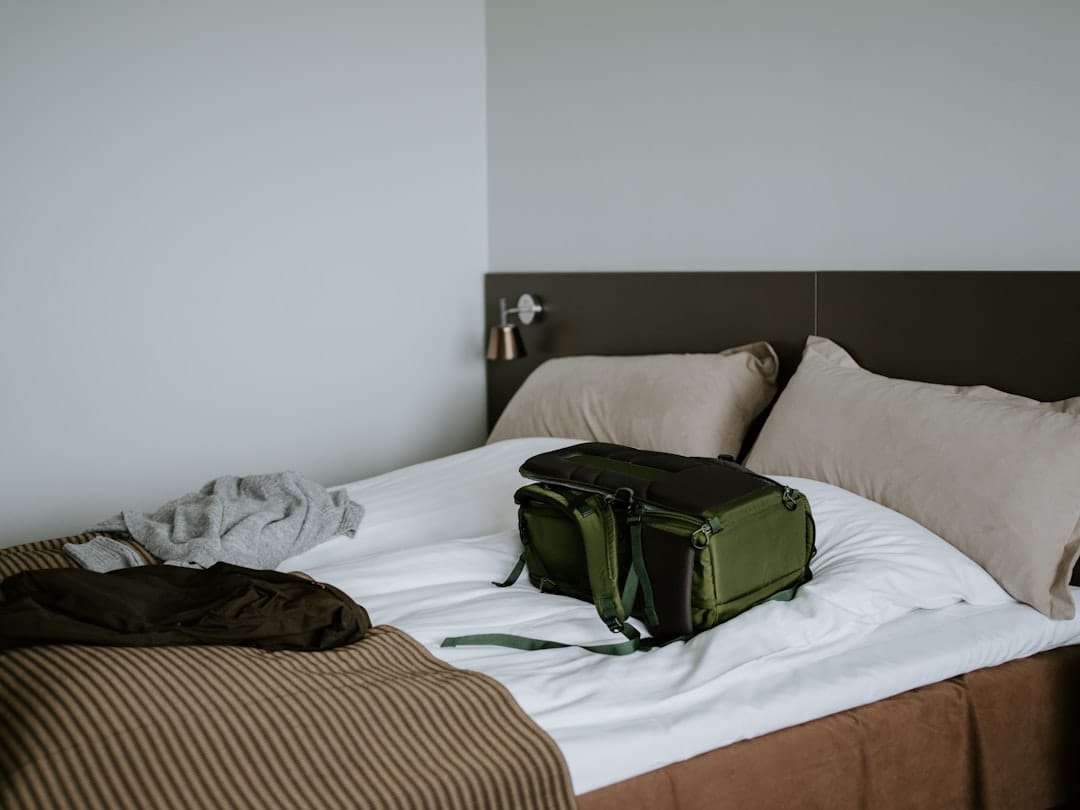
How People Actually Travel with Only a Carry-On
The honest answer is that carry-on-only travel works because of deliberate editing, not willpower. People who manage it consistently are not suffering through the trip with fewer clothes. They have simply learned to build what the fashion world calls a capsule wardrobe — a small collection of items that all work together, so that three tops and three bottoms create nine different outfits rather than three. The secret is choosing neutrals, prioritizing fabrics that pack flat and dry fast, and being ruthless about eliminating anything that only works with one other item.
For remote workers, the calculus shifts slightly because you are also packing a laptop, chargers, noise-cancelling headphones, and whatever else keeps you productive on the road. That tech stack can easily consume a third of your bag before a single item of clothing goes in. The solution most seasoned nomads land on is choosing a 20-litre to 26-litre carry-on backpack with a dedicated tech compartment, then treating the remaining space like a puzzle to be solved. Every item earns its place or it stays home.
There is also a rhythm to it that takes a trip or two to find. The first time you pack with a strict carry-on limit, you will almost certainly overpack anyway, then spend the first two days of your trip quietly editing, stuffing things into local charity bins or leaving them at your accommodation. By your third or fourth trip, the decisions become instinctive. You start to know exactly what you reach for and exactly what sits folded and untouched at the bottom of a bag for two weeks.
What Is the 5-4-3-2-1 Packing Trick?
What Is the 5-4-3-2-1 Packing Trick?
A comparison of popular packing methods showing item limits, best use case, and suitability for digital nomads.
| Packing Method | 333 Method | 5-4-3-2-1 Rule | 3-5-7 Rule |
|---|---|---|---|
| Tops allowed | 3 | 5 | 7 |
| Bottoms allowed | 3 | 4 | 5 |
| Shoes allowed | 3 | 3 | 3 |
| Fits carry-on | Yes | Yes | Limited |
| Best trip length | 1–2 weeks | Up to 1 week | 2–3 weeks |
| Nomad Friendly | Recommended | Yes | Upgrade required |
The 5-4-3-2-1 method is a structured packing formula that gives you a slightly more generous allowance than the 333 rule, which makes it popular with people taking longer trips or traveling somewhere with genuinely unpredictable weather. The numbers break down like this: five sets of socks and underwear, four tops, three bottoms, two pairs of shoes, and one jacket or outer layer. Everything else — scarves, accessories, a swimsuit if needed — gets folded into spare space after those ten core items are accounted for.
What makes this framework particularly useful for digital nomads is the deliberate prioritisation of socks and underwear. These are the items most likely to be unavailable in your exact preferred style at a corner shop in a new city, and they are also the items that wear out fastest when you are doing laundry every few days in a hostel sink or a shared laundry room at a co-living space. Having five of each gives you enough buffer to go four or five days between washes without anxiety, which is exactly the kind of margin that makes nomadic life feel comfortable rather than chaotic.
The single jacket rule is perhaps the most clarifying constraint in the whole system. It forces you to choose one layer that genuinely works across multiple contexts — a merino zip that looks presentable on a video call but also keeps out a coastal breeze, for instance, rather than a thick hiking fleece you only need for one mountain day. If you find yourself holding two jackets and trying to decide between them, that is usually a sign that one of them is solving a problem that does not actually exist yet.
Enjoying this? Get more like it.
Weekly picks for remote workers and digital nomads — tools, destinations, and honest takes, straight to your inbox.
Subscribe free →
Is the 3-1-1 Rule Only for Carry-On?
Yes and no. The 3-1-1 rule is a TSA liquids regulation, not a packing philosophy — and it applies specifically to what you can carry through airport security in your hand luggage. The rule states that all liquids, gels, aerosols, creams, and pastes must be in containers of 3.4 ounces (100ml) or less, all of those containers must fit inside a single clear resealable bag of one quart (approximately one litre) in size, and each passenger is allowed one such bag. So: 3.4 ounces, 1 bag, 1 bag per person. That is the 3-1-1.
It does not apply to checked luggage, where you can generally carry larger quantities of liquids without restriction (though airline-specific rules and country entry regulations can still apply). But for anyone committed to carry-on only travel, mastering the 3-1-1 constraint is non-negotiable. The most effective way to handle it is to switch as many products as possible to solid or powder form — shampoo bars, solid conditioner, powdered sunscreen, and toothpaste tablets have all become reliable staples in the minimalist travel kit. What you cannot convert, you decant into small refillable silicone bottles.
One quiet carry on only travel tip that experienced nomads rarely talk about publicly: buy your full-size liquids when you arrive. Shampoo, shower gel, and sunscreen are available in virtually every city on earth, often at a fraction of the price you would pay at home. Pick up what you need on day one, use what you can, and leave the rest behind or donate it to whoever is staying in your room next. It sounds obvious but it genuinely solves the 3-1-1 problem entirely for trips longer than a few days.
What Is the 3-5-7 Rule for Packing?
The 3-5-7 rule takes a slightly different angle. Rather than prescribing exactly how many of each clothing category to bring, it works as a layering and versatility test. The idea is that every item you pack should be wearable in at least three different combinations, that your total clothing selection should cover five different occasions or contexts, and that the whole wardrobe should be packable into seven kilograms or less — which happens to be the typical weight limit for carry-on luggage on European budget carriers like Ryanair and Wizz Air.
The five-occasion framework is what makes the 3-5-7 rule particularly useful for digital nomads whose days span wildly different contexts. A typical nomad week might include a morning of deep focus work at a cafe, an afternoon co-working at a shared space, a casual afternoon exploring a market, an evening dinner with new friends from a co-living community, and a weekend hike or beach day. That is five distinct contexts, and your wardrobe needs to flex across all of them without requiring you to carry five entirely separate outfit sets.
The seven-kilogram ceiling is the most clarifying constraint in this framework, and it is worth weighing your bag before you leave even if your airline allows more. Lighter bags mean less back strain, easier overhead bin access, and — if you ever switch to a smaller airline mid-trip — no panic at the gate. Many experienced carry-on travelers aim for five to six kilograms including their tech gear, which leaves comfortable room for a few extras and a souvenir or two on the way home. If you are still building your nomadic routine and looking for a framework to guide the bigger lifestyle questions, the principles behind slow travel in budget-friendly cities can help you think about where weight and pace intersect.
The Most Forgotten Item When Traveling — and What It Reveals About Packing
Ask any frequent traveler what they forget most often, and the answers cluster around a handful of usual suspects: phone chargers, adapters, medications, and — more than almost anything else — some form of power bank or the cable for a device they packed at the last minute. The irony is that these are not bulky or heavy items. They get left behind not because people run out of space but because they live outside the main packing ritual, plugged into a wall or sitting on a bathroom shelf until the very last moment.
The deeper insight here is that packing methods like the 333, 5-4-3-2-1, and 3-5-7 are primarily clothing frameworks. They do not account for the tech layer that most digital nomads carry, nor for the small functional items — a universal adapter, a micro-fibre towel, a packable rain jacket, a reusable water bottle — that experienced travelers consider non-negotiable. The real skill in carry-on only travel is integrating both layers: the clothing system and the functional kit, all within your bag's capacity. For nomads building out their full remote work travel setup, having the right tools for a seamless remote work routine is as important as having the right clothes.
A practical solution that many nomads swear by is the master packing list — not a generic template downloaded from the internet, but a personal one built over several trips by noting exactly what you used, what you did not touch, and what you desperately wished you had. Keep it in a notes app or a simple document. After every trip, update it. Within three or four journeys, you will have a list that is entirely calibrated to your actual life and travel style, which is infinitely more valuable than any framework built by someone who has never seen your bag. And if your travels take you toward destinations with strong co-living infrastructure, knowing what you need to be comfortable and productive in shared spaces can be found in a guide to finding the best co-living spaces for remote workers — including what amenities to expect so you can pack accordingly.
All of these packing methods — 333, 5-4-3-2-1, 3-1-1, 3-5-7 — are really just different lenses on the same underlying discipline: knowing what you actually need versus what you might need, and having the confidence to pack for the former. The first time you arrive somewhere new with everything you need in a bag on your back, no carousel wait, no checked bag fee, no aching shoulder from hauling luggage up three flights of stairs in an old building with no lift, something clicks. The bag stops feeling like a limitation and starts feeling like a superpower.
Start with whichever framework makes the most intuitive sense to you — the 333 if you want the simplest possible starting point, the 5-4-3-2-1 if you want a slightly fuller kit, or the 3-5-7 if you want to stress-test your choices against real occasions and real weight. Pack it, travel with it, learn from it. The bag will get lighter every time.