What is the 27% rule in Denmark?
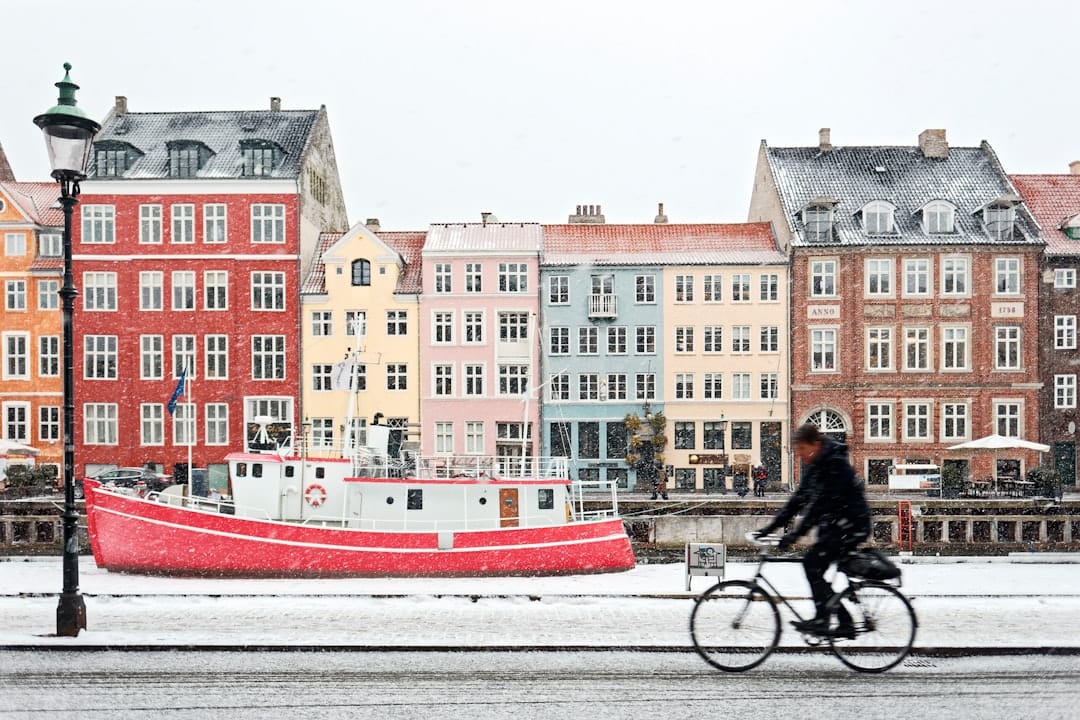
There is a particular kind of fantasy that surrounds Scandinavia for those of us who work remotely. The image is vivid: a clean, minimalist apartment in Copenhagen, a flat white on a wooden desk, the kind of city where the bike lanes are wider than the roads and the welfare state hums quietly in the background like a well-maintained engine. But then the salary calculators come out, the tax brackets reveal themselves, and the dream curdles a little. Denmark — famously, legendarily — taxes its residents at rates that can climb above fifty percent. So when whispers of something called the "27% rule" started circulating in digital nomad forums and expat Slack channels, people paid attention. A flat tax rate of just 27% in one of Europe's most expensive and sophisticated countries? It sounds almost too good to be true.
The scheme is real, and for a specific kind of remote worker or location-independent professional, it can be genuinely transformative. But like all things that sound elegant from a distance, the details matter enormously. The 27% rule — officially known as the researcher and highly paid employee scheme, or "forskerskatteordningen" in Danish — is not a loophole for every passport holder with a laptop and a dream. It is a carefully structured tax incentive designed to attract skilled international talent, and it comes with conditions, timelines, and trade-offs that deserve serious consideration before you start pricing Copenhagen apartments.
This piece is for those of you who are genuinely weighing Denmark as a base — perhaps you have a contract with a Danish company, a remote role with an employer willing to set up a local entity, or you are a researcher considering a university position. We are going to walk through exactly how the scheme works, who qualifies, what it actually costs to live in Denmark even with the tax break, and how the country compares to other affordable cities digital nomads tend to favour when doing their financial planning.
How the 27% Rule Actually Works
Denmark's standard income tax system is progressive and, by global standards, steep. When you factor in the national income tax, the municipal tax, and the labour market contribution, a resident earning a comfortable professional salary can find themselves paying an effective rate somewhere between 40% and 56%. The researcher tax scheme cuts through all of that and replaces it with a flat gross tax rate of 27% — applied to your salary before deductions, which means it functions differently from standard Danish taxation but results in a dramatically lower overall burden for high earners.
The scheme applies for a maximum of seven years. After that period, you fall into the standard Danish tax system unless you leave the country and later qualify again under certain conditions. The seven-year clock is important: it is not a permanent arrangement, and those who use it as a foundation for long-term European residency planning need to be thinking about what their financial picture looks like in year eight. For many, the scheme serves as a generous runway — a period during which you can build savings, invest, and establish yourself in a country with world-class infrastructure, before either transitioning to standard Danish residency or moving on.
One key nuance: the 27% is applied on top of the 8% labour market contribution (AM-bidrag), which is deducted first. In practice, this means the effective combined rate on your gross salary is closer to 32.84%. Still dramatically lower than the standard top bracket, but worth understanding precisely so that your financial projections are accurate rather than aspirational.
Who Qualifies — and Who Doesn't
This is where the scheme gets selective, and where many digital nomads will find the door is not open to them — at least not directly. There are two routes to eligibility. The first is the researcher route, which requires that you hold a position as a researcher at a qualifying Danish institution, typically a university, a research hospital, or an approved private research facility. This route has no minimum salary requirement but demands that your role genuinely constitutes research work as defined by the institution and Danish tax authorities.
The second route — and the one more relevant to the tech, finance, and creative professionals who populate the remote work community — is the highly paid employee route. To qualify here, your monthly salary must meet a minimum threshold that is adjusted annually. As of recent figures, this sits at approximately DKK 75,100 per month (roughly €10,000 or $10,800 per month at current rates). That is the gross salary that must appear on your Danish employment contract — it cannot be supplemented by bonuses, benefits, or equity to reach the threshold. It must be your base.
Who Qualifies — and Who Doesn't
A side-by-side overview of eligibility criteria under Denmark's 27% researcher and highly paid employee tax scheme.
| Criteria | Qualifies | Does Not Qualify |
|---|---|---|
| Minimum Monthly Salary | DKK 75,100+ (2024) | Below DKK 75,100 |
| Prior Danish Tax Residency | Not resident in 10 yrs | Resident within 10 yrs |
| Employment Type | Employed by Danish entity | Self-employed / freelance |
| Scheme Duration | Up to 7 years | Beyond 7 years |
| Researcher Role | Approved research position | Non-research roles below threshold |
| Overall Value | Strong tax advantage | Standard rates apply |
Beyond the salary threshold, you must not have been a Danish tax resident in the ten years preceding your application. This prevents people from simply cycling in and out of the country to repeatedly access the scheme. You must also be employed by a Danish employer — which means the classic freelance nomad who invoices international clients remotely is not eligible, unless they establish a genuine Danish entity or secure a position with a Danish company. Some employers will sponsor relocation to Denmark specifically because the scheme makes the country competitive for international talent acquisition.
Enjoying this? Get more like it.
Weekly picks for remote workers and digital nomads — tools, destinations, and honest takes, straight to your inbox.
Subscribe free →
The Real Cost of Living in Denmark Under the Scheme
Even with the tax advantage locked in, Denmark is not what you would call a budget destination. Copenhagen consistently ranks among the most expensive cities in Europe for daily living. A one-bedroom apartment in the city centre will typically run between DKK 12,000 and DKK 18,000 per month (roughly €1,600 to €2,400). Groceries are noticeably more expensive than in most of Western Europe, though the quality is consistently high. Dining out — even casually — tends toward the premium end of the scale. A simple lunch will set you back DKK 120 to DKK 180, and dinner at a mid-range restaurant for two can easily exceed DKK 700 before wine.
That said, there are real areas where Denmark's cost structure surprises people favourably. Healthcare is effectively free at the point of use for residents. Public transportation is excellent and, by major European city standards, reasonably priced. Childcare is heavily subsidised. And the quality of public infrastructure — cycling routes, parks, libraries, civic spaces — means that a great deal of daily life does not require spending money at all. For those accustomed to paying for gyms, private healthcare, or cars, the Danish model can offset some of its sticker shock.
The net picture for someone earning at or above the researcher tax scheme threshold is actually quite comfortable. At the minimum qualifying salary of around DKK 75,100 per month gross, you take home approximately DKK 50,000 after the effective combined tax rate — somewhere around €6,700. After a well-appointed Copenhagen apartment and a full social life, there is meaningful money left over. This is why the scheme attracts serious consideration from senior software engineers, finance professionals, and specialists in fields like biotech and AI, where Danish companies compete aggressively for global talent.
How Denmark Compares to Other Affordable Cities Digital Nomads Choose
Here is where an honest comparison matters. When most digital nomads and remote workers talk about affordable cities, they are thinking about Lisbon, Tbilisi, Chiang Mai, Medellín, or Tallinn — places where a strong foreign income stretches dramatically, where co-working spaces are abundant, and where the visa infrastructure has been built with nomadic workers in mind. Denmark, even under the researcher tax scheme, is not competing in that tier. It is a different proposition entirely.
What Denmark offers under the 27% scheme is not raw affordability — it is relative value at the high end. If you are earning a salary that puts you in the top percentile of global remote workers, Denmark with the researcher tax scheme can actually deliver a better net income position than equivalent roles in countries like Germany, France, or the Netherlands, where high earners face comparable or steeper progressive tax systems without equivalent flat-rate alternatives. The comparison is less about Chiang Mai versus Copenhagen and more about Copenhagen versus Amsterdam or Berlin for a senior professional making a strategic location decision.
There is also a lifestyle argument that transcends the spreadsheet. Denmark consistently ranks among the happiest countries on earth, and Copenhagen is reliably rated one of the most liveable cities globally. The work culture genuinely values boundaries and rest in ways that many overworked remote professionals find unexpectedly healing. The city is walkable, extraordinarily safe, architecturally beautiful, and culturally rich in understated ways. If you have spent years bouncing between affordable cities optimising for cost, a stint in Copenhagen under favourable tax conditions can feel like a recalibration — a reminder of what it looks like when a society invests in itself.
Denmark is not for everyone in the remote work community, and the 27% rule will not magically transform it into the kind of destination where your savings rate shoots up and every expense feels like a bargain. But for the right professional — someone with a qualifying salary, a Danish employer willing to support the application, and an appetite for one of Europe's most distinctive urban experiences — it is one of the more genuinely interesting tax schemes available anywhere in the world. The flat 27% rate (or approximately 32.84% when the labour market contribution is factored in) applied to a high income in a country with universal healthcare, excellent public services, and a deeply functioning democracy is not a bad deal. It just requires being honest about what tier of remote work career you are at before you start fantasising about a Nørrebro apartment and a cargo bike commute.
If you are in the research phase — mapping out your next multi-year base, weighing European options, or figuring out whether a senior role with a Danish company makes financial sense — treat the 27% rule as a serious piece of the puzzle. Talk to a Danish tax adviser before you commit, verify the current salary threshold (it is adjusted annually), and read the fine print on the ten-year prior residency exclusion. The scheme rewards those who do their homework, and Denmark, characteristically, rewards those who show up prepared.