What are the top tier travel credit cards?
If you're clocking serious miles as a digital nomad or location-independent professional, your wallet is either working overtime for you — or it's quietly leaving thousands of dollars in rewards on the table. Travel credit cards are one of the most powerful tools in a nomad's financial kit, and yet most people either pick one at random or stick with whatever card they signed up for a decade ago. The difference between the right card and the wrong one can be the difference between a free business-class upgrade to Bali and paying full price for a middle seat.
Travel credit cards points programs have evolved dramatically over the last few years. Welcome bonuses are more generous, transfer partners have multiplied, and perks like lounge access, trip delay insurance, and Global Entry credits are becoming standard on premium cards. The competition between issuers has never been better for consumers — if you know what to look for.
This roundup covers the top-tier travel credit cards worth your attention in 2024. We've focused on cards that genuinely reward a nomadic lifestyle — think strong earn rates on travel and dining, flexible points currencies, and perks that actually show up in real-world travel rather than just looking good on a comparison chart. Whether you're a one-card minimalist or a points optimizer juggling a full stack, there's something here for you.
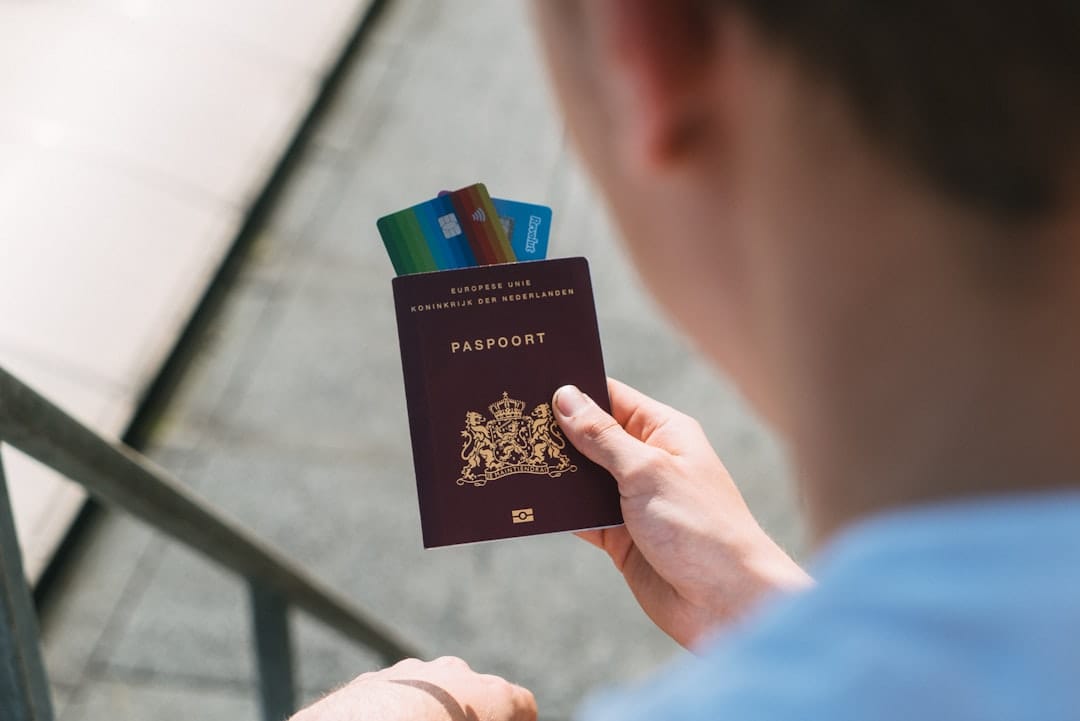
Chase Sapphire Reserve — The Benchmark for Serious Travelers
The Chase Sapphire Reserve has been the gold standard for premium travel cards since its explosive launch and it still earns that reputation. You get 3x points on travel and dining worldwide, and those Ultimate Rewards points are among the most valuable in the game — transfer them to partners like United, Hyatt, Singapore Airlines, or Air France/KLM and you can routinely pull 2 cents or more per point in value.
The $300 annual travel credit is automatic — it applies to the first $300 in travel purchases each year and essentially drops the effective annual fee from $550 to $250. Add in Priority Pass Select lounge access for you and up to two guests, a $100 Global Entry or TSA PreCheck credit, and best-in-class trip delay and cancellation insurance, and this card pays for itself quickly if you're traveling even semi-regularly.
The one caveat: Chase's 5/24 rule means if you've opened five or more credit cards in the last 24 months, you'll likely be denied. Prioritize this card early in your points journey if you're just getting started, or if you've been responsible with new credit lines. For nomads who eat out constantly and book their own travel, this card is nearly impossible to beat as a daily driver.
American Express Platinum — Unmatched Perks, Serious Commitment Required
The Amex Platinum has the highest headline annual fee of any mainstream consumer travel card at $695, but it also has the most comprehensive suite of benefits. The lounge access alone is extraordinary — Centurion Lounges, Priority Pass, Delta Sky Clubs (when flying Delta), Escape Lounges, and more. For nomads who spend a lot of time in airports, this fundamentally changes the transit experience.
The annual credits are staggering on paper: up to $200 in airline fee credits, $200 in hotel credits via Amex Travel, $155 Walmart+ credit, $240 in digital entertainment credits, $100 Saks credits, and more. The catch is that you have to actually use these credits — and many of them are narrow or require enrollment. Nomads who are organized and intentional about spending categories will extract enormous value; those who travel more spontaneously may leave credits on the table.
Membership Rewards points transfer to an impressive 20-plus airline and hotel partners including ANA, Air Canada Aeroplan, British Airways, and Marriott Bonvoy. The 5x earn rate on flights booked directly with airlines or through Amex Travel is one of the best available. If you're flying frequently and can realistically use the credits, this card's effective annual fee can drop to nearly zero — and the lounge access alone makes layovers something to look forward to.
Enjoying this? Get more like it.
Weekly picks for remote workers and digital nomads — tools, destinations, and honest takes, straight to your inbox.
Subscribe free →
Capital One Venture X — The Clean, High-Value Alternative
Capital One launched the Venture X in late 2021 and immediately disrupted the premium card space by offering Chase Sapphire Reserve-level perks at a more digestible $395 annual fee. The card earns 2x miles on every purchase with no category management required — a massive win for nomads whose spending is diverse and unpredictable. You also get 10x on hotels and rental cars booked through Capital One Travel, and 5x on flights through Capital One Travel.
The $300 annual Capital One Travel credit and 10,000 bonus miles anniversary gift together are worth approximately $395 by Capital One's own valuations — meaning the card effectively costs nothing if you book travel through their portal. Access to Capital One Lounges (a growing network with excellent reviews) plus Priority Pass with unlimited guests makes this one of the best lounge access cards at any price point. The transfer partners have also expanded significantly, now including Turkish Airlines Miles&Smiles, Avianca LifeMiles, and Air Canada Aeroplan — all known for sweet spots in award booking.
For nomads who want premium travel benefits without the complexity of tracking multiple spending categories or managing a slate of niche credits, the Venture X is arguably the most straightforward win in the premium card space. It's also unusually good for authorized users — additional cardholders get Priority Pass lounge access for a flat $75 fee, making it excellent for couples or travel partners.
Chase Sapphire Preferred — The Smart Entry Point for Travel Credit Cards Points
Not everyone is ready to pay $550 or more for a credit card, and that's completely reasonable. The Chase Sapphire Preferred at $95 per year has long been the recommended starting point for anyone getting serious about travel credit cards points for the first time — and it still delivers exceptional value for its fee. You earn 3x on dining, 3x on online grocery purchases, 2x on all other travel, and the points are in the same Ultimate Rewards ecosystem as the Reserve.
The welcome bonus is typically in the 60,000 to 80,000 point range — worth $750 to $1,000 when redeemed through Chase Travel, and potentially far more when transferred to airline and hotel partners. The card also comes with a $50 annual hotel credit through Chase Travel, trip delay reimbursement of up to $500 per ticket, primary rental car insurance, and baggage delay insurance. For a $95 annual fee, that's a remarkable collection of travel protections.
Many points enthusiasts start with the Preferred, accumulate a strong base of Ultimate Rewards points, and then product-change to the Reserve once their travel spending justifies the higher fee. The Preferred is also an ideal companion card — hold it alongside an Amex Platinum or Venture X to round out your points portfolio and ensure you have Chase's transfer partners covered. For new nomads building their first serious credit card stack, this is where to start.
Honorable Mentions Worth Your Attention
Honorable Mentions Worth Your Attention
A side-by-side comparison of key features across all top-tier travel credit cards covered in this post.
| Card | Annual Fee | Welcome Bonus | Best For | Recommended? |
|---|---|---|---|---|
| Chase Sapphire Reserve | $550 | 60,000 pts | Frequent flyers | Recommended |
| Amex Platinum | $695 | 80,000 pts | Lounge lovers | Recommended |
| Capital One Venture X | $395 | 75,000 miles | Simplicity seekers | Recommended |
| Chase Sapphire Preferred | $95 | 60,000 pts | Beginners | Recommended |
| Citi Premier | $95 | 60,000 pts | Flexible earners | Partial |
| Bilt Mastercard | $0 | Varies | Renters | Partial |
| Wells Fargo Autograph | $0 | 30,000 pts | No-fee travelers | Partial |
The Citi Strata Premier deserves a mention for nomads who want a flexible points currency with strong everyday earn rates. At just $95 per year, it earns 3x on air, hotels, restaurants, supermarkets, and gas — one of the broadest 3x category spreads of any travel card at this price. ThankYou Points transfer to partners including Turkish Airlines, Singapore Airlines KrisFlyer, Avianca LifeMiles, and Air France/KLM Flying Blue, opening up some genuinely excellent international business class redemptions.
The Bilt Mastercard is a sleeper hit for nomads who rent accommodation — it's the only card that earns points on rent payments with no transaction fee. Given that rent is typically the largest monthly expense for anyone, the ability to accumulate Bilt Rewards points on that spend and transfer them to United, American, Hyatt, Air Canada, or even transfer 1:1 to Marriott Bonvoy is genuinely unique. The card has no annual fee, which makes it a no-brainer addition to any points stack.
For nomads who are loyal to a single airline, co-branded cards like the United Club Infinite Card or Delta SkyMiles Reserve American Express can make sense — particularly if you want lounge access at that airline's hubs or perks like free checked bags, companion certificates, or elite status fast-tracking. That said, transferable points currencies almost always offer better flexibility, so co-branded cards tend to work better as secondary cards rather than your main travel credit card.
The travel credit cards points landscape rewards those who are intentional. The right card — or the right combination of two or three cards — can realistically generate $1,500 to $3,000 in annual travel value for a full-time nomad, covering flights, hotels, and more. That's not hypothetical; it's what engaged points earners regularly achieve by matching their spending patterns to cards that reward them most.
Start with one strong card — the Chase Sapphire Preferred if you're new to this, the Venture X or Sapphire Reserve if you're ready to commit to a premium card — and build from there. Track your points, learn your transfer partners, and treat your credit card like the financial tool it is. The best seat in the house doesn't have to cost full price when you know how to play.