What to pack with just a carry-on?
There is a particular kind of freedom that arrives the moment you zip up a single bag and walk straight past the baggage drop queue, past the anxious faces watching a carousel that hasn't moved yet, and directly through to the gate. Carry-on only travel is not about deprivation — it is about editing your life down to its most useful, most beautiful essentials and discovering that the edited version travels far better than the bloated original. For digital nomads and remote workers hopping between cities, time zones, and co-working spaces, that single bag is less a constraint and more a superpower.
The challenge, of course, is getting there. Most of us have stood in front of an open suitcase the night before a flight, surrounded by "just in case" items, wondering how a two-week trip has somehow demanded the contents of an entire wardrobe. The truth is that carry-on only travel is as much a mindset shift as it is a packing technique. Once you internalise a few guiding principles — and yes, there are some wonderfully named systems to help you do exactly that — the whole process begins to feel less like sacrifice and more like curation.
Whether you are heading out for a long weekend in Lisbon, three months moving between Southeast Asian cities, or an indefinite stretch of location-independent living, the carry-on only approach will serve you well. These carry on only travel tips have been road-tested across dozens of destinations and refined by a community of people who have learned, sometimes painfully, that the best luggage is the bag you never have to check in.
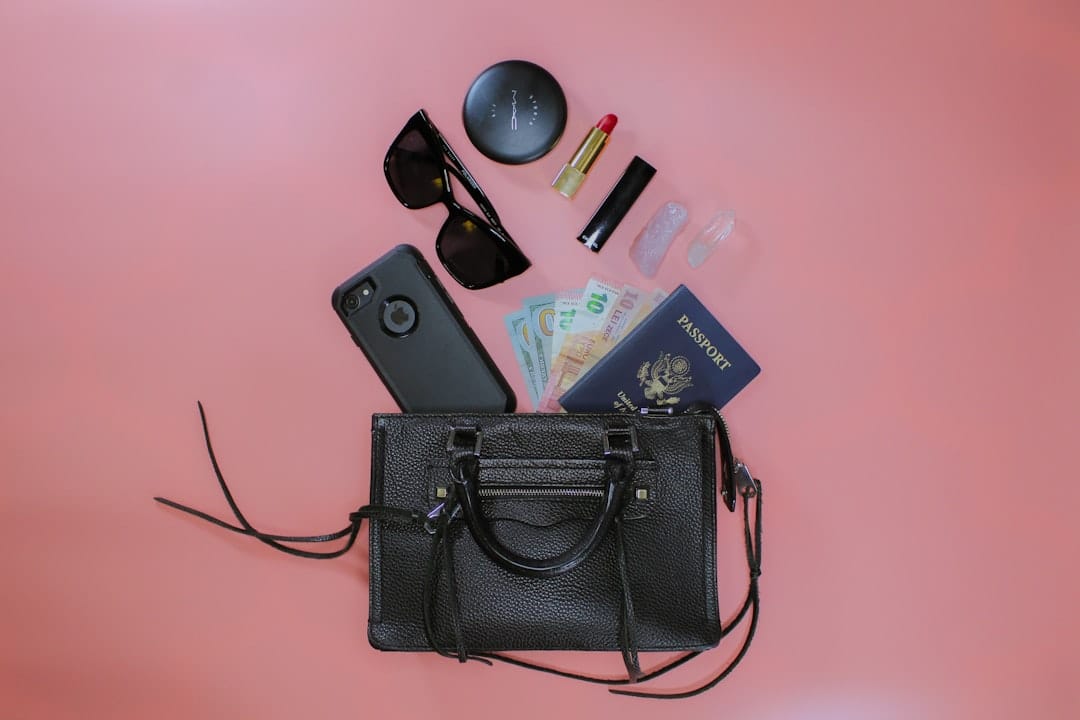
How People Actually Make Carry-On Only Work
The foundation of carry-on only travel is a wardrobe built around colour cohesion and versatility rather than volume. Experienced light packers choose a palette — typically neutrals like navy, grey, black, and white — so that every item works with every other item. A single pair of dark trousers can go from a morning co-working session to an evening aperitivo without complaint. A merino wool t-shirt can be worn three days in a row in different combinations without broadcasting the fact. This is not a compromise; it is a more intentional relationship with your clothes.
Beyond clothing, the carry-on only traveller becomes deeply selective about dual-purpose items. A lightweight scarf doubles as a blanket on overnight flights and a beach wrap in warmer destinations. A laptop sleeve slides inside a daypack so you are never carrying two bags through an airport. Packing cubes — those underrated fabric organisers that compress and compartmentalise everything — transform a chaotic bag into something you can navigate in the dark without unpacking entirely. Compression bags work brilliantly for bulkier items like a fleece or a down jacket, squeezing out the air and dramatically reducing volume.
The other secret that carry-on travellers rarely talk about loudly enough is the acceptance of doing laundry. This single habit unlocks everything. When you know you will wash clothes every four or five days — whether at a laundromat, in your accommodation's sink, or at a self-service laundrette — you stop needing to pack for the full duration of a trip. You are no longer packing for three weeks; you are packing for a cycle. That mental shift alone can halve the contents of most people's bags.
The 5-4-3-2-1 Packing Method Explained
If you have ever wished someone would just tell you exactly how many of each thing to pack, the 5-4-3-2-1 method answers that wish. It is a clothing formula designed specifically for one-bag travel, and it goes like this: five pairs of socks, four tops, three bottoms, two pairs of shoes, and one hat or versatile accessory. That is your entire clothing allocation, and for most trips of up to two weeks — and even longer with access to laundry — it is genuinely sufficient.
The beauty of the formula is not just in the numbers but in the constraint it provides. When you know you are only bringing four tops, you choose four excellent ones rather than six mediocre ones. You choose tops that layer, that transition between casual and smart, that dry quickly after washing. The same logic applies to the three bottoms — one pair of jeans or smart trousers, one pair of lightweight chinos or linen trousers, and one pair of shorts or a skirt, depending on your climate and personal style. These three pieces, combined with four tops, yield twelve distinct outfit combinations before you even start layering.
The two shoes rule is where many people baulk, but it holds up in practice. One pair of versatile walking shoes or clean trainers that can handle both a long city day and a casual dinner, plus one pair of lightweight sandals or packable flats, covers the vast majority of situations most travellers encounter. The shoes you wear onto the plane count as one of your two pairs, which means only one pair goes in the bag — and that changes the weight calculation considerably. Shoes are almost always the heaviest, bulkiest items in a bag, so this restraint pays dividends in overhead bin space.
Enjoying this? Get more like it.
Weekly picks for remote workers and digital nomads — tools, destinations, and honest takes, straight to your inbox.
Subscribe free →The 3-1-1 Rule — And What It Actually Covers
Yes, the 3-1-1 rule applies specifically to carry-on luggage, and understanding it properly saves you from the quiet humiliation of watching your favourite moisturiser confiscated at a security tray. The rule, enforced by the TSA in the United States and adopted in broadly similar form by aviation authorities around the world, states that liquids, gels, aerosols, creams, and pastes must each be in containers of no more than 100 millilitres (approximately 3.4 ounces). All of those containers must fit within a single clear, resealable plastic bag of one litre capacity, and each passenger is permitted one such bag.
For carry-on only travellers, this is not an obstacle — it is a clarifying constraint. Once you accept that your entire toiletry allowance fits into a one-litre bag, you stop entertaining the idea of bringing a full-size shampoo or a 200ml bottle of face wash. You decant what you need into reusable silicone bottles, you invest in solid toiletries — shampoo bars, conditioner bars, solid sunscreen — and you discover that these products are lighter, more compact, and often better for your hair and skin than their liquid counterparts. Solid toiletries bypass the 3-1-1 rule entirely, which is why they have become something of a quiet revolution among carry-on converts.
It is worth noting that the rules vary slightly by country, and the one-litre bag requirement is non-negotiable at most international airports. Some destinations have stricter enforcement than others, and certain items — including prescription medications, baby formula, and breast milk — are exempt with appropriate documentation. If you are travelling frequently through multiple countries, it pays to keep your liquids bag consistently packed and consistently compliant, so it can be pulled out and placed in the tray at security without any last-minute repacking drama at the checkpoint.
The 3-5-7 Rule — Packing by Trip Length
The 3-5-7 Rule — Packing by Trip Length
A comparison of recommended item counts across three trip lengths using the 3-5-7 packing rule.
| Item Category | Weekend (3 days) | Week (5 days) | Extended (7+ days) |
|---|---|---|---|
| Tops | 3 tops | 4 tops | 5 tops |
| Bottoms | 2 bottoms | 3 bottoms | 4 bottoms |
| Shoes | 1 pair | 2 pairs | 2 pairs |
| Outerwear | 1 layer | 1 layer | 2 layers |
| Underwear & Socks | 3 sets | 5 sets | 6 sets |
| Fits in Carry-On? | Yes | Yes | Upgrade required |
Illustrative figures — composed for shape, not sourced
Where the 5-4-3-2-1 method focuses on categories, the 3-5-7 rule focuses on time. The principle is elegantly simple: pack three items of clothing for a trip of up to three days, five items for a trip of up to a week, and seven items for anything longer. The "items" in question refer to complete outfit-building pieces rather than individual garments — think of each item as something that changes the look of your overall outfit rather than a sock counted separately.
What makes this rule particularly useful is that it implicitly acknowledges the laundry principle discussed earlier. For trips longer than a week, seven items of clothing is only workable if you are washing things along the way — and that is precisely the point. The 3-5-7 rule gently nudges you toward thinking of your packing not as a fixed wardrobe but as a rotating capsule. You are not running out of clothes on day eight; you are cycling through the same seven well-chosen pieces with the kind of intentionality that a good capsule wardrobe demands.
For digital nomads on indefinite trips or rolling month-to-month travels, the 3-5-7 rule effectively resolves to seven items as a permanent packing list. The horizon of the trip becomes irrelevant because the system is self-sustaining. Many long-term travellers find that after a few months of living by this principle, they start to genuinely prefer the lightness — not just the physical lightness of a bag you can swing into an overhead bin with one hand, but the psychological lightness of owning fewer things and needing to make fewer decisions about what to wear each morning.
The Most Forgotten Item — And How to Never Leave It Behind
Ask any seasoned traveller what they have forgotten most often, and you will hear the same answers with remarkable consistency: charging cables, adapters, and — most commonly — the universal travel adapter. It is the one item that sits somewhere between obvious and easy-to-overlook, almost always left on a desk or plugged into a wall socket at home because it was last used the previous evening. The good news for carry-on only travellers is that a compact multi-region adapter takes up almost no space and solves an enormous problem, so keeping one permanently in your bag — never removing it between trips — is the simplest fix imaginable.
Beyond adapters, the second most-forgotten category is medication. Not prescription medication, which most people remember through necessity, but the everyday over-the-counter essentials: painkillers, antihistamines, antidiarrhoeals, blister plasters, and rehydration sachets. These items are small, weigh almost nothing, and are invaluable when you are in a country where you do not speak the language and cannot easily navigate a pharmacy. A small ziplock bag of travel medications, kept stocked and refreshed after every trip, is the kind of preparation that feels overly cautious right up until the moment it saves an entire day.
The deeper lesson from the forgotten-item problem is the value of a permanent packing list — a document you maintain, update, and consult before every single trip regardless of how experienced you become. The most well-travelled people in any airport queue still use packing lists, because memory under the mild stress of departure preparation is unreliable. A list stored in your notes app, reviewed the night before you leave, catches the adapter on the desk, the medication bag under the bathroom sink, and the one specific cable that every single device you own seems to require simultaneously.
Carry-on only travel rewards the person who has thought carefully once, so they do not have to think anxiously every time. The systems and rules explored here — the 5-4-3-2-1, the 3-1-1, the 3-5-7 — are not rigid commandments so much as thinking tools. They give you a framework for making decisions under the peculiar pressure of pre-travel packing, and they tend to produce better outcomes than approaching an empty bag with no plan at all. Use them as starting points, adjust them for your body, your climate, your work requirements, and your personal style, and then stick to them consistently enough to develop your own refined version.
The carry-on only traveller walks through the world with a particular kind of ease that is visible to anyone who has spent time in airports. There is no waiting, no worrying, no wheeled luggage navigating cobblestones in a Portuguese alley at midnight. There is just the bag, the destination, and the open, uncomplicated feeling of having exactly what you need and nothing more. That feeling, once properly experienced, tends to make the overpacked version of yourself feel like a stranger you have happily left behind.
Get the Packing & Carry-on Field Guide
Fly carry-on only — what to pack, what to leave, and what airlines actually measure. Free with your email.
Get the free guide →