The Best Osprey Packing Cubes for Travel
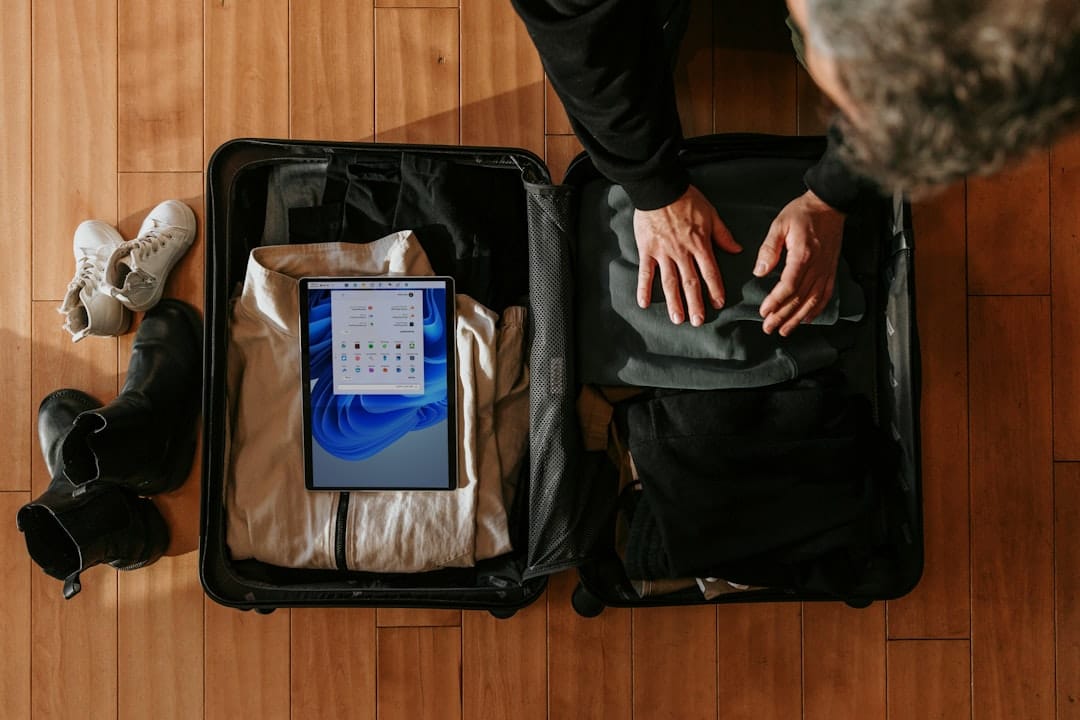
There is a particular kind of clarity that arrives the first time you open a suitcase and everything inside it makes sense. No tangle of chargers wound through balled-up socks. No frantic rummaging at 5am in a hostel dorm while a roommate sleeps three feet away. Just neat, labelled rectangles that slot into place like a game of Tetris that finally went right. For anyone who lives out of a bag — whether that bag comes with you to a co-working space in Lisbon or a beach town in Oaxaca — this is not a small thing. It is the difference between travel that drains you and travel that lets you keep working, exploring, and sleeping through the night.
Osprey has spent decades earning a reputation among long-haul travellers and thru-hikers alike, and their packing cubes carry that same design DNA. They are not the cheapest cubes on the market, and they are not trying to be. What they offer instead is durability that survives being crammed into overhead bins for the hundredth time, breathable mesh that lets you see what you own without unpacking, and a fit that feels engineered rather than improvised. If you have ever watched a zip fail on a budget cube halfway through a trip, you understand why this matters.
This guide walks through what makes Osprey packing cubes worth considering, which ones suit which kind of travel, the mistakes that quietly sabotage even good packing systems, and how to build a setup that works whether you are gone for a weekend or a year. Consider it a companion for the moment you decide that living out of a bag should feel calm rather than chaotic.
What Makes Osprey Packing Cubes Different
The first thing you notice when you handle an Osprey cube is the fabric. Most of their range uses a bluesign-approved recycled nylon or polyester that feels substantial without being heavy — the kind of material that has clearly been chosen to take abuse rather than to hit a price point. The zips glide rather than catch, and the pull tabs are large enough to grab with cold fingers or gloved hands, a small detail that reveals a company that actually tests its gear in the field. When you are repacking on a train platform in the rain, these things stop being abstract.
The design philosophy leans toward visibility and airflow. The Ultralight range in particular uses a mesh top panel so you can see exactly what a cube holds without opening it, and that mesh does double duty by letting slightly damp clothes breathe rather than fester. For anyone moving through humid climates — and much of the digital nomad map sits in exactly those latitudes — breathability is not a luxury. It is what keeps your merino base layer from smelling like a gym bag by the third city.
Then there is the fit. Osprey designs its cubes to nest neatly inside its own bags, but the dimensions are sensible enough that they play well with almost any carry-on or backpack. The corners hold their shape, the seams are reinforced where strain gathers, and the whole thing compresses down when you cinch it. It is this combination of thoughtful sizing and honest construction that separates a cube you replace every year from one that outlasts several backpacks.
The Best Osprey Packing Cubes for Every Kind of Traveller
The Best Osprey Packing Cubes for Every Kind of Traveller
Feature comparison of Osprey's top packing cube models across budget, mid-range, and premium travellers.
| Feature | Ultralight | Standard | Pro |
|---|---|---|---|
| Weight per cube | 110g | 180g | 220g |
| Compression straps | Single | Dual | Dual + side |
| Water resistance | Partial | Full | Full |
| Typical price range | $25–35 | $45–60 | $75–95 |
| Best for | Minimalists | Most travellers | Frequent flyers |
Illustrative figures — composed for shape, not sourced
If you carry only one thing away from this guide, let it be the Osprey Ultralight Packing Cube Set. Sold in a small-and-medium pairing, it is the quiet workhorse of the range. The medium swallows a week of tops and layers, the small is perfect for underwear, socks, and the assorted small items that otherwise migrate to the bottom of a bag. Because the whole set weighs next to nothing, it steals almost none of your precious carry-on allowance — a real consideration if you have taken enough flights to know how quickly a checked bag fee erodes a budget.
For travellers who want structure over featherweight, the Osprey Transporter Packing Cube offers a slightly more robust build. The fabric is heavier, the shape holds firmer even when the cube is only half full, and it suits people who like their gear to look tidy on a shelf as much as inside a bag. If you spend long stretches in one place — settling into a co-living space or a monthly apartment rather than hopping every few nights — this sturdier cube doubles neatly as a drawer organiser, which turns a rented room into something that feels a little more like home.
Don't overlook the compression variants either. The Osprey Ultralight Garment Folder and compression cubes use additional straps or zips to squeeze air out of the equation, which is transformative for anyone packing bulky items like light jackets or a couple of jumpers for cooler destinations. There is a genuine trade-off here — compression cubes wrinkle clothes more than gentle folding does — so match the tool to the trip. Beach-and-laptop travel rarely needs pressed shirts, but if your work occasionally demands looking presentable on camera, keep one folder cube for the pieces that matter.
Enjoying this? Get more like it.
Weekly picks for remote workers and digital nomads — tools, destinations, and honest takes, straight to your inbox.
Subscribe free →{{IMAGE_2:folded clothes inside travel packing cube}}
Common Packing Cube Mistakes to Avoid
The most common mistake is treating cubes as magic. A packing cube does not reduce what you own — it organises it. If you fill three cubes and still cannot close your bag, the problem was never the cubes. Experienced carry-on-only travellers will tell you the cube is a discipline device, not a volume expander: it forces you to decide how much of any category you actually need. One cube for tops, one for bottoms and layers, one for the small stuff. When a category outgrows its cube, that is your cue to leave something behind, not to buy a bigger cube.
The second mistake is packing by item type rather than by use. It feels logical to put all shirts together, but if you find yourself living out of a single cube for the first three days of every trip, organise around access instead. A grab-and-go cube of two outfits and toiletries essentials means you can survive a delayed bag or a late-night arrival without disturbing your whole system. This kind of intentionality mirrors the mindset that helps people who are transitioning from a 9-to-5 to a nomadic life — the small routines you build early are what keep the lifestyle sustainable once the novelty fades.
A third and quieter mistake is over-compressing everything. Cinching a cube to its absolute limit does save space, but it also crushes fabrics into a wrinkled mess and makes the cube rigid and awkward to fit around the odd-shaped items every bag contains — shoes, a toiletry kit, a laptop sleeve. Leave a little give. A cube that is ninety percent full is easier to pack, easier to close, and kinder to your clothes than one strained to bursting. The goal is a system you can maintain effortlessly for months, not a one-time feat of spatial engineering you will never replicate.
Building a System That Travels With You
The colour-coding trick is worth adopting from day one. Osprey offers its cubes in a range of shades, and assigning each category a consistent colour turns unpacking into muscle memory. Blue for tops, green for layers, grey for the miscellaneous drawer — whatever scheme you choose, the point is that your brain stops having to think about it. There is a surprising overlap here with the way colour shapes how a workspace feels; the same instinct that leads people to consider colour psychology in a home office applies to a well-ordered bag. A tidy, legible system lowers the low-grade cognitive load that constant travel quietly piles on.
Think about destination as well. A packing setup for humid, warm cities such as many of the affordable slow-travel hubs favoured by nomads looks very different from one built for a cooler European autumn. Warm climates reward lightweight mesh cubes and minimal layers; cooler ones justify a compression cube or two to tame bulk. If you tend to base yourself in budget-friendly destinations where laundry is cheap and frequent, you can pack fewer clothes and lean harder on smaller cubes, freeing space for the work gear that actually pays for the trip.
Finally, treat one cube as your permanent tech and admin kit. Chargers, adapters, cables, a spare battery, and copies of important documents live here and never come out except to be used. Because this cube never gets unpacked into a drawer, you always know where your electronics are, and you can lift your entire digital life out of one bag and into another in seconds. For remote workers whose income depends on being online, this single habit removes an entire category of travel anxiety — the frantic search for a charger before an early call.
Are They Worth the Investment?
It is fair to ask whether premium cubes justify their price when generic sets cost a fraction as much. The honest answer depends on how you travel. If you take a single holiday a year, a cheap set will serve you perfectly well and there is no shame in it. But if your bag is effectively your home, the calculus shifts. A cube that survives years of daily handling, rough baggage carousels, and constant repacking pays for itself many times over compared to replacing flimsy alternatives every season — and it spares you the small betrayals of gear that fails at the worst moment.
There is also a quieter value that resists being priced. When your bag is organised, everything else feels slightly more manageable. You arrive in a new city, settle into a room, and within two minutes your life is unpacked and legible. That small ritual of order becomes a grounding point in a life that is otherwise gloriously unpredictable — a way of carrying a little continuity from one place to the next, no matter how far the distances between them stretch.
Osprey packing cubes are not the only good option, but they are among the most quietly reliable — the kind of gear you stop thinking about because it simply works. Start with the Ultralight set, add a compression cube if your climate demands it, keep a dedicated tech kit, and colour-code the whole thing so unpacking becomes second nature. Do that, and the next time you open your bag in an unfamiliar room, you will feel that small, welcome clarity: everything in its place, and you free to go and enjoy wherever the road has taken you.