Best Coworking for Digital Nomads: Industrious vs WeWork
There's a moment every nomad knows well — you've just landed in a new city, your Airbnb Wi-Fi is doing that thing where it works for exactly eleven minutes before giving up entirely, and you need to be on a client call in two hours. You pull up a search for "best coworking spaces" in whatever neighborhood you're in, and suddenly you're drowning in options, reviews, price tiers, and day-pass policies that seem designed to confuse. Two names keep surfacing through the noise: WeWork and Industrious. They're both glossy, both professional, both promise you the kind of productive environment that turns a Tuesday into something almost resembling momentum.
But here's the thing about coworking spaces — they are not interchangeable, and choosing the wrong one for your lifestyle and work style is the kind of low-stakes mistake that somehow ends up costing you in ways you didn't anticipate. Maybe it's the vibe that's off, the membership model that doesn't flex the way you need it to, or the simple reality that the coffee tastes like regret. For remote workers who are spending real money on a workspace away from home, the difference between Industrious and WeWork isn't just cosmetic. It's structural, philosophical, and in some cities, deeply practical.
So let's slow down and actually unpack this comparison — not with a dry feature checklist, but with the kind of honest, on-the-ground perspective that matters when you're making a real decision about where you're going to spend forty-plus hours of your week. We'll dig into the competitive landscape, the New York coworking scene as a case study, the genuine downsides of coworking that nobody advertises, and finally, the direct head-to-head between Industrious and WeWork that you came here for.
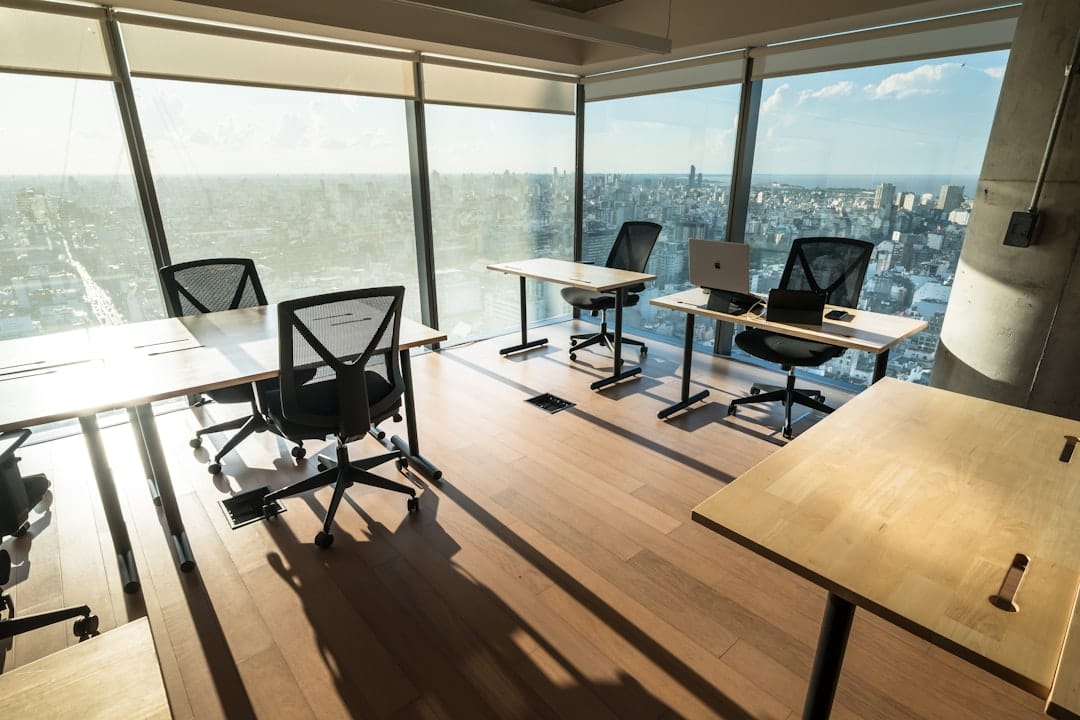
Who Is WeWork's Biggest Competitor?
WeWork spent most of the 2010s behaving as though it had no real competitors — a posture that was simultaneously understandable and catastrophically wrong. At its peak, WeWork was operating in over 150 cities globally and had rebranded itself not as a real estate company but as a "physical social network," which tells you everything you need to know about the era in which it was born. Then came the IPO implosion, the billions evaporated, and suddenly the flex-space market looked a lot more interesting to operators who'd been building quietly in the background.
Today, WeWork's most significant competitor in the premium segment is almost certainly Industrious — but the broader competitive landscape includes IWG (which operates Regus and Spaces), Convene, The Wing's surviving locations, and a growing constellation of independent boutique spaces that don't carry the overhead or the baggage of a VC-inflated brand. IWG, for its part, is the largest operator in the world by sheer square footage, but Industrious has earned a reputation for quality over quantity that makes it the more direct threat to WeWork's positioning among professionals who can afford to be selective.
It's also worth noting that CBRE — one of the world's largest commercial real estate services firms — acquired a majority stake in Industrious in 2021, which fundamentally changed the game. Suddenly Industrious had the backing and real estate relationships to scale in ways that didn't depend on WeWork's old model of leasing enormous spaces and hoping the membership revenue would eventually make the math work. That partnership gave Industrious something WeWork spent years trying to fake: actual stability.
What Is the Best Coworking Space in NYC?
New York is an almost unfair testing ground for coworking spaces because the stakes are so high and the city's energy demands so much from the spaces that try to contain it. If you can make a coworking concept work in Manhattan — where rent is punishing, foot traffic is relentless, and members expect world-class everything because they're paying world-class prices — you've proven something real about your model. Both WeWork and Industrious have multiple New York locations, and experiencing them side by side is genuinely instructive.
Among the best coworking spaces in NYC by consistent reputation, Industrious locations — particularly the ones in Midtown and the Financial District — tend to score highest for quiet professionalism, cleanliness, and the kind of amenities that don't feel performative. The snacks are actually good. The conference rooms are actually soundproofed. The staff actually know your name after your second visit. WeWork's best New York locations have a more frenetic energy — great if you feed off urban buzz, exhausting if you need to concentrate. Their Summer Street and Wall Street locations have improved significantly in recent years, but the experience can vary wildly depending on how full the space is on any given day.
Beyond the two giants, New York's coworking scene offers genuine alternatives worth exploring. Neuehouse in Midtown channels a members' club sensibility that attracts creative professionals willing to pay for an elevated atmosphere. Primary in the Flatiron District has built a loyal following among wellness-oriented remote workers with its rooftop and meditation spaces. And for digital nomads who find themselves in Brooklyn rather than Manhattan, spaces like Green Desk in Dumbo offer a more grounded, community-forward experience that neither WeWork nor Industrious quite replicates. The best coworking space in New York depends entirely on who you are when you sit down to work.
Enjoying this? Get more like it.
Weekly picks for remote workers and digital nomads — tools, destinations, and honest takes, straight to your inbox.
Subscribe free →
What Are the Real Downsides of Coworking?
Nobody in the coworking industry wants you to linger too long on the downsides, so let's be honest about them — because if you're going to spend anywhere from a couple hundred to over a thousand dollars a month on a workspace, you deserve the full picture. The most obvious issue is cost. A dedicated desk at a premium coworking space in a major city can run you $500 to $900 per month or more. A private office pushes well past that. For nomads who are already managing accommodation costs, this line item stings. And for those who work best in coffee shops or who happen to have reliable home internet, the value proposition requires some genuine scrutiny.
Then there's the noise problem, which is the dirty secret of open-plan coworking. The same sociable, community-forward energy that makes a coworking space feel alive can make deep work nearly impossible. You've got people on calls — some of them inexplicably choosing to use speaker mode — keyboard tappers, ambient-noise addicts playing lo-fi hip hop loud enough to bleed through AirPods, and the occasional meeting-without-a-room that sprawls into shared space. Even the best spaces struggle with this on busy days, and neither WeWork nor Industrious is immune. Both offer phone booths and private spaces, but these tend to fill up fast, and booking systems can be a bureaucratic headache.
There's also the lonelier-than-expected paradox. Many remote workers turn to coworking spaces expecting to feel more connected, only to find themselves surrounded by people who are all equally heads-down and headphoned. The community aspect that coworking brands market so aggressively is real in some spaces — particularly smaller independent ones — but in larger, more transient locations it can feel more like a lobby than a community. If you're looking for genuine connection and collaboration, the size and culture of your specific location matters enormously, and this varies so much within both Industrious and WeWork that chain-level generalizations are almost meaningless.
Industrious vs. WeWork: Which Is Actually Better?
Industrious vs. WeWork: Which Is Actually Better?
A side-by-side comparison of Industrious and WeWork across key coworking criteria for digital nomads.
| Feature | Industrious | WeWork |
|---|---|---|
| Pricing Model | All-inclusive membership | Tiered, add-on costs |
| Locations (Global) | ~200 | ~700 |
| Amenities Included | Full (coffee, printing, events) | Partial (varies by plan) |
| Lease Flexibility | Month-to-month | Month-to-month |
| Community & Culture | Professional, curated | Energetic, startup-focused |
| Financial Stability | Stable (Cushman-backed) | Restructured (post-bankruptcy) |
| Best For | Established remote workers | Early-stage startups |
Here's the honest answer: Industrious is better for most serious remote professionals, and WeWork is better if you're a certain kind of person in a certain kind of moment. Let's unpack that. Industrious wins consistently on the metrics that matter most for sustained productive work — quality of spaces, reliability of amenities, staff attentiveness, and an overall atmosphere that says "people here mean business" rather than "people here are networking aggressively while waiting for their startup to get traction." The design aesthetic leans warmer and more considered than WeWork's often-industrial look, and crucially, the membership model — while not cheap — tends to deliver more predictable value because the spaces are managed more conservatively.
WeWork, even post-bankruptcy and in its restructured form, retains a genuine edge in a few areas. The network is still broader — more cities, more locations within cities, and a global access pass that makes more sense for true nomads who bounce between destinations frequently. WeWork's app and booking infrastructure, despite its turbulent history, is more mature than Industrious's. And there's something to be said for WeWork's cultural energy in creative industries — if you're a designer, a filmmaker, a marketing consultant, or someone whose work is fueled by ambient creative buzz, certain WeWork locations deliver that in a way Industrious simply doesn't try to.
On price, they're more comparable than most people assume, with both offering day passes in the $40 to $60 range in major markets and monthly memberships that scale up with access level. Where Industrious distinguishes itself most clearly is in the consistency of experience — visiting a WeWork in a city you've never been to is somewhat of a lottery, while Industrious locations tend to hold to a higher baseline standard. For nomads who need to know that their workspace will work before they arrive, that predictability is worth a premium. The decision ultimately comes down to this: do you want the most reliable, professional experience available, or do you want the biggest network with the most flexibility? For the former, choose Industrious. For the latter, WeWork still has a case.
What Is the 996 Rule — and Why Should Remote Workers Care?
The 996 rule originated in China's tech culture as an informal — and increasingly formalized — expectation that employees work from 9 a.m. to 9 p.m., six days a week. It became a flashpoint in conversations about labor rights, burnout, and the cost of hustle culture when Chinese tech workers began publicly pushing back against the practice in the late 2010s. The rule has since taken on a broader meaning in global conversations about overwork, and it's directly relevant to anyone choosing a coworking space because the space you work in has an outsized influence on how much you work — and how you feel about it.
Both WeWork and Industrious have, at various points, marketed themselves to the hustle-culture crowd — the startup founders who wear sleeplessness as a badge of honor, the freelancers who feel guilty closing their laptops before midnight. But the better spaces, whether Industrious, WeWork, or any independent alternative, are starting to understand that the most valuable thing they can offer isn't access to an espresso machine at 11 p.m. — it's an environment that helps you do your best work during reasonable hours and then genuinely disconnect. The 996 model is a cautionary tale, not an aspiration, and the coworking space you choose should reflect that.
For nomads especially, the boundary between living and working is already blurry in ways that can quietly erode your wellbeing over months and years. A coworking space that closes at 7 p.m. and actively encourages you to log off is, paradoxically, more valuable than one that lets you grind indefinitely. Industrious tends to have a more structured, office-hours feel that creates natural boundaries — which many remote workers find surprisingly healthy. WeWork's 24/7 access model is a genuine draw for some, but it also makes it easier to fall into the trap of never fully leaving work mode. Know yourself before you choose.
At the end of the day — and this is a phrase that's much more literal for remote workers than for their office-bound counterparts — the question of Industrious versus WeWork isn't really about which brand is objectively superior. It's about what kind of worker you are, what city you're in, what your budget looks like, and what you need from the hours between arriving at your desk and leaving it. The best coworking spaces aren't the most famous ones or the most luxurious ones. They're the ones that make your specific kind of work easier and your specific kind of life more sustainable.
So the next time you land somewhere new and pull out your phone to search for a place to work, resist the pull of defaulting to whichever name you recognize first. Walk in the door, order a coffee, sit down for ten minutes, and notice how you feel. The right workspace announces itself quietly — in the light, the rhythm, the way other people are leaning into their screens. That feeling is what you're paying for, and it's worth taking the time to find the real thing.