Remote Work Burnout: The Warning Signs and How to Prevent It
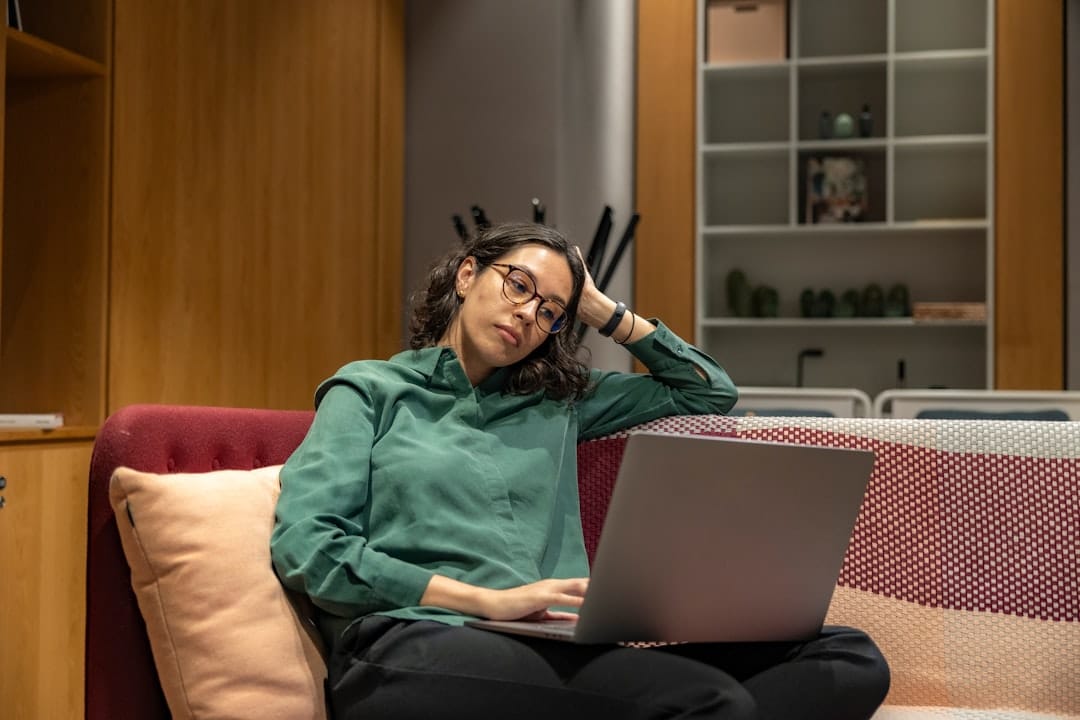
There's a particular kind of exhaustion that doesn't announce itself. It doesn't arrive after a brutal week or a red-eye flight. Instead it seeps in slowly, over months of laptop light and quiet apartments, until one morning you sit down at your desk — which is also your dinner table, which is also the place you scroll before bed — and you simply can't summon the energy to open your inbox. The strange part is that nothing has gone wrong. You have freedom, flexibility, and a life many people dream about. And yet you feel hollowed out.
So the question deserves a serious answer rather than a slogan. Does remote work cause burnout? The honest reply is that remote work doesn't cause burnout the way a virus causes illness — it isn't inherently toxic. But it removes many of the invisible guardrails that office life quietly provided, and without those, the conditions for burnout can flourish. The commute that forced a mental transition, the colleague who noticed you looked wrecked, the physical door you could close behind you — all of that disappears when your work lives inside your home and inside your phone.
This piece walks through what actually drives remote work burnout, how to spot it before it flattens you, and — most importantly — how to build a working life that stays sustainable whether you're logging in from a flat in Lisbon or a spare bedroom in Ohio. The goal isn't to scare you back into an office. It's to help you keep the freedom you fought for without letting it quietly consume you.
What Actually Causes Remote Work Burnout
The first myth to dismantle is that burnout comes from working too many hours. Hours matter, but they're only part of the story. Burnout is the product of chronic stress meeting a lack of recovery — and remote work has a habit of stealing recovery quietly. When there is no physical boundary between where you work and where you rest, your nervous system never fully clocks off. You close the laptop but the laptop is still there on the table, glowing faintly, a reminder of the message you didn't answer. The brain interprets proximity as availability, and availability as obligation.
There's also the erosion of natural rhythm. Office life is dotted with micro-breaks you never counted as rest: the walk to a meeting room, the queue for coffee, the small talk that lets your mind wander for ninety seconds. Remote work compresses all of that out of the day. You can end up staring at a screen for six hours with barely a pause, mistaking constant motion for productivity while your reserves drain to empty. Add asynchronous notifications that arrive at all hours across time zones, and the workday stops having edges at all.
Then there's isolation, which is its own slow-acting force. Humans regulate their stress partly through other humans — a shared laugh, a colleague who says "that meeting was rough for everyone." Without that, small frustrations calcify into resentment and small wins go uncelebrated. The connection between loneliness and remote fatigue is real and well documented, and it's worth reading more about how isolation, anxiety, and depression show up in the remote workplace. Burnout is rarely one big thing. It's a dozen small drains, all left unattended.
The Warning Signs You're Trained to Ignore
The Warning Signs You're Trained to Ignore
Early warning signs of burnout and their severity levels to help you identify when intervention is needed.
| Warning Sign | Mild | Moderate | Severe |
|---|---|---|---|
| Sleep disruption | Occasional insomnia | 3–4 nights poor sleep/week | Chronic sleep loss |
| Emotional exhaustion | End-of-day fatigue | Persistent low mood | Cynicism, detachment |
| Work-life bleed | Occasional after-hours emails | Frequent weekend work | No true off-hours |
| Productivity changes | Minor focus dips | Missed deadlines | Unable to complete tasks |
| Social withdrawal | Skip one social event | Avoid team interactions | Total isolation |
Illustrative figures — composed for shape, not sourced
Burnout is sneaky because its early symptoms look a lot like ordinary tiredness, and remote workers are especially good at explaining them away. You tell yourself you're just having a slow week, that everyone feels flat in the afternoons, that the fog will lift once this project ships. But there are patterns worth watching for. Cynicism is a big one — when tasks you used to enjoy start feeling pointless, or when you catch yourself feeling irritated by clients and colleagues who haven't actually done anything wrong. Emotional distance from work you once cared about is a classic marker, not a personality flaw.
Physical signals matter too, and they arrive early. Trouble falling asleep despite feeling exhausted. Tension headaches that appear by mid-afternoon. A reliance on caffeine to start and something to switch off at night. Reduced immunity — the sense that you're catching every cold going around. These aren't separate problems to treat individually; they're often the body flagging that your recovery isn't keeping pace with your output. Pay attention to the mornings especially. Dread on a Monday is human. Dread every single day is a signal.
The trickiest sign for remote workers is a shrinking world. Burnout narrows your life. You stop making plans, stop exploring the city you moved to, stop replying to friends. The freedom that drew you to this lifestyle quietly collapses into a loop of bed, desk, and screen. If you've noticed your days have become a grey blur of near-identical routines with nothing to look forward to, that flattening is itself a symptom. Catching it here — while you can still name it — is far easier than clawing back from full collapse months later.
Enjoying this? Get more like it.
Weekly picks for remote workers and digital nomads — tools, destinations, and honest takes, straight to your inbox.
Subscribe free →
Building Boundaries When Work Lives at Home
The single most protective thing you can do is rebuild the boundaries office life used to hand you for free. Start with space. If you can dedicate a corner, a desk, or ideally a whole room to work — and nothing but work — you give your brain a physical cue that helps it switch modes. When the laptop closes and you leave that zone, the workday genuinely ends. If a separate room isn't possible, even a packed-away setup that disappears into a drawer at 6pm creates a ritual of closure. The details matter more than you'd think; there's good evidence that everything from lighting to layout affects focus, which is why it's worth learning how to create a distraction-free workspace.
Then rebuild the boundaries of time. Give yourself a fake commute — a fifteen-minute walk before you start and another when you finish. It sounds almost too simple, but that walk does the work the old commute did: it marks a transition, resets your posture, and puts a wall between "working you" and "resting you." Set genuine start and stop times and defend them like appointments. Turn off notifications outside those hours, and if you work across time zones, be ruthless about which messages actually require a response tonight versus tomorrow morning. Availability is a choice, not a virtue.
Finally, protect your breaks as though your performance depends on them — because it does. Step away from the screen for lunch and actually eat somewhere else. Take the afternoon slump seriously and go outside rather than pushing through with more coffee. Batch your deep work into a couple of focused blocks rather than smearing it thinly across ten hours of half-attention. Working fewer, better hours nearly always beats working more, distracted ones, and it leaves something in the tank for the life you moved abroad to actually live.
Location, Community, and Recovery on the Road
For those who work while travelling, geography becomes a variable you can actually tune. The pace of your movement is the biggest lever. Hopping between cities every few days looks glamorous on a feed, but it's a reliable recipe for exhaustion — you never build a routine, never find your café, never sleep in a familiar bed long enough for your body to settle. Slow travel is not just a nicer way to see a place; it's a burnout defence. Staying somewhere for a month or a season lets you establish the rhythms that recovery depends on. If budget is part of the equation, it helps to look at slow travel cities that suit a nomad budget, so you can afford to stay put long enough to actually rest.
Community is the other great buffer, and it doesn't happen by accident when you're constantly on the move. Co-living and coworking spaces exist partly to solve the loneliness problem — they build in the casual human contact that remote work strips out. Sharing a kitchen, joining a group dinner, or simply working in the same room as other people can restore a sense of belonging that no amount of Slack banter replicates. Even if you prefer your own space, a standing weekly ritual — a language exchange, a run club, a market you visit every Saturday — anchors you to a place and to people.
Recovery on the road also means being honest about what a destination demands of you. A city with reliable internet, walkable streets, decent healthcare, and a climate that suits you removes a hundred small daily stressors that quietly stack up. Chasing the cheapest or most exotic option often means importing friction you'll pay for in energy. Choose places that make the ordinary parts of life easy, and you free up bandwidth for the work and adventure you're actually there for. Sustainability isn't the enemy of ambition — it's what lets ambition last.
If Burnout Has Already Arrived
If Burnout Has Already Arrived
Recovery strategies and their effectiveness timeline for those already experiencing remote work burnout.
| Recovery strategy | Quick wins (1–2 weeks) | Sustainable (1–3 months) | Requires professional support |
|---|---|---|---|
| Structured daily schedule | Yes | Yes | No |
| Physical separation of workspace | Yes | Yes | No |
| Social community building | Partial | Yes | No |
| Therapy or coaching | No | Yes | Yes |
| Extended location break | Partial | Yes | No |
Illustrative figures — composed for shape, not sourced
Prevention is ideal, but plenty of people find this article while already deep in the fog — and if that's you, the first thing to know is that pushing harder will not fix it. Burnout is a deficit of recovery, and you cannot out-hustle a deficit. The instinct to grind through, to prove you're still capable, is exactly the instinct that dug the hole. Real recovery starts with subtraction: fewer commitments, lower expectations of yourself for a defined period, and a genuine break that doesn't involve checking messages "just in case." A long weekend won't undo months of depletion, but it can be the pause that lets you think clearly enough to make bigger changes.
From there, look honestly at what's structural rather than personal. Is the workload genuinely impossible, or has it simply expanded to fill every hour because nobody set limits? Is the isolation fixable with a change of scene or a co-living stint? Are you in the wrong role entirely, white-knuckling a job that no longer fits? Sometimes burnout is a signal that the arrangement needs to change, not just your coping strategies. It's worth exploring practical, structured approaches to recovery, and there's a fuller guide to mastering digital nomad burnout with real wellness tips that goes deeper than any single article can.
And if the fog is heavy — if you're experiencing persistent low mood, hopelessness, or symptoms that go beyond tiredness — treat it as a health matter rather than a productivity one, and reach out to a doctor or mental health professional. Being far from home shouldn't mean being far from help. Many nomads carry telehealth access precisely so that support is never more than a call away. Seeking it is not a failure of the lifestyle; it's part of running it responsibly.
So, does remote work cause burnout? Not by itself. What it does is hand you an enormous amount of freedom along with the full responsibility for how you use it. The commute, the office door, the colleague's watchful eye — those crude old structures kept a lot of people upright without them ever noticing. Remove them and you have to become the architect of your own boundaries, your own rhythm, your own recovery. That's harder than it sounds, and nobody gets it perfect.
But it's absolutely learnable. Protect your space and your time, move slowly enough to actually live, stay connected to other humans, and watch for the early warning signs before they flatten you. Do that, and remote work stops being a quiet threat to your wellbeing and becomes what it always promised to be — a way of working that leaves room for a whole life around it. The freedom is real. The trick is building a structure sturdy enough to hold it.