Burned out and looking for a quiet seaside town to reset
You know the feeling before you can name it. The cursor blinks at you a beat too long. The notifications that once felt like proof you mattered now land like small stones, one after another, until you are carrying a pile of them you never agreed to lift. Somewhere along the way the freedom you chased turned into a different kind of cage, one with better scenery and the same exhausted heartbeat. Burnout does not always arrive as a dramatic collapse. More often it slips in quietly, dressed as one more deadline, one more time zone, one more city you barely remember because you spent it indoors answering email.
If you have reached that point, the instinct to keep moving faster is exactly the wrong one. What the nervous system is asking for is not another flight or a productivity app or a new color-coded calendar. It is asking for quiet. For a place where the loudest sound is the tide pulling back over wet stone, where the day is measured in light rather than meetings, and where nobody knows you well enough yet to need anything from you.
A small seaside town can be that place. Not a beach resort with infinity pools and a swim-up bar, and not a famous coastal city where the cafes are full of laptops glowing like a server farm. Something smaller and slower, where you can hear yourself think again. This is a guide to choosing that town, settling into it, and using its rhythm to actually reset rather than simply relocating your stress to a prettier backdrop.
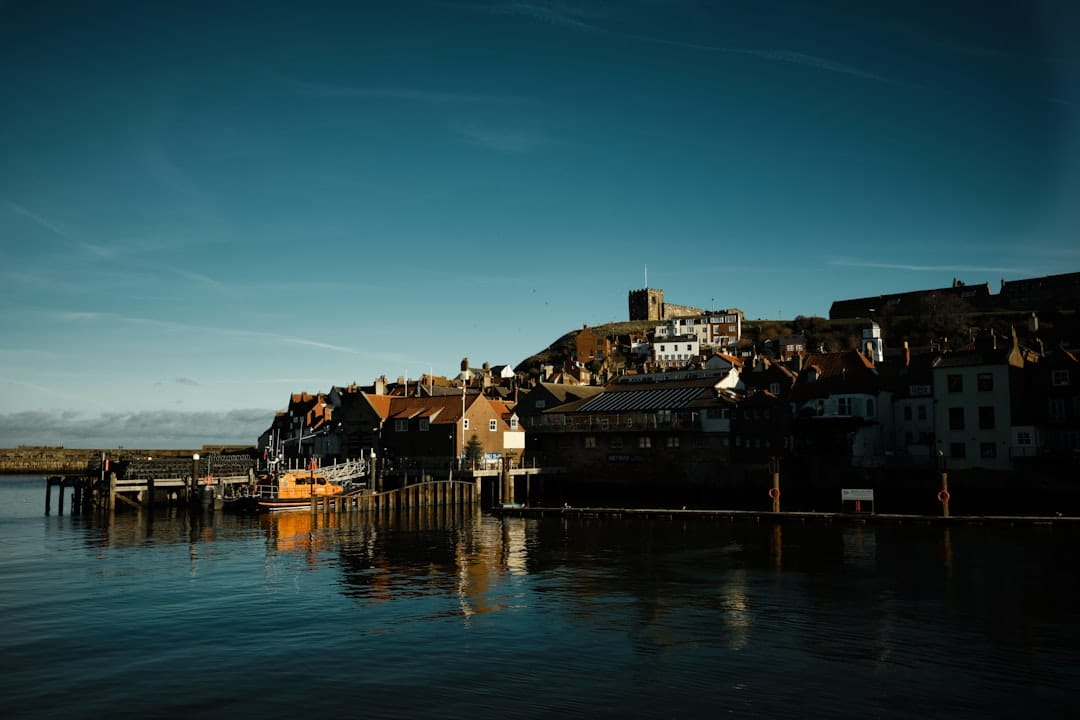
Why the Sea Resets Something Words Cannot
There is a reason humans have always drifted toward coastlines to recover. The sea does something to attention that no amount of deliberate mindfulness can force. Psychologists call it soft fascination — the way a wide, gently moving horizon holds your gaze without demanding anything from it. Your eyes rest on the water and your mind, for once, is allowed to wander without being interrupted. After months of staring at a screen that demands constant micro-decisions, this is not a luxury. It is a kind of repair.
A small seaside town adds something a city beach cannot: scale that fits a human body. You can walk the length of it in an afternoon. You begin to recognise faces — the person who opens the bakery, the fisher mending nets on the same bench every morning, the dog that patrols the seawall as though it owns the place. That gentle repetition is medicine for a burned-out nervous system. Novelty is stimulating, and stimulation is exactly what you have been overdosing on. What you need instead is the unhurried predictability of a place that does the same small things, in the same order, every single day.
The salt air helps too, though perhaps not for the reasons the wellness brochures claim. It is more that the cold slap of sea wind in the morning, the smell of seaweed and diesel from the harbour, the grit of sand that ends up in everything — these are sensory anchors to the physical world. Burnout is partly a condition of living too much inside your own head and your own screen. The sea drags you back out into your body, and your body, it turns out, has been quietly waiting for you to come home.
How to Choose the Right Town for a Reset
How to Choose the Right Town for a Reset
Comparison of key characteristics across three popular seaside reset destinations.
| Feature | Portugal (Algarve) | Greece (Crete) |
|---|---|---|
| Cost of Living | Budget-friendly | Very affordable |
| Internet Reliability | Excellent | Good in towns |
| Noise Levels | Quiet year-round | Seasonal crowds |
| Beach Access | Walking distance | Walking distance |
| Workspace Options | Cafés & co-working | Limited options |
| Best for Reset | Highly recommended | Good alternative |
Illustrative figures — composed for shape, not sourced
Start by being honest about what reset actually means for you. If the goal is genuine rest, resist the urge to pick the most Instagrammable destination, because famous towns come with crowds, inflated prices, and an unspoken pressure to be having the time of your life. The towns that heal are usually the ones that arrive on no listicle. Look one bay over from the well-known spot. Look at the working fishing village rather than the postcard one. The slightly unglamorous neighbour is often quieter, cheaper, and infinitely more restful precisely because nobody is performing there.
Then weigh the practical scaffolding you still need, because a reset that ends with you panicking about a dropped client call is no reset at all. Check that the internet can actually carry your work before you commit — ask your host directly for a speed test screenshot, not a vague promise. Confirm there is at least one reliable cafe or a small coworking space for the days you need a desk and a kettle that is not yours. If you are weighing destinations seriously, it is worth browsing a roundup of affordable coworking and coliving spots near the beach so you start with somewhere that already has the basics sorted.
Consider the season too, and consider going against it. The shoulder months — late spring before the crowds arrive, or early autumn after they leave — give you a seaside town at its most honest. The light is soft, the prices drop, the restaurants are run by people who have time to talk to you, and the beach belongs to the locals and the seabirds again. A town in its off-season feels like being let in on a secret. That sense of having space to yourself is exactly the texture a tired mind is craving.
Enjoying this? Get more like it.
Weekly picks for remote workers and digital nomads — tools, destinations, and honest takes, straight to your inbox.
Subscribe free →
Designing a Workday That Doesn't Undo the Whole Point
Here is the trap that catches most people: they arrive in paradise and bring their burnout with them, intact. The town changes but the working habits do not, and within a fortnight they are answering Slack at the same frantic pace, just with a better view of the sea they never actually look at. A reset is not a place. It is a renegotiation of how you spend your hours, and the town is simply the setting that makes that renegotiation easier.
Try compressing your work into the part of the day when your mind is sharpest, and then guarding the rest of the day fiercely. For many people that means starting early, before the town wakes, knocking out the genuinely important tasks in a focused three or four hour block, and then closing the laptop with the firmness of someone clocking off a factory shift. The afternoon then belongs to the water, the walking, the slow lunch. If you are juggling more than one income stream and that already feels impossible, our guide on how to manage multiple remote jobs without burning out is worth reading before you go, because the structure you build matters more than the postcode you build it in.
Be ruthless about notifications during this period. Turn off everything that is not genuinely urgent, and define urgent narrowly. A reset only works if your attention is allowed to fall silent for stretches at a time. Tell your team or clients in advance that you are operating on focused blocks and slower response times for a few weeks. Most people, you will find, simply adjust. The world rarely ends because you replied at four in the afternoon instead of within four minutes — and the few times it does, you will know it was never a sustainable arrangement to begin with.
Settling In: Rituals That Turn a Stay Into a Reset
The difference between a holiday and a genuine reset is rituals — the small repeated acts that tell your body it is safe to stand down. In a seaside town these almost build themselves. The morning swim or the cold-water dip that shocks you fully awake and leaves you tingling for hours. The walk to the same bakery for the same bread. The evening on the seawall watching the light go down over the water while the day's tension drains out through your feet. None of this is glamorous and all of it works.
Resist the urge to fill every empty hour. Burned-out people often confuse rest with a new project — they arrive intending to recover and immediately enrol in a surf course, a cooking class, a language intensive, and a 5am running club, recreating the exact overload they came to escape. Let yourself be bored. Boredom, for a mind that has been sprinting, is not emptiness. It is the sound of the engine finally cooling. Some of your best thinking and your most honest feeling will surface in those unstructured stretches when you have nothing in particular to do.
Settle in for longer than feels necessary, too. A weekend will tantalise but not heal. The first week is mostly decompression — your shoulders are still up around your ears and you keep reaching for your phone out of habit. It is usually the second and third weeks when something genuinely shifts, when you stop checking the time, when you catch yourself laughing at nothing on a clifftop and realise you cannot remember the last time you felt this loose. Staying put long enough also makes the trip more affordable; monthly rates almost everywhere come at a steep discount, and our notes on finding cheap monthly rentals as a nomad can stretch your budget far enough to make a proper, slow stay possible.
The Quiet Signs That It's Working
You will not wake up one morning suddenly cured, with a fanfare and a clear head. Recovery from burnout is quieter and sneakier than that. It shows up as small returns. You notice you slept the whole night through for the first time in months. You feel a flicker of curiosity about a side project you abandoned long ago, not because you should, but because you genuinely want to. A meal tastes vivid again. A conversation with a stranger at the harbour leaves you energised rather than drained. These are the signs the engine has cooled and is ready to turn over gently once more.
Pay attention, too, to the relationship you have with your work as it returns. The goal is not to feel ready to sprint again at the old destructive pace — that simply restarts the cycle and lands you right back here in six months. The goal is to come back to your work with boundaries that survived the trip, with a sense of what is actually worth your attention and what was only ever noise. The seaside town is not a one-off escape hatch. Treated well, it teaches you a tempo you can carry home, wherever home turns out to be next.
If you find a town that fits, there is also no rule that says you must leave on schedule. Some of the best resets quietly become longer chapters — the place where you finally learn to work in a way that does not consume you. Plenty of slow-living destinations are built precisely for that kind of long, gentle stay, and it is worth keeping a shortlist of the ones that called to you most.
Burnout convinces you that the answer is to push harder, to optimise more, to find the one missing tool that will make the unsustainable suddenly sustainable. It is lying. The answer is usually slower and simpler than that, and it often smells of salt and sounds like waves. A quiet seaside town will not fix your job, your contracts, or the structural reasons you ran yourself down. But it will give your nervous system the room it needs to remember what calm feels like, and from that calm you can make better decisions about everything else.
So pick the unglamorous town one bay over. Book longer than feels reasonable. Tell your inbox you will see it in the afternoon. Then walk down to the water in the early light, let the cold air find you, and do the radical thing of standing still for a while. The work will still be there. The difference is that you will have something left to bring to it.